Rocks vs. Big Rigs
Let’s shift into high gear!
Runaway trucks. Gravel pits. A...Squirrel Launch System? Only you (and physics) can stop the chaos!
Topics Covered
Standards
Grades
Rocks vs. Big Rigs
Unit Overview
How do gravel beds stop runaway big rigs...and does it always work?
Buckle up. In this unit, we're tackling kinetic energy—the energy packed inside anything that's moving—and discovering why mass and speed make some moving objects much harder to stop than others. Along the way, we'll race big rigs, launch Phat Gus to new heights, and chuck things off a 15-story tower (for science, obviously). But here's the best part: students are in the driver's seat. They'll build mini-rigs, crash them over and over, tweak their speed and mass, and use every test to get one step closer to solving the mystery.

It's Three Dimensional!
Rocks vs. Big Rigs
Unit Storyline
A mystery, not a textbook, drives the learning in Rocks vs Big Rigs as students investigate the power of kinetic energy. Every question leads to another, turning a series of lessons into a single connected journey toward an overarching answer.
What we do
- Watch a video to learn about different ways of stopping a runaway truck and see three model big rigs roll down a truck ramp and into a gravel bed at Class CrunchLabs. We Notice, Think & Wonder about why each of the big rigs stopped in different places.
- Build classroom-scale models of the big rigs and use these mini rigs to explore what causes a runaway truck to stop.
- Review what we learned about energy in elementary school science and apply those ideas to explain how the big rigs moved, slowed, and stopped.
- Set the Big Question for the mission: Why do some trucks stop in gravel beds and others don’t?
- Develop questions, initial ideas, and potential investigations to explore how motion energy works.
What we figure out
- The faster a truck moves, the more motion energy it has.
- Energy is transferred when a truck rolls onto and collides with the gravel.
- A truck that stops in a gravel bed has transferred all of its motion energy before it reaches the end. Trucks that still have some motion energy left don’t stop in the gravel bed.
- We have some ideas about the factors that might be causing the differences in how the big rigs stopped.
How we show it
- Individually craft an initial model and possible explanations to explain what we think may cause the differences in how each big rig stopped.
- Individually develop questions we want to answer about what causes different trucks to stop differently.
- Individually conduct investigations and discuss our findings.
- Individually make our thinking visible in our Student Mission Logs.
- Individually complete a Status Check assessment.
- Collect a list of ideas and questions as a class to investigate together.
- Develop a Possible Explanations Chart as a class.
Lesson goals
- Ask questions about different factors that might affect why trucks stop differently.
- Identify different forms of energy in a model to explain why the motion of trucks is different.
- Use evidence to support explanations for what causes the motion of trucks to be different.
What we do
- Carry out investigations to explore how different amounts of rice affect the way our mini rigs stop.
- Compare evidence that supports and refutes two possible explanations for how rice stops mini rigs, then build a class argument about which explanation is best.
- Make models to show how other stopping methods can stop a mini rig.
What we figure out
- When motion energy is transferred from the truck to something else, the truck slows down. The observable evidence of this energy transfer includes sound, heat, and changes in motion.
- More gravel means more small collisions, which means more energy transfers away from the truck.
- A mini rig can be stopped by one big collision or with no collision at all.
- Some stopping methods are safer than others.
- Scientific argumentation helps us make sense of competing ideas by using evidence and reasoning to see which explanation has the best support.
- The strongest evidence that explains why some trucks stop in gravel beds and others don’t is that more rice resulted in a shorter stopping distance for the mini rigs, and that gravel went flying when the big rigs rolled onto it.
How we show it
- Individually make models to explain the role of energy in different mini rig stopping scenarios.
- Individually determine how new evidence and reasoning related to energy transfer supports or refutes our possible explanations.
- Individually make our thinking visible in our Student Mission Logs.
- Individually complete our first Mission Milestone assessment.
- Use evidence to develop an argument as a class about why the different big rigs stopped in different spots in the gravel bed.
- Update the Possible Explanations Chart as a class.
Lesson goals
- Collect data on different forms of energy to explain changes in motion of the mini rig.
- Construct an argument for an explanation about why mini rigs change motion when they collide with rice that is supported by evidence of energy changes and reasoning about energy transfer.
What we do
- Plan and carry out an investigation with the mini rigs to test the effect of speed on stopping distance.
- Construct and analyze graphs to spot patterns in the data about mini rig speed and stopping distance.
- Read to discover more about analyzing graphs, and about the relationship between speed and motion energy.
- Use our new evidence to evaluate our possible explanations and update our individual explanations.
What we figure out
- The faster a truck moves, the more energy that must be transferred away in order for it to stop in gravel.
- The shape of a line graph conveys information about the relationship between two variables.
- A graph with a straight line indicates a linear relationship. A curved line indicates a nonlinear relationship.
- When two things change together in a consistent and predictable way, their relationship is proportional.
- The motion energy of a truck — or anything else — increases with the square of the speed. This is a nonlinear, proportional relationship.
- Big rigs traveling at different speeds could stop at different places in a gravel bed.
How we show it
- Individually make models to show how energy is transferred when a mini rig runs into a cup.
- Individually determine how new evidence and reasoning related to the relationship between speed and motion energy supports or refutes our possible explanations.
- Individually make our thinking visible in our Student Mission Logs.
- Individually complete a short Status Check assessment.
- Update the Possible Explanations Chart as a class.
Lesson goals
- Conduct an investigation to determine how speed affects the energy of a mini rig.
- Construct and interpret nonlinear graphs to identify the squared relationship between the speed and energy of mini rigs.
What we do
- Revise and carry out an investigation to test the effect of mass on mini rig stopping distance.
- Construct and analyze graphs to identify patterns in the data about mini rig mass and stopping distance.
- Use our new evidence to evaluate our possible explanations.
What we figure out
- The more massive a truck is, the more energy that must be transferred away in order for it to stop in gravel.
- The motion energy of a truck — or anything else — increases proportionally with the mass of the object.
- Big rigs with different masses could stop at different places in a gravel bed.
How we show it
- Individually determine how new evidence and reasoning related to the relationship between mass and motion energy supports or refutes our possible explanations.
- Individually make our thinking visible in our Student Mission Logs.
- Individually complete a short Status Check assessment
- Update the Possible Explanations Chart as a class.
Lesson goals
- Construct and interpret graphs to identify the magnitude of the effect of mass on the motion energy of a model truck.
- Use graphs as evidence to support an argument that compares the motion energy of trucks using proportional relationships between mass and motion energy.
What we do
- Use evidence from previous investigations to make predictions about the motion energy of trucks with different masses and speeds.
- Use evidence and reasoning from throughout the unit to construct arguments for which of our possible explanations is best for understanding why some trucks stop in gravel and others don't.
- Plan and conduct an investigation to produce evidence that will help us predict where big rigs with different masses and speeds will stop.
- Plan and conduct an investigation to produce evidence that will help us predict the stopping distances of big rigs with different masses and speeds.
- Use ideas about kinetic energy and energy transfer to explain different methods of stopping runaway trucks.
What we figure out
- The kinetic energy of an object depends on both its mass and speed.
- Differences in kinetic energy would cause the big rigs to stop in different places.
- Differences in the size and amount of gravel would change how energy is transferred from the big rigs to the gravel and cause the big rigs to stop in different places.
- Evidence and reasoning can be used to compare, support, and rule out competing explanations for a phenomenon.
How we show it
- Individually use all of the evidence and reasoning developed in the unit to explain why some trucks stopped in gravel beds and others didn’t.
- Individually make our thinking visible in our Student Mission Logs.
- Individually complete a short Status Check assessment.
- Update the Possible Explanations Chart as a class.
Lesson goals
- Construct and present an argument for the best explanation for why some trucks stop in gravel and others do not, using evidence for how mass and speed affect kinetic energy and how that energy transfers to the gravel.
- Collect evidence to make predictions about how changes to the mass and speed of the big rigs will affect how far they roll in a gravel bed.
What we do
- Identify evidence from across the unit that can be used to answer our Big Question.
- Develop a model showing how energy changes as different runaway trucks stop in a gravel bed.
- Build a shared explanation of why some runaway trucks stop in gravel beds and others don’t.
- Apply what we figured out about kinetic energy and energy transfer to a new scenario.
What we figure out
- Some trucks stopped in the gravel bed because all of their kinetic energy was transferred away before they reached the end.
- One truck kept moving because it still had more kinetic energy than the gravel could transfer away.
- Kinetic energy concepts apply beyond runaway trucks.
- Mass and speed affect kinetic energy in all scenarios.
- The ideas developed in this unit are transferable tools for explaining other real-world situations.
How we show it
- Individually write or develop a model to explain a scenario from the Find the Familiar chart.
- Individually complete a Mission Milestone assessment.
- Individually use our Student Mission Logs to reflect on our learning journey throughout the unit.
- Construct a shared explanation as a class of why some runaway trucks stop in gravel beds and others don’t.
Lesson goal
- Develop a model to describe how a truck’s kinetic energy and the amount of energy transferred from the truck affect how far it travels into a gravel bed.
The Anchor
What we do
- Watch a video to learn about different ways of stopping a runaway truck and see three model big rigs roll down a truck ramp and into a gravel bed at Class CrunchLabs. We Notice, Think & Wonder about why each of the big rigs stopped in different places.
- Build classroom-scale models of the big rigs and use these mini rigs to explore what causes a runaway truck to stop.
- Review what we learned about energy in elementary school science and apply those ideas to explain how the big rigs moved, slowed, and stopped.
- Set the Big Question for the mission: Why do some trucks stop in gravel beds and others don’t?
- Develop questions, initial ideas, and potential investigations to explore how motion energy works.
What we figure out
- The faster a truck moves, the more motion energy it has.
- Energy is transferred when a truck rolls onto and collides with the gravel.
- A truck that stops in a gravel bed has transferred all of its motion energy before it reaches the end. Trucks that still have some motion energy left don’t stop in the gravel bed.
- We have some ideas about the factors that might be causing the differences in how the big rigs stopped.
How we show it
- Individually craft an initial model and possible explanations to explain what we think may cause the differences in how each big rig stopped.
- Individually develop questions we want to answer about what causes different trucks to stop differently.
- Individually conduct investigations and discuss our findings.
- Individually make our thinking visible in our Student Mission Logs.
- Individually complete a Status Check assessment.
- Collect a list of ideas and questions as a class to investigate together.
- Develop a Possible Explanations Chart as a class.
Lesson goals
- Ask questions about different factors that might affect why trucks stop differently.
- Identify different forms of energy in a model to explain why the motion of trucks is different.
- Use evidence to support explanations for what causes the motion of trucks to be different.
Energy Transfer
What we do
- Carry out investigations to explore how different amounts of rice affect the way our mini rigs stop.
- Compare evidence that supports and refutes two possible explanations for how rice stops mini rigs, then build a class argument about which explanation is best.
- Make models to show how other stopping methods can stop a mini rig.
What we figure out
- When motion energy is transferred from the truck to something else, the truck slows down. The observable evidence of this energy transfer includes sound, heat, and changes in motion.
- More gravel means more small collisions, which means more energy transfers away from the truck.
- A mini rig can be stopped by one big collision or with no collision at all.
- Some stopping methods are safer than others.
- Scientific argumentation helps us make sense of competing ideas by using evidence and reasoning to see which explanation has the best support.
- The strongest evidence that explains why some trucks stop in gravel beds and others don’t is that more rice resulted in a shorter stopping distance for the mini rigs, and that gravel went flying when the big rigs rolled onto it.
How we show it
- Individually make models to explain the role of energy in different mini rig stopping scenarios.
- Individually determine how new evidence and reasoning related to energy transfer supports or refutes our possible explanations.
- Individually make our thinking visible in our Student Mission Logs.
- Individually complete our first Mission Milestone assessment.
- Use evidence to develop an argument as a class about why the different big rigs stopped in different spots in the gravel bed.
- Update the Possible Explanations Chart as a class.
Lesson goals
- Collect data on different forms of energy to explain changes in motion of the mini rig.
- Construct an argument for an explanation about why mini rigs change motion when they collide with rice that is supported by evidence of energy changes and reasoning about energy transfer.
Speed Matters
What we do
- Plan and carry out an investigation with the mini rigs to test the effect of speed on stopping distance.
- Construct and analyze graphs to spot patterns in the data about mini rig speed and stopping distance.
- Read to discover more about analyzing graphs, and about the relationship between speed and motion energy.
- Use our new evidence to evaluate our possible explanations and update our individual explanations.
What we figure out
- The faster a truck moves, the more energy that must be transferred away in order for it to stop in gravel.
- The shape of a line graph conveys information about the relationship between two variables.
- A graph with a straight line indicates a linear relationship. A curved line indicates a nonlinear relationship.
- When two things change together in a consistent and predictable way, their relationship is proportional.
- The motion energy of a truck — or anything else — increases with the square of the speed. This is a nonlinear, proportional relationship.
- Big rigs traveling at different speeds could stop at different places in a gravel bed.
How we show it
- Individually make models to show how energy is transferred when a mini rig runs into a cup.
- Individually determine how new evidence and reasoning related to the relationship between speed and motion energy supports or refutes our possible explanations.
- Individually make our thinking visible in our Student Mission Logs.
- Individually complete a short Status Check assessment.
- Update the Possible Explanations Chart as a class.
Lesson goals
- Conduct an investigation to determine how speed affects the energy of a mini rig.
- Construct and interpret nonlinear graphs to identify the squared relationship between the speed and energy of mini rigs.
Mass in Motion
What we do
- Revise and carry out an investigation to test the effect of mass on mini rig stopping distance.
- Construct and analyze graphs to identify patterns in the data about mini rig mass and stopping distance.
- Use our new evidence to evaluate our possible explanations.
What we figure out
- The more massive a truck is, the more energy that must be transferred away in order for it to stop in gravel.
- The motion energy of a truck — or anything else — increases proportionally with the mass of the object.
- Big rigs with different masses could stop at different places in a gravel bed.
How we show it
- Individually determine how new evidence and reasoning related to the relationship between mass and motion energy supports or refutes our possible explanations.
- Individually make our thinking visible in our Student Mission Logs.
- Individually complete a short Status Check assessment
- Update the Possible Explanations Chart as a class.
Lesson goals
- Construct and interpret graphs to identify the magnitude of the effect of mass on the motion energy of a model truck.
- Use graphs as evidence to support an argument that compares the motion energy of trucks using proportional relationships between mass and motion energy.
Kinetic Energy
What we do
- Use evidence from previous investigations to make predictions about the motion energy of trucks with different masses and speeds.
- Use evidence and reasoning from throughout the unit to construct arguments for which of our possible explanations is best for understanding why some trucks stop in gravel and others don't.
- Plan and conduct an investigation to produce evidence that will help us predict where big rigs with different masses and speeds will stop.
- Plan and conduct an investigation to produce evidence that will help us predict the stopping distances of big rigs with different masses and speeds.
- Use ideas about kinetic energy and energy transfer to explain different methods of stopping runaway trucks.
What we figure out
- The kinetic energy of an object depends on both its mass and speed.
- Differences in kinetic energy would cause the big rigs to stop in different places.
- Differences in the size and amount of gravel would change how energy is transferred from the big rigs to the gravel and cause the big rigs to stop in different places.
- Evidence and reasoning can be used to compare, support, and rule out competing explanations for a phenomenon.
How we show it
- Individually use all of the evidence and reasoning developed in the unit to explain why some trucks stopped in gravel beds and others didn’t.
- Individually make our thinking visible in our Student Mission Logs.
- Individually complete a short Status Check assessment.
- Update the Possible Explanations Chart as a class.
Lesson goals
- Construct and present an argument for the best explanation for why some trucks stop in gravel and others do not, using evidence for how mass and speed affect kinetic energy and how that energy transfers to the gravel.
- Collect evidence to make predictions about how changes to the mass and speed of the big rigs will affect how far they roll in a gravel bed.
Energy in Action
What we do
- Identify evidence from across the unit that can be used to answer our Big Question.
- Develop a model showing how energy changes as different runaway trucks stop in a gravel bed.
- Build a shared explanation of why some runaway trucks stop in gravel beds and others don’t.
- Apply what we figured out about kinetic energy and energy transfer to a new scenario.
What we figure out
- Some trucks stopped in the gravel bed because all of their kinetic energy was transferred away before they reached the end.
- One truck kept moving because it still had more kinetic energy than the gravel could transfer away.
- Kinetic energy concepts apply beyond runaway trucks.
- Mass and speed affect kinetic energy in all scenarios.
- The ideas developed in this unit are transferable tools for explaining other real-world situations.
How we show it
- Individually write or develop a model to explain a scenario from the Find the Familiar chart.
- Individually complete a Mission Milestone assessment.
- Individually use our Student Mission Logs to reflect on our learning journey throughout the unit.
- Construct a shared explanation as a class of why some runaway trucks stop in gravel beds and others don’t.
Lesson goal
- Develop a model to describe how a truck’s kinetic energy and the amount of energy transferred from the truck affect how far it travels into a gravel bed.
Unit Materials
Our materials provide a roadmap for teachers and students. They’re standards-aligned, use evidence-backed strategies, and are built to actually work.

Quick Launch Guide
Need a quick overview of what’s happening in this unit and the resources you’ll use to make it happen? Check out this one-page overview!
 Open in Google Drive
Mission Launch Deck
Your command center. Slides include discussion prompts, embedded videos, and directions for hands-on challenges, all in an editable deck.
Open in Google Drive
Teacher Mission Manual & Handbook
These resources have background info, lesson breakdowns, instructional strategies, and pro tips for pulling the whole thing off.
Open in Google Drive
Hands-On Challenges
The best way to learn science is to DO it. We've included everything you need to prepare and jump right in.
Open in Google Drive
Student Mission Log
Every scientist and engineer needs a place to record their questions, investigation plans, and data and track their progress.
Open in Google Drive
Student Assessments
Multimodal assessments help you understand what's clicking and what's not for every student so you can plan instruction that works.
Open in Google Drive
Teacher Assessment Guidance
We provide things to look for in student responses so you can understand where they are and give feedback that actually moves the needle.
Open in Google Drive
Handouts & Other Materials
Readings, worksheets, flashcards, and other print materials your students need to make the most of the unit.
Hands-On Challenges
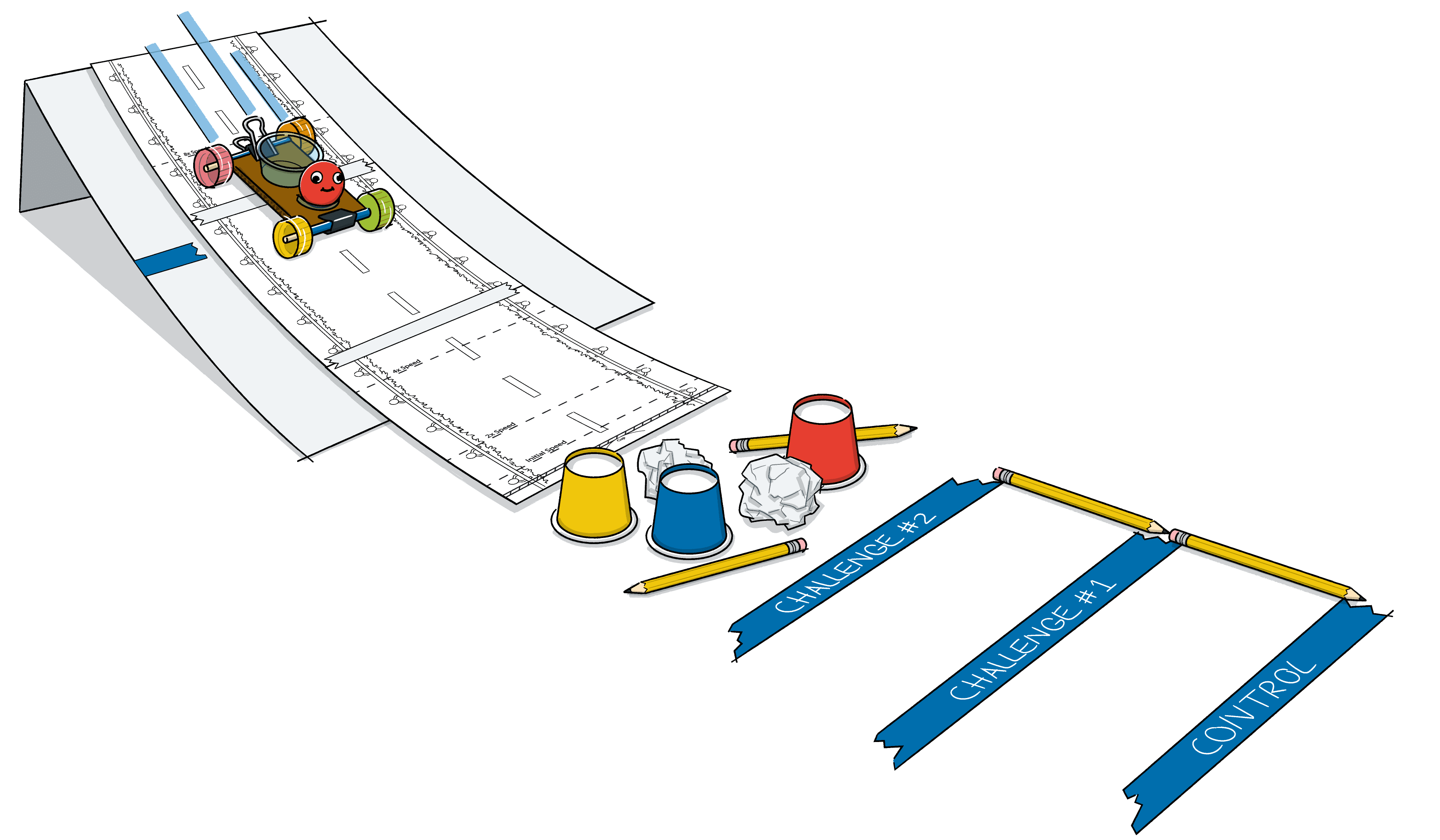
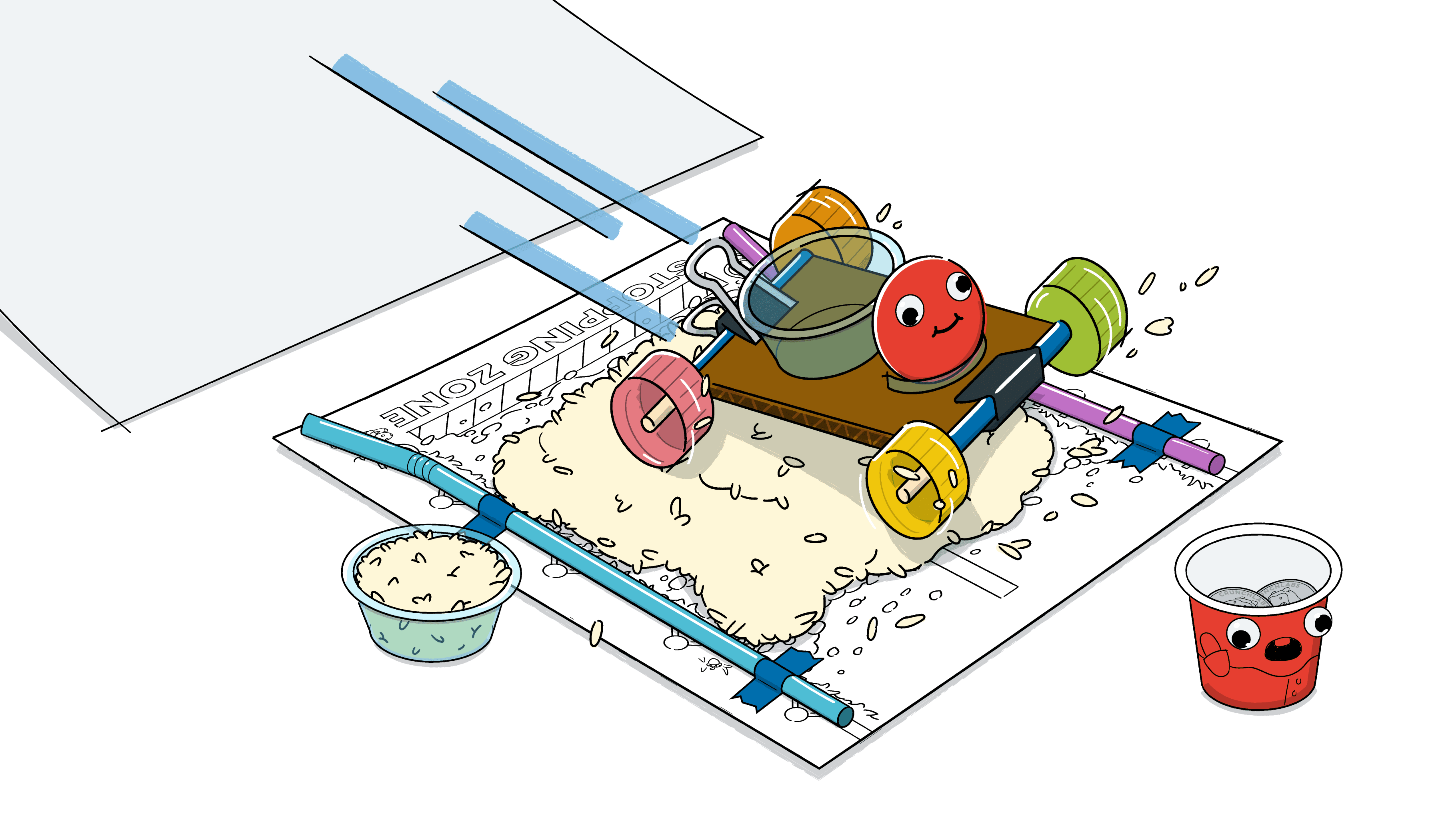
Grab a few everyday materials and dive into hands-on challenges that turn big science ideas into unforgettable experiences.
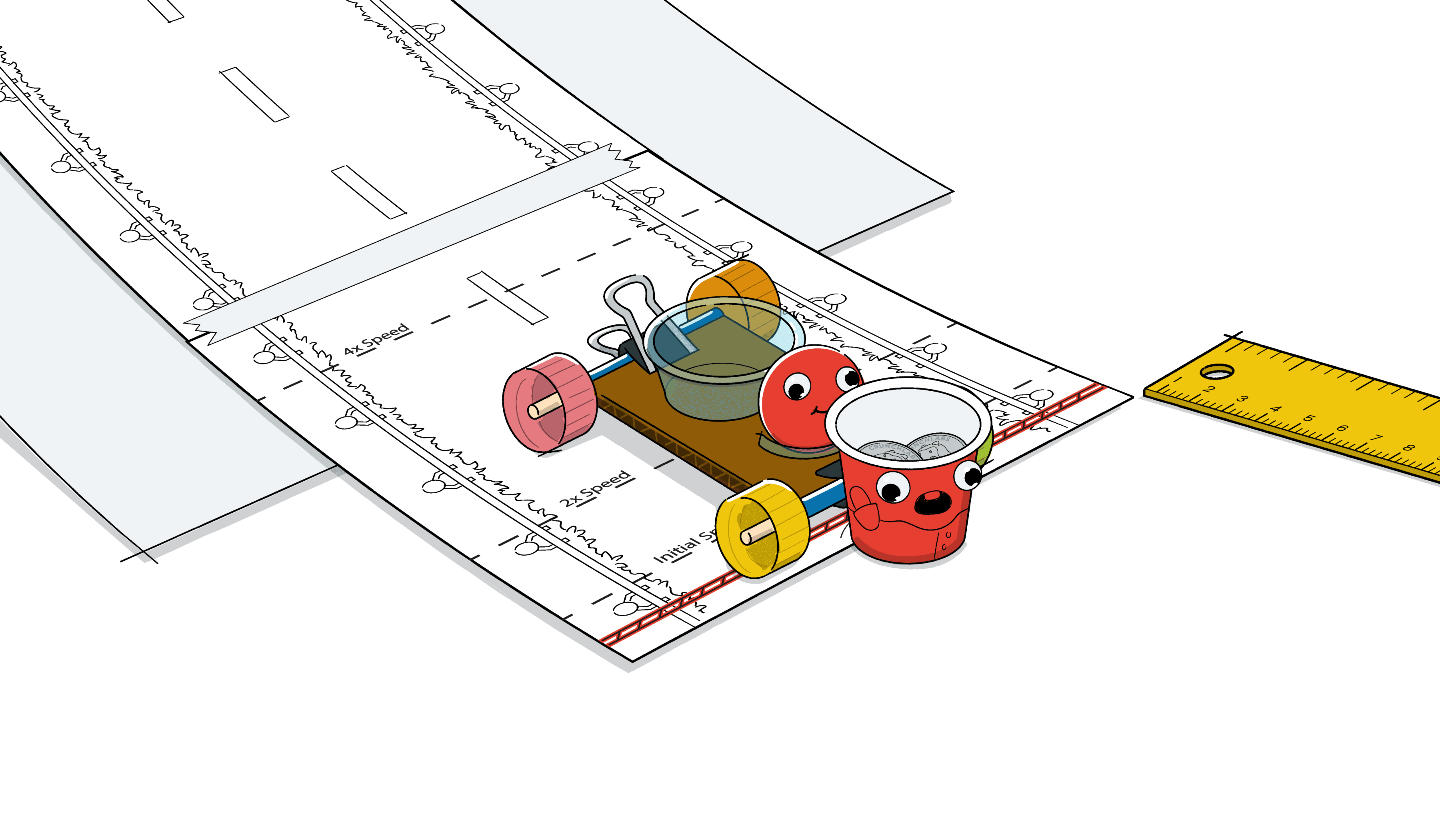
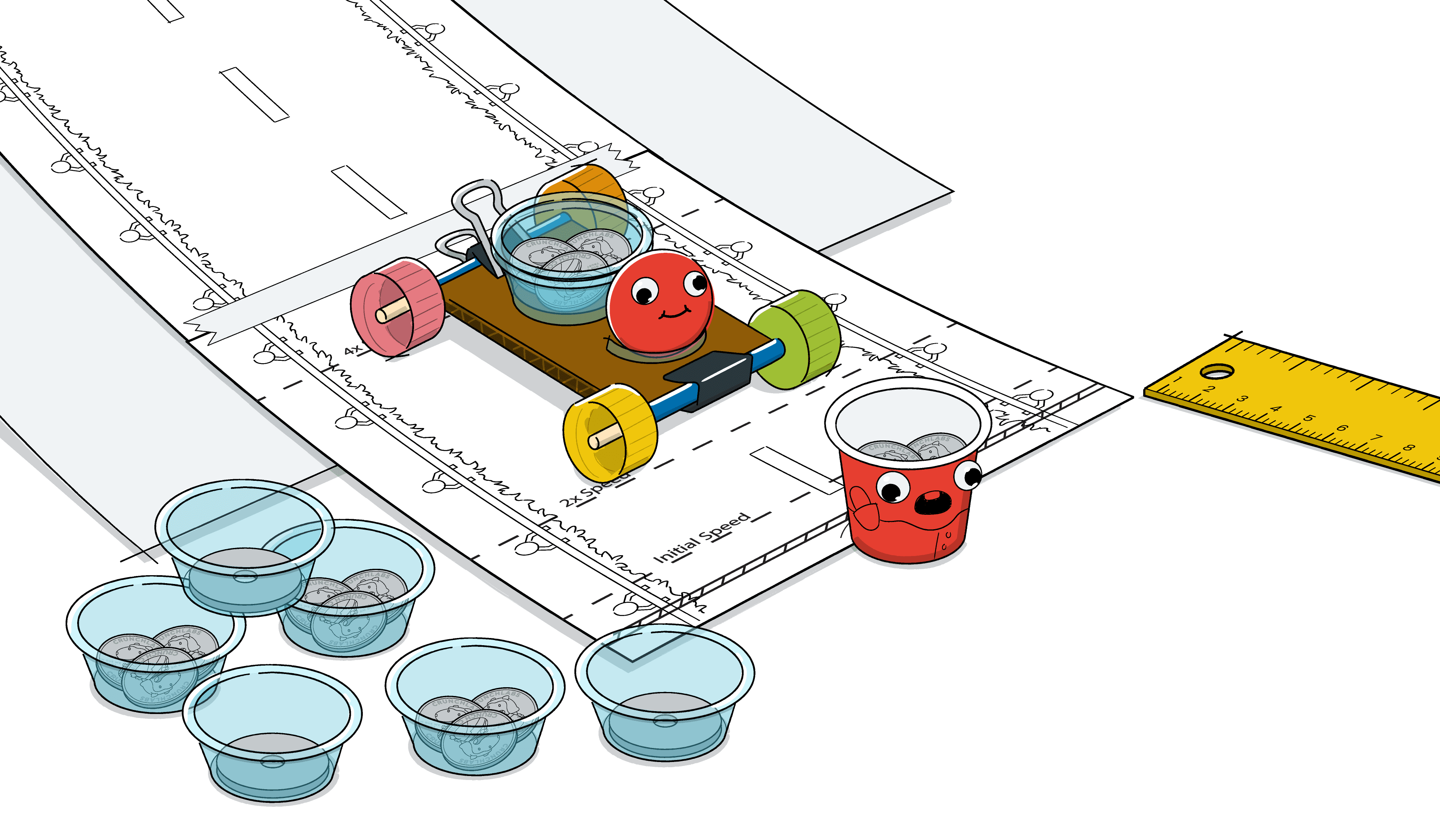
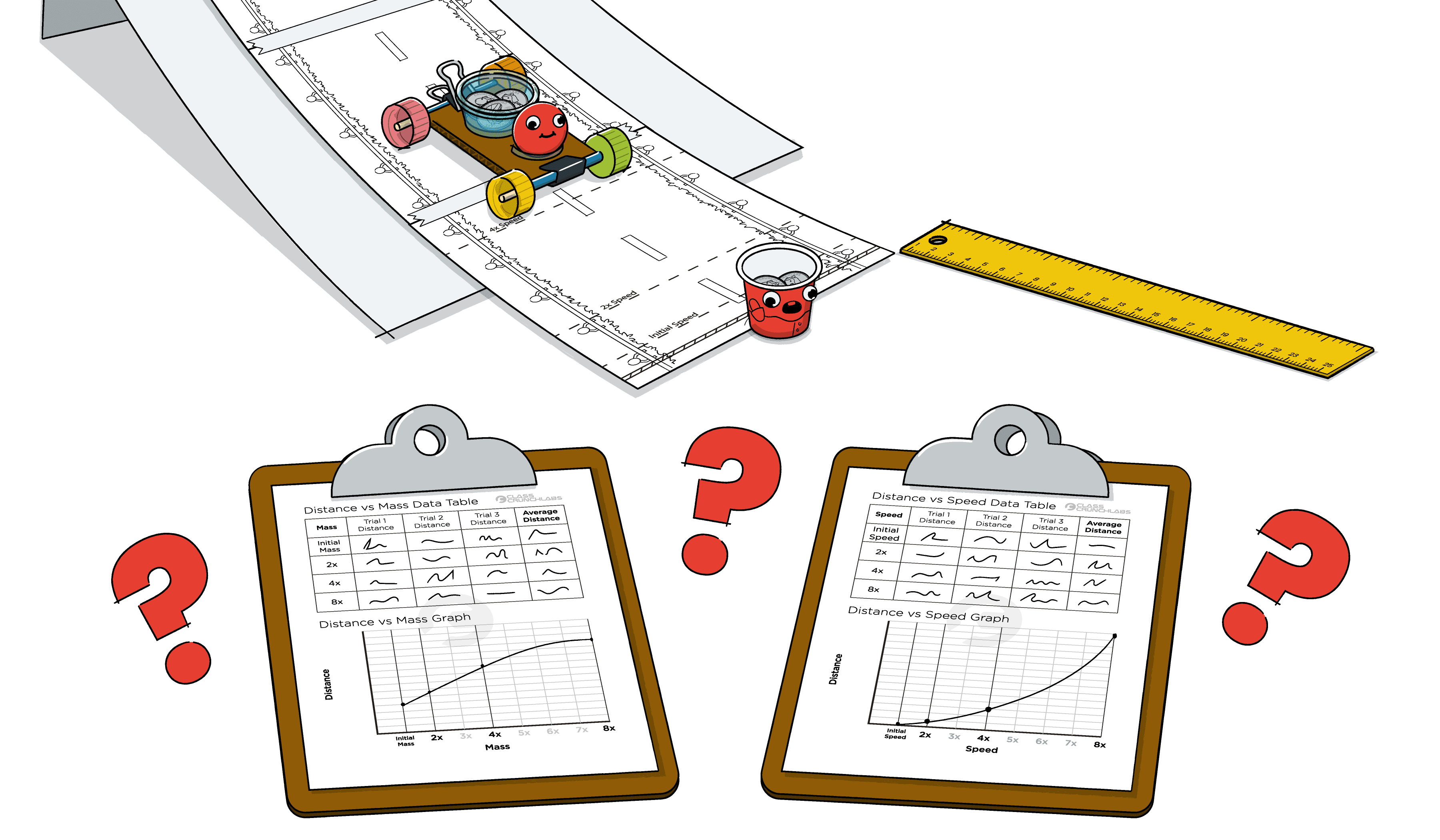
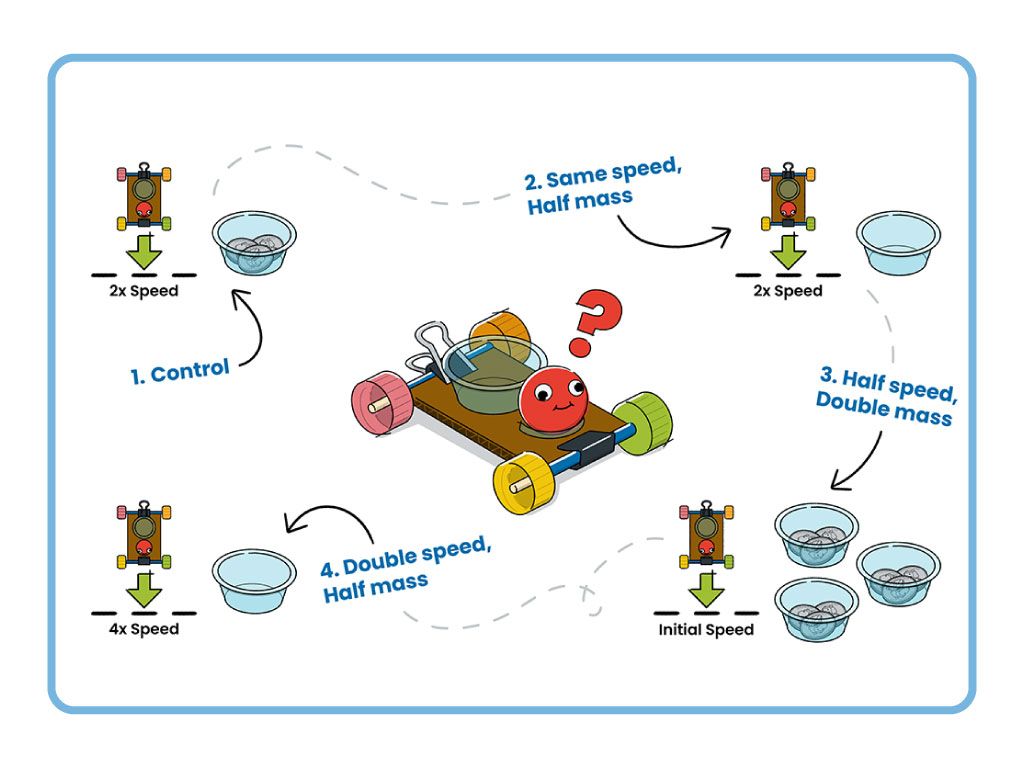
Our Amazing Cast
This team brings the “Wow!” so your students can explain the “How?”
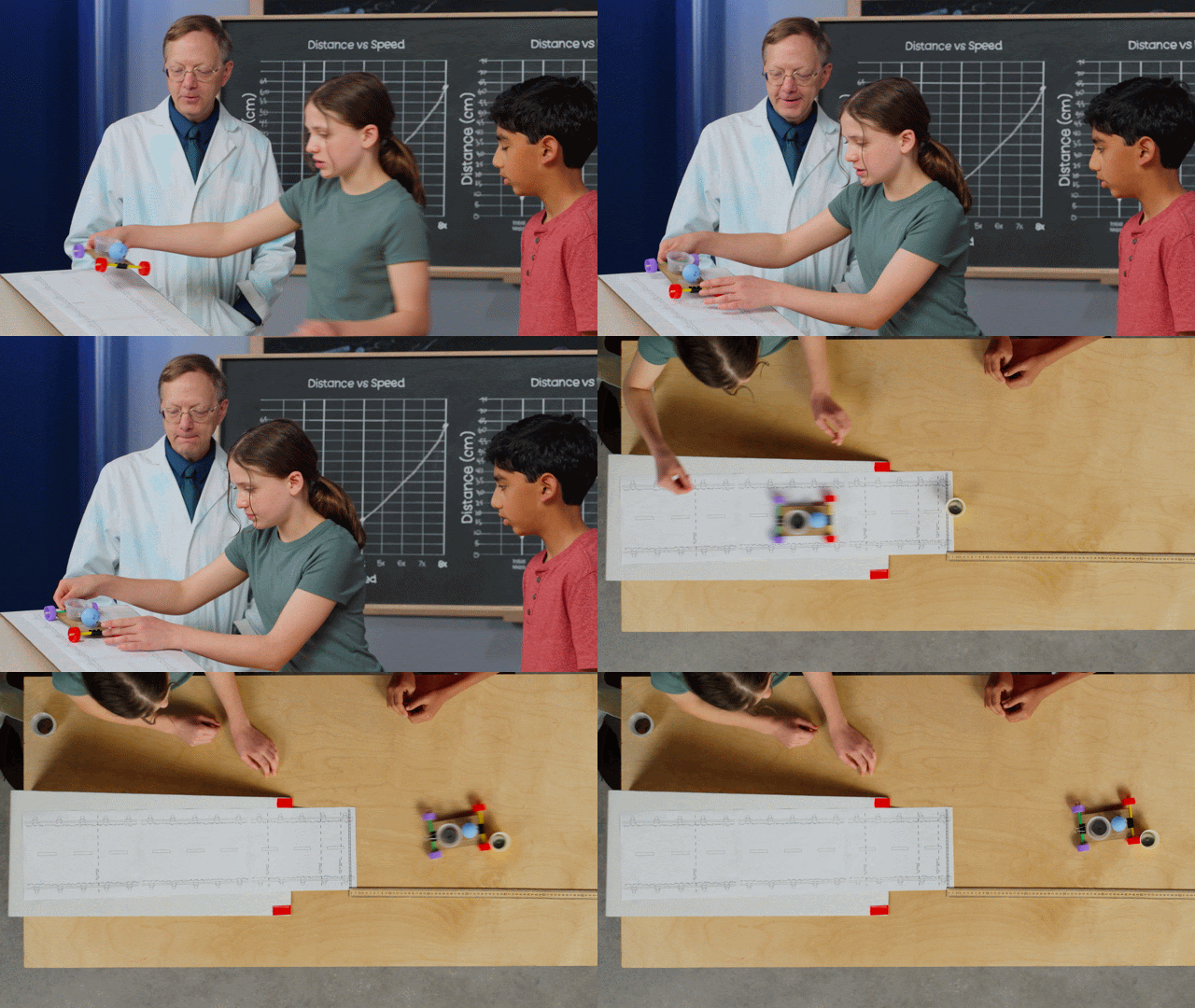
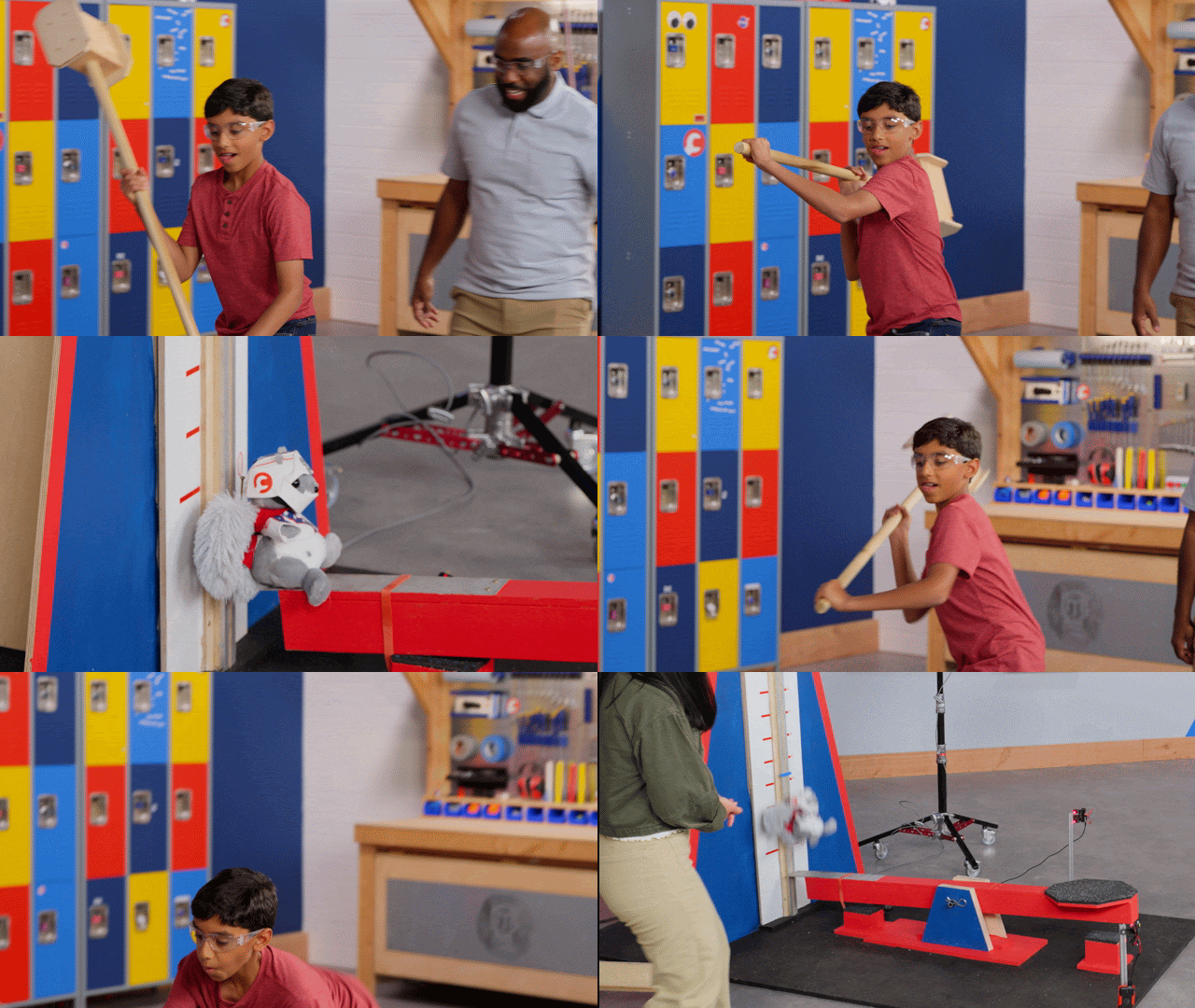
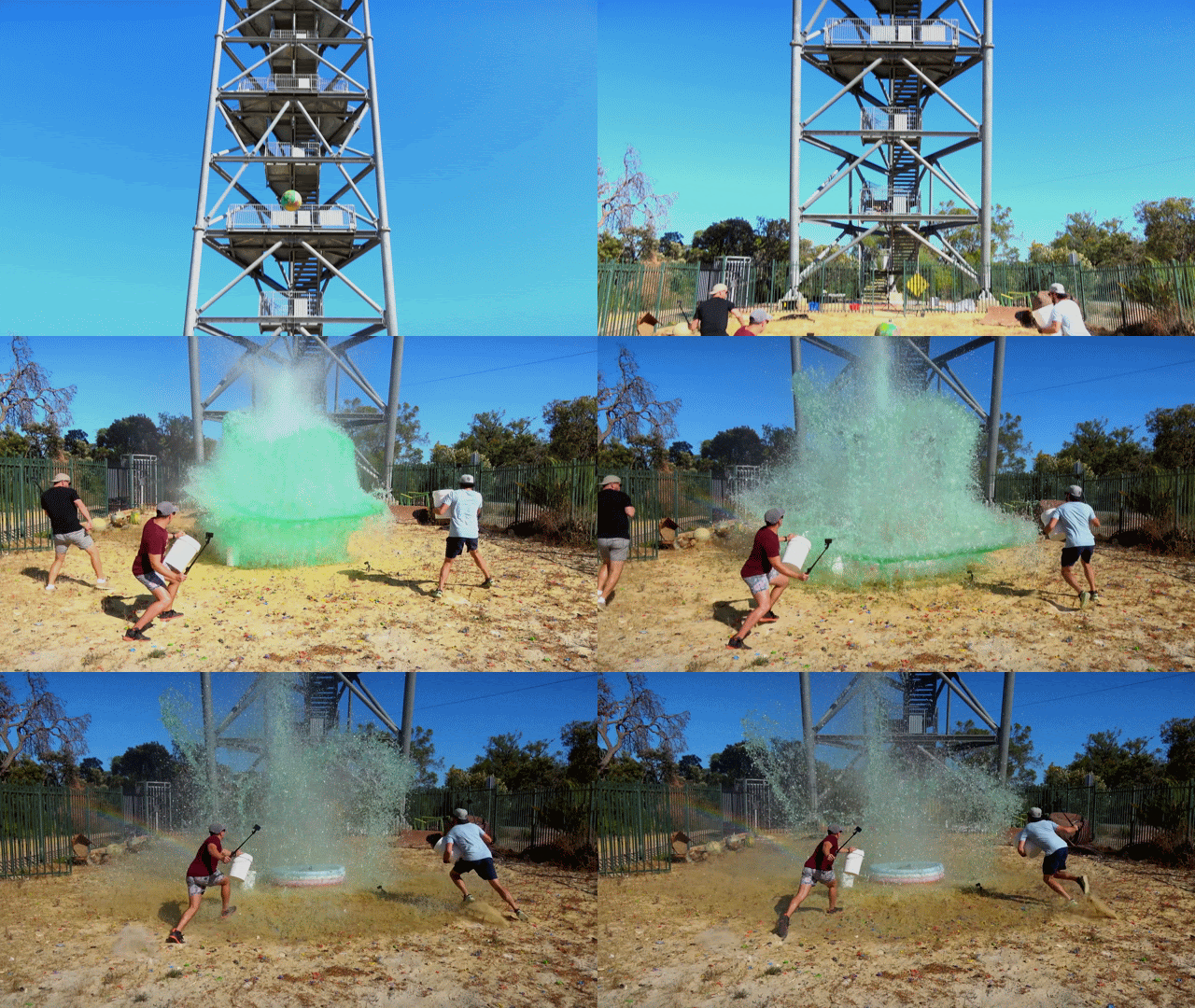
The Video Vault
Every video from the unit all in one place.
1.1 Anchor Check-In (Part 1)
1.3 Mini Rig Mayhem Prep
1.4 Mini Rig Mayhem Challenge
1.6 Anchor Check-In (Part 2)
1.9 Elementary Explainer: Energy
2.1 Lesson Recap
2.4 Unravel the Gravel Travel Prep
2.4 Unravel the Gravel Travel Challenge
2.10 Check-In with Class CrunchLabs
3.1 Lesson Recap
3.4 Ramp Proof
3.5 Too Fast, Too Curious Prep
1.1 Anchor Check-In (Part 1)
1.6 Anchor Check-In (Part 2)
1.9 Elementary Explainer: Energy
2.1 Lesson Recap
2.10 Check-In with Class CrunchLabs
3.1 Lesson Recap
4.1 Lesson Recap
4.8 Check-In with Class CrunchLabs
5.1 Lesson Recap
5.11 Check-In with Class CrunchLabs
6.1 Lesson Recap
6.13 Check-In with Class CrunchLabs
1.1 Anchor Check-In (Part 1)
1.6 Anchor Check-In (Part 2)
1.9 Elementary Explainer: Energy
2.1 Lesson Recap
2.10 Check-In with Class CrunchLabs
3.1 Lesson Recap
4.1 Lesson Recap
4.8 Check-In with Class CrunchLabs
5.1 Lesson Recap
5.11 Check-In with Class CrunchLabs
6.1 Lesson Recap
6.13 Check-In with Class CrunchLabs
Bonus: Kinetic Energy vs Watermelon
1.3 Mini Rig Mayhem Prep
1.4 Mini Rig Mayhem Challenge
2.4 Unravel the Gravel Travel Prep
2.4 Unravel the Gravel Travel Challenge
3.4 Ramp Proof
3.5 Too Fast, Too Curious Prep
3.5 Too Fast, Too Curious Challenge
4.4 Massive Mystery Prep
4.4 Massive Mystery Challenge
5.2 Predict the Push Prep
5.2 Predict the Push Challenge
5.4 Kinetic Conundrum Prep
1.3 Mini Rig Mayhem Prep
1.4 Mini Rig Mayhem Challenge
2.4 Unravel the Gravel Travel Prep
2.4 Unravel the Gravel Travel Challenge
3.4 Ramp Proof
3.5 Too Fast, Too Curious Prep
3.5 Too Fast, Too Curious Challenge
4.4 Massive Mystery Prep
4.4 Massive Mystery Challenge
5.2 Predict the Push Prep
5.2 Predict the Push Challenge
5.4 Kinetic Conundrum Prep
5.4 Kinetic Conundrum Challenge
3.12 Check-In with Class CrunchLabs
4.8 Check-In with Class CrunchLabs
3.12 Check-In with Class CrunchLabs
4.8 Check-In with Class CrunchLabs
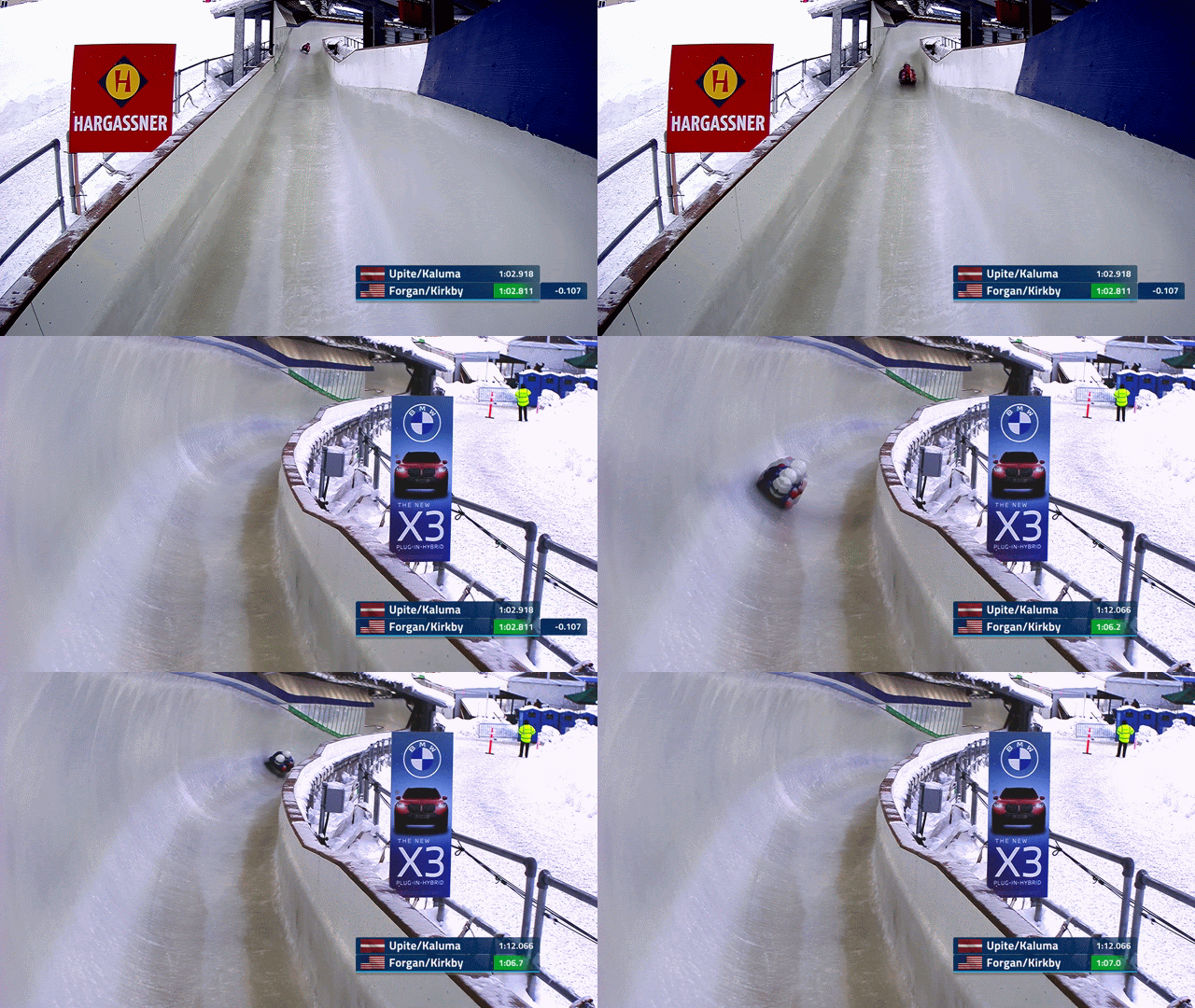
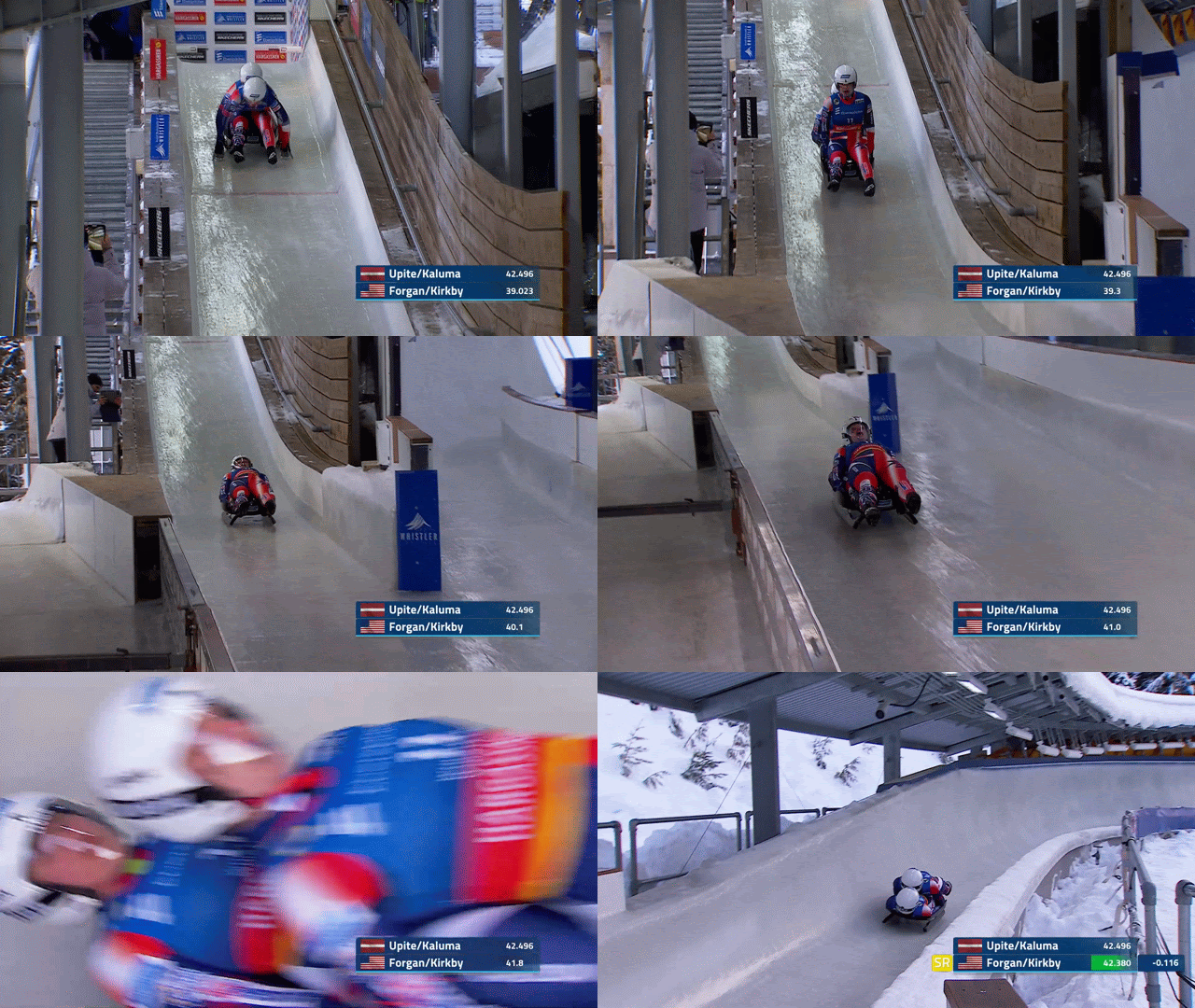
3.19 Career Connect with Luge Olympians
4.13 Making a Splash with How Ridiculous
Bonus: Q&A with How Ridiculous
3.19 Career Connect with Luge Olympians
4.13 Making a Splash with How Ridiculous
Bonus: Q&A with How Ridiculous
1.1 Anchor Check-In (Part 1)
1.6 Anchor Check-In (Part 2)
2.10 Check-In with Class CrunchLabs
3.12 Check-In with Class CrunchLabs
4.8 Check-In with Class CrunchLabs
4.13 Making a Splash with How Ridiculous
5.11 Check-In with Class CrunchLabs
6.13 Check-In with Class CrunchLabs
1.1 Anchor Check-In (Part 1)
1.6 Anchor Check-In (Part 2)
2.10 Check-In with Class CrunchLabs
3.12 Check-In with Class CrunchLabs
4.8 Check-In with Class CrunchLabs
4.13 Making a Splash with How Ridiculous
5.11 Check-In with Class CrunchLabs
6.13 Check-In with Class CrunchLabs
1.3 Mini Rig Mayhem Prep
1.4 Mini Rig Mayhem Challenge
2.4 Unravel the Gravel Travel Prep
2.4 Unravel the Gravel Travel Challenge
3.5 Too Fast, Too Curious Prep
3.5 Too Fast, Too Curious Challenge
4.4 Massive Mystery Prep
4.4 Massive Mystery Challenge
5.2 Predict the Push Prep
5.2 Predict the Push Challenge
5.4 Kinetic Conundrum Prep
5.4 Kinetic Conundrum Challenge
1.3 Mini Rig Mayhem Prep
1.4 Mini Rig Mayhem Challenge
2.4 Unravel the Gravel Travel Prep
2.4 Unravel the Gravel Travel Challenge
3.5 Too Fast, Too Curious Prep
3.5 Too Fast, Too Curious Challenge
4.4 Massive Mystery Prep
4.4 Massive Mystery Challenge
5.2 Predict the Push Prep
5.2 Predict the Push Challenge
5.4 Kinetic Conundrum Prep
5.4 Kinetic Conundrum Challenge
1.9 Elementary Explainer: Energy
1.9 Elementary Explainer: Energy
2.1 Lesson Recap
3.1 Lesson Recap
4.1 Lesson Recap
5.1 Lesson Recap
6.1 Lesson Recap
2.1 Lesson Recap
3.1 Lesson Recap
4.1 Lesson Recap
5.1 Lesson Recap
6.1 Lesson Recap
Bonus: Kinetic Energy vs Watermelon
Bonus: Q&A with Dr. Nee
Bonus: Q&A with How Ridiculous
Bonus: Kinetic Energy vs Watermelon
Bonus: Q&A with Dr. Nee
Bonus: Q&A with How Ridiculous
1.4 Mini Rig Mayhem Challenge
2.4 Unravel the Gravel Travel Challenge
3.5 Too Fast, Too Curious Challenge
4.4 Massive Mystery Challenge
5.2 Predict the Push Challenge
5.4 Kinetic Conundrum Challenge
1.4 Mini Rig Mayhem Challenge
2.4 Unravel the Gravel Travel Challenge
3.5 Too Fast, Too Curious Challenge
4.4 Massive Mystery Challenge
5.2 Predict the Push Challenge
5.4 Kinetic Conundrum Challenge
3.4 Ramp Proof
3.4 Ramp Proof
1.3 Mini Rig Mayhem Prep
2.4 Unravel the Gravel Travel Prep
3.5 Too Fast, Too Curious Prep
4.4 Massive Mystery Prep
5.2 Predict the Push Prep
5.4 Kinetic Conundrum Prep
1.3 Mini Rig Mayhem Prep
2.4 Unravel the Gravel Travel Prep
3.5 Too Fast, Too Curious Prep
4.4 Massive Mystery Prep
5.2 Predict the Push Prep
5.4 Kinetic Conundrum Prep
1.1 Anchor Check-In (Part 1)
1.3 Mini Rig Mayhem Prep
1.4 Mini Rig Mayhem Challenge
1.6 Anchor Check-In (Part 2)
1.9 Elementary Explainer: Energy
1.1 Anchor Check-In (Part 1)
1.3 Mini Rig Mayhem Prep
1.4 Mini Rig Mayhem Challenge
1.6 Anchor Check-In (Part 2)
1.9 Elementary Explainer: Energy
2.1 Lesson Recap
2.4 Unravel the Gravel Travel Prep
2.4 Unravel the Gravel Travel Challenge
2.10 Check-In with Class CrunchLabs
2.1 Lesson Recap
2.4 Unravel the Gravel Travel Prep
2.4 Unravel the Gravel Travel Challenge
2.10 Check-In with Class CrunchLabs
3.1 Lesson Recap
3.4 Ramp Proof
3.5 Too Fast, Too Curious Prep
3.5 Too Fast, Too Curious Challenge
3.12 Check-In with Class CrunchLabs
3.19 Career Connect with Luge Olympians
3.1 Lesson Recap
3.4 Ramp Proof
3.5 Too Fast, Too Curious Prep
3.5 Too Fast, Too Curious Challenge
3.12 Check-In with Class CrunchLabs
3.19 Career Connect with Luge Olympians
4.1 Lesson Recap
4.4 Massive Mystery Prep
4.4 Massive Mystery Challenge
4.8 Check-In with Class CrunchLabs
4.13 Making a Splash with How Ridiculous
4.1 Lesson Recap
4.4 Massive Mystery Prep
4.4 Massive Mystery Challenge
4.8 Check-In with Class CrunchLabs
4.13 Making a Splash with How Ridiculous
5.1 Lesson Recap
5.2 Predict the Push Prep
5.2 Predict the Push Challenge
5.4 Kinetic Conundrum Prep
5.4 Kinetic Conundrum Challenge
5.11 Check-In with Class CrunchLabs
5.1 Lesson Recap
5.2 Predict the Push Prep
5.2 Predict the Push Challenge
5.4 Kinetic Conundrum Prep
5.4 Kinetic Conundrum Challenge
5.11 Check-In with Class CrunchLabs
6.1 Lesson Recap
6.13 Check-In with Class CrunchLabs
6.1 Lesson Recap
6.13 Check-In with Class CrunchLabs
3.19 Career Connect with Luge Olympians
3.19 Career Connect with Luge Olympians
What's Next?
More experiments. More discoveries. Pick your next adventure!
The Core Unit Team
Meet the educators, engineers, leaders, and visual storytellers who led this unit from idea to launch.





















Teamwork makes the dream work!
More than 100 people worked together to make this unit a reality.


Tell us what you think!
Class CrunchLabs is just getting started! After you've reviewed or taught this pilot, we'd love your feedback. You can also drop us an email: class@crunchlabs.com (opens in new tab)