Carnival of Collisions
Let the games begin!
A slingshot. Giant pins. Mark Rober as a human bowling ball. You can't win if you don't play. Are you in?
Topics Covered
Standards
Grades
Carnival of Collisions
Unit Overview
What makes carnival games look so easy to play, but so hard to win?
The secret to winning carnival games isn't luck — its physics. Through hands-on challenges, students investigate how weight, stability, and force are secretly running the show. Then they use what they learn to engineer their own game with a hidden trick. They design it, test it, and pitch it to the class. The real prize? Knowing the science behind every gimmick.

It's Three Dimensional!
Carnival of Collisions
Unit Storyline
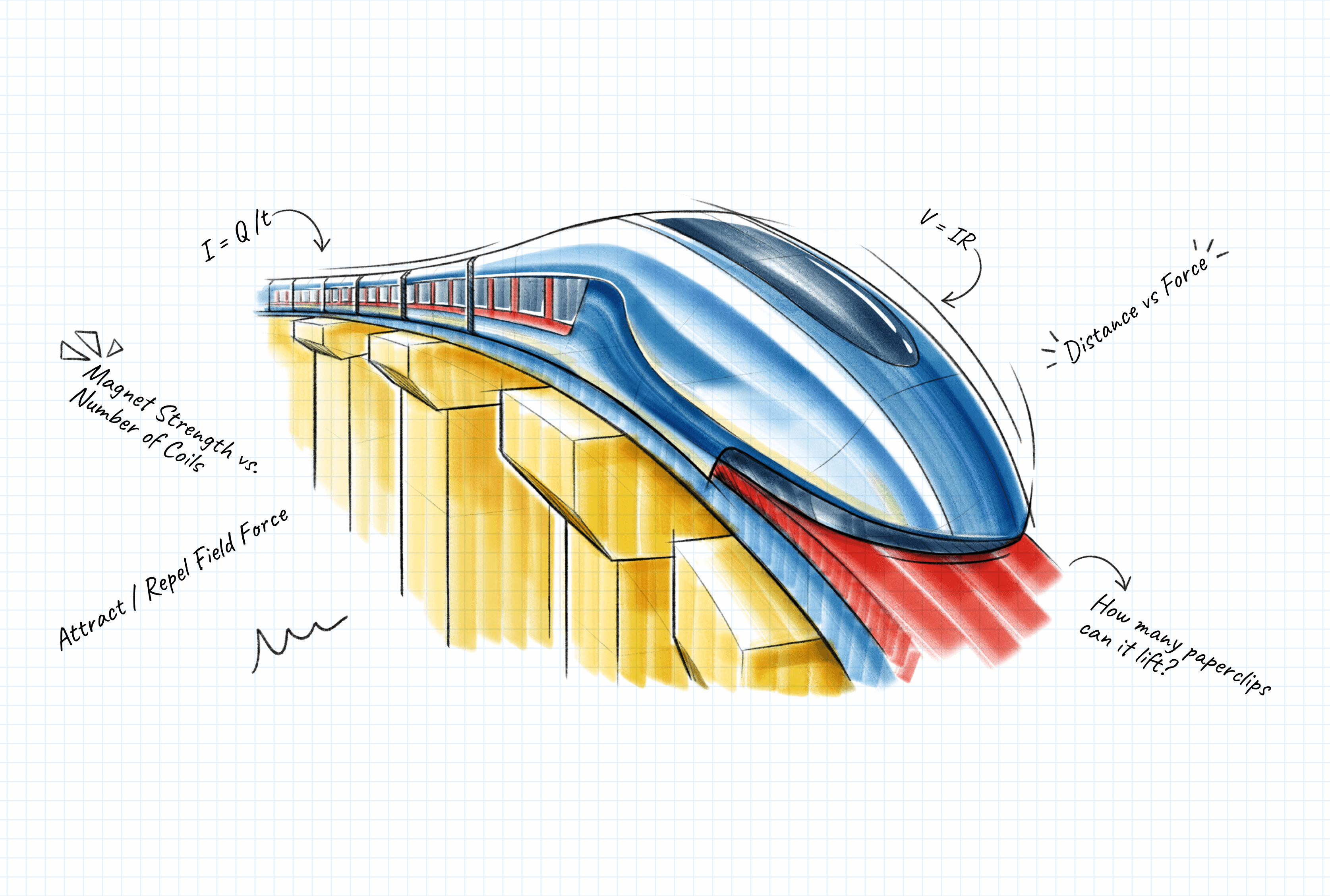
A puzzling phenomenon, not a textbook, drives the learning in Carnival of Collisions as students investigate the workings of a futuristic train. Every question leads to another, turning a series of lessons into a single connected journey toward an overarching answer.
What we do
• Explore two carnival games with Mark and friends.
• Play carnival games similar to the ones that stumped Mark.
• Come up with possible explanations for how carnival games are made to keep us from winning.What we figure out
• Carnival games are designed to look simple but are actually hard to win.
• The results of the collisions in carnival games can lead to unexpected changes in motion.
• The carnival games must change or hide something about either the targets or the things we use to hit the targets.How we show it
Individually:
• Draft early explanations and models to show what we think makes carnival games hard to win.
• Form questions that we want to answer about how the carnival games work.
As a class:
• Develop a class initial explanation.
• Collect ideas and questions to investigate together.
• Brainstorm ways to investigate the class’s questions. (opens in new tab)Lesson goals
• Construct an initial explanation, using a model, to show how the characteristics of pieces, and the way they collide, affect the resulting motion in a carnival game.
• Propose ways to investigate and collect evidence for why the components of game systems move differently even as similar forces are applied.What we do
• Explore some data about one of the carnival games introduced in Lesson 1.
• Collaboratively plan and carry out an investigation to see whether lighter and heavier targets move differently after a collision. Discuss and make sense of our findings.
• Plan and carry out an investigation about how the location of the weight in a target affects its stability.
• Make sense of our findings and add ideas to our Class Initial Explanation Chart.What we figure out
• When hit with the same force, heavier targets move less than lighter targets.
• Making the striker heavier causes it to apply more force.
• Forces and motion can be described from different points of view at different times.
• During a collision, targets are less stable (that is, easier to knock down) when the weight is placed higher on the target.How we show it
Individually:
• Develop an investigation plan.
• Conduct investigations and discuss our findings.
• Make our thinking visible in our Mission Logs.
• Complete a Status Check short assessment.
As a class:
• Create an investigation plan. • Develop Results Recap Poster.Lesson goals
• Plan an investigation to explore how the weight of an object affects how the object moves after a collision.
• Analyze and interpret data from an investigation to identify and explain patterns in how weight and weight distribution affect motion and stability in collisions.What we do
• Use syringes and ramps with marbles to investigate force pairs.
• Plan and carry out an investigation to figure out how changing the mass and/or speed of things affects the forces.What we figure out
• However much force the striker applies, the target applies a force back equally and in the opposite direction.
How we show it
Individually:
• Conduct investigations and discuss our findings.
• Plan an investigation and make improvements in response to peer feedback.
• Complete a Status Check short assessment.As a class:
• Make investigation plans and predictions.
• Develop a force diagram.
• Update our initial explanation about the striker and target.Lesson goals
• Construct a visual explanation based on quantitative data to explain that when objects in a system collide, the force they exert on each other is the same but in opposite directions.
• Collaboratively and individually plan an investigation to describe how the change in motion of two specific objects depends on the forces acting on the objects and that changes in mass and/or speed can change the strength of forces.What we do
• Try to identify the hidden tricks for two new carnival games.
• Develop a checklist to help us design an investigation to identify hidden tricks in a carnival game.
• Learn about a new engineering design challenge.What we figure out
• We can plan an investigation in order to identify the hidden trick in a new carnival game.
• We can decide how an investigation needs to be designed in order to produce results we can trust.How we show it
Individually:
• Develop an investigation plan to identify the hidden science trick in a carnival game.
• Apply science ideas to an investigation used to figure out how a carnival game works.
As a class:
• Brainstorm criteria required to design an investigationLesson goal
• Collaboratively and individually plan an investigation to describe how the change in motion of two specific objects depends on the forces acting on the objects and that changes in mass and/or speed can change the strength of forces.
What we do
• Use design specifications to identify criteria and constraints.
• Revise initial designs.
• Form collaborative design teams.
• Describe and make sense of the Engineering Design Process (EDP).
• Prototype design sprints (multiple iterations).
• Capture data to inform future design.What we figure out
• The EDP requires the application of science ideas.
• The EDP involves multiple phases, including “See,” “Question,” “Imagine,” “Realize,” “Evaluate,” “Launch or Learn,” and “Storytelling.”
• The EDP is not a linear process.How we show it
Individually:
• Draw a diagram of a game design.
• Give and receive feedback as the prototypes evolve.Lesson goal
• Apply Newton’s Laws regarding forces and motion on interacting objects to design, construct, and evaluate a model (prototype) of a carnival game.
What we do
• Use our science ideas to design a hack for one carnival game.
• See and hear how engineers provide feedback to each other.
• Revise our individual design hacks based on peer feedback.
• Test our game designs with other people to see how fun they are to play.
• Use the feedback from our testing to create a final game design pitch to submit to Class CrunchLabs.What we figure out
• Models can be used to explain how our physics trick works.
• Feedback helps us improve or move our thinking forward.
• We can design experiences that are accessible and bring joy to our community.How we show it
Individually:
• Design and revise our own game hack.
• Provide feedback to classmates to help with their game design pitches.
• Develop and deliver pitches for our own carnival games.
As a class:
• Develop a list of criteria for successful pitches.Lesson goals
• Apply Newton’s Laws regarding forces and motion on interacting objects to design, construct, and test a model (prototype) of a carnival game.
• Communicate scientific and technical information through annotated models and presentations about how interacting components and forces in a designed system produce and control motion.
• Develop and deliver a pitch that makes people excited to play new carnival games and persuades other students to try them.
The Anchor
What we do
• Explore two carnival games with Mark and friends.
• Play carnival games similar to the ones that stumped Mark.
• Come up with possible explanations for how carnival games are made to keep us from winning.
What we figure out
• Carnival games are designed to look simple but are actually hard to win.
• The results of the collisions in carnival games can lead to unexpected changes in motion.
• The carnival games must change or hide something about either the targets or the things we use to hit the targets.
How we show it
Individually:
• Draft early explanations and models to show what we think makes carnival games hard to win.
• Form questions that we want to answer about how the carnival games work.
As a class:
• Develop a class initial explanation.
• Collect ideas and questions to investigate together.
• Brainstorm ways to investigate the class’s questions. (opens in new tab)
Lesson goals
• Construct an initial explanation, using a model, to show how the characteristics of pieces, and the way they collide, affect the resulting motion in a carnival game.
• Propose ways to investigate and collect evidence for why the components of game systems move differently even as similar forces are applied.
Weight & Motion
What we do
• Explore some data about one of the carnival games introduced in Lesson 1.
• Collaboratively plan and carry out an investigation to see whether lighter and heavier targets move differently after a collision. Discuss and make sense of our findings.
• Plan and carry out an investigation about how the location of the weight in a target affects its stability.
• Make sense of our findings and add ideas to our Class Initial Explanation Chart.
What we figure out
• When hit with the same force, heavier targets move less than lighter targets.
• Making the striker heavier causes it to apply more force.
• Forces and motion can be described from different points of view at different times.
• During a collision, targets are less stable (that is, easier to knock down) when the weight is placed higher on the target.
How we show it
Individually:
• Develop an investigation plan.
• Conduct investigations and discuss our findings.
• Make our thinking visible in our Mission Logs.
• Complete a Status Check short assessment.
As a class:
• Create an investigation plan. • Develop Results Recap Poster.
Lesson goals
• Plan an investigation to explore how the weight of an object affects how the object moves after a collision.
• Analyze and interpret data from an investigation to identify and explain patterns in how weight and weight distribution affect motion and stability in collisions.
Equal & Opposite
What we do
• Use syringes and ramps with marbles to investigate force pairs.
• Plan and carry out an investigation to figure out how changing the mass and/or speed of things affects the forces.
What we figure out
• However much force the striker applies, the target applies a force back equally and in the opposite direction.
How we show it
Individually:
• Conduct investigations and discuss our findings.
• Plan an investigation and make improvements in response to peer feedback.
• Complete a Status Check short assessment.
As a class:
• Make investigation plans and predictions.
• Develop a force diagram.
• Update our initial explanation about the striker and target.
Lesson goals
• Construct a visual explanation based on quantitative data to explain that when objects in a system collide, the force they exert on each other is the same but in opposite directions.
• Collaboratively and individually plan an investigation to describe how the change in motion of two specific objects depends on the forces acting on the objects and that changes in mass and/or speed can change the strength of forces.
Hidden Trick
What we do
• Try to identify the hidden tricks for two new carnival games.
• Develop a checklist to help us design an investigation to identify hidden tricks in a carnival game.
• Learn about a new engineering design challenge.
What we figure out
• We can plan an investigation in order to identify the hidden trick in a new carnival game.
• We can decide how an investigation needs to be designed in order to produce results we can trust.
How we show it
Individually:
• Develop an investigation plan to identify the hidden science trick in a carnival game.
• Apply science ideas to an investigation used to figure out how a carnival game works.
As a class:
• Brainstorm criteria required to design an investigation
Lesson goal
• Collaboratively and individually plan an investigation to describe how the change in motion of two specific objects depends on the forces acting on the objects and that changes in mass and/or speed can change the strength of forces.
Engineering Design Process
What we do
• Use design specifications to identify criteria and constraints.
• Revise initial designs.
• Form collaborative design teams.
• Describe and make sense of the Engineering Design Process (EDP).
• Prototype design sprints (multiple iterations).
• Capture data to inform future design.
What we figure out
• The EDP requires the application of science ideas.
• The EDP involves multiple phases, including “See,” “Question,” “Imagine,” “Realize,” “Evaluate,” “Launch or Learn,” and “Storytelling.”
• The EDP is not a linear process.
How we show it
Individually:
• Draw a diagram of a game design.
• Give and receive feedback as the prototypes evolve.
Lesson goal
• Apply Newton’s Laws regarding forces and motion on interacting objects to design, construct, and evaluate a model (prototype) of a carnival game.
Storytelling & Design
What we do
• Use our science ideas to design a hack for one carnival game.
• See and hear how engineers provide feedback to each other.
• Revise our individual design hacks based on peer feedback.
• Test our game designs with other people to see how fun they are to play.
• Use the feedback from our testing to create a final game design pitch to submit to Class CrunchLabs.
What we figure out
• Models can be used to explain how our physics trick works.
• Feedback helps us improve or move our thinking forward.
• We can design experiences that are accessible and bring joy to our community.
How we show it
Individually:
• Design and revise our own game hack.
• Provide feedback to classmates to help with their game design pitches.
• Develop and deliver pitches for our own carnival games.
As a class:
• Develop a list of criteria for successful pitches.
Lesson goals
• Apply Newton’s Laws regarding forces and motion on interacting objects to design, construct, and test a model (prototype) of a carnival game.
• Communicate scientific and technical information through annotated models and presentations about how interacting components and forces in a designed system produce and control motion.
• Develop and deliver a pitch that makes people excited to play new carnival games and persuades other students to try them.
Unit Materials
Our materials provide a roadmap for teachers and students. They’re standards-aligned, use evidence-backed strategies, and are built to actually work.

Mission Launch Deck
Your command center. Slides include discussion prompts, embedded videos, and directions for hands-on challenges, all in an editable deck.
 Open in Google Drive
Teacher Mission Manual
The TMM has background info, lesson breakdowns, materials and preparation lists, assessment overviews, and tips to pull the whole thing off.
Open in Google Drive
Student Mission Log
Every scientist and engineer needs a place to record their questions, investigation plans, and data and track their progress.
Open in Google Drive
Status Check Assessments
Status Checks help teachers see where every student stands and understand what's clicking and what's not.
Open in Google Drive
Teacher Assessment Guidance
Things to look for in student responses so you can give feedback that actually moves the needle.
Open in Google Drive
Handouts
Readings, worksheets, and other print materials your students need to make the most of the unit.
Open in Google Drive
Other Materials
Flashcards, tools for hands-on investigations, and other unit-specific resources.
Open in Google Drive
Supply List
Your shopping list for hands-on challenges and other classroom materials.
Open in Google DriveHands-On Challenges
These videos show you how to use everyday items in activities that make abstract concepts click, because the best way to learn science is to DO it.
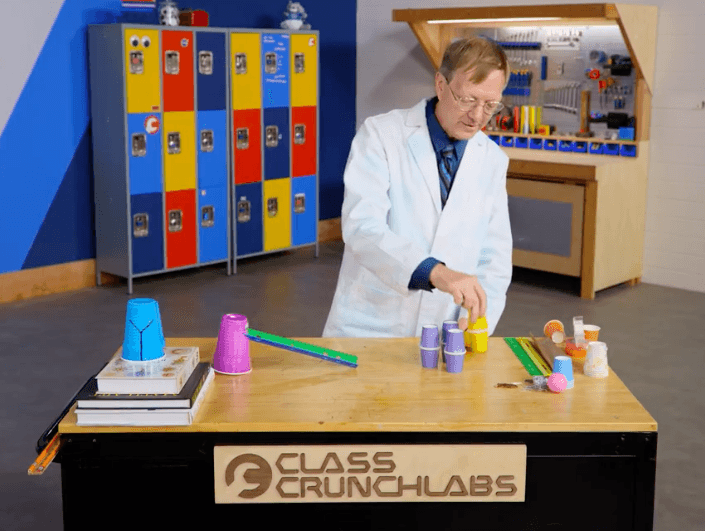
Carnival Game Teacher Prep
Carnival Game Challenge
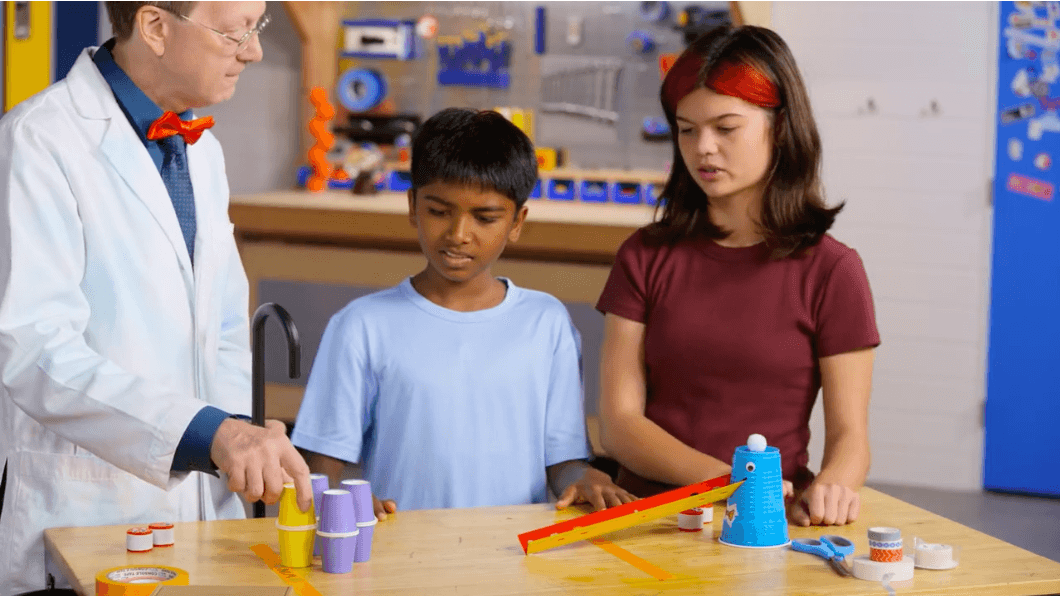
Zoom and Boom Teacher Prep
Zoom and Boom Challenge
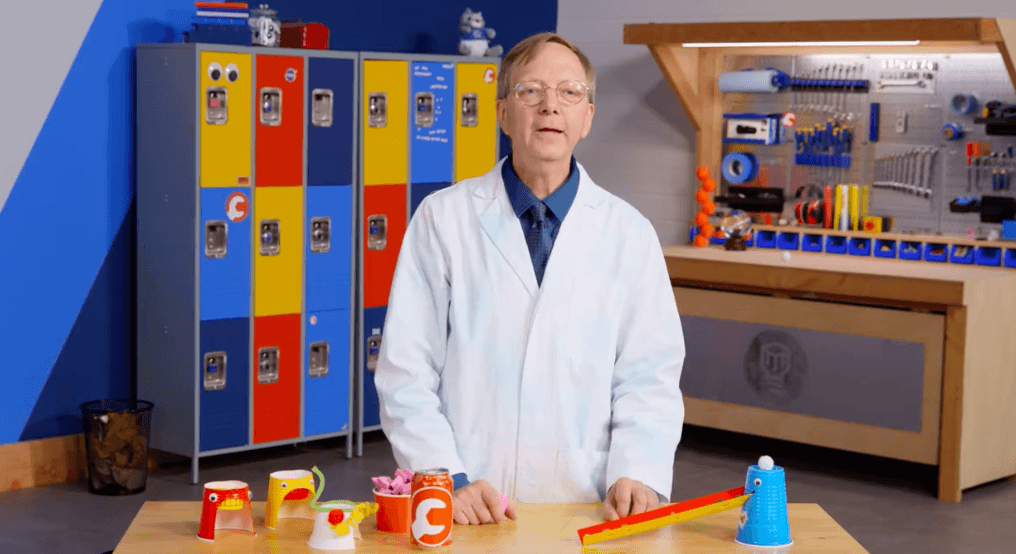
Bounce Back Demo Teacher Prep

Play with Plungers Teacher Prep
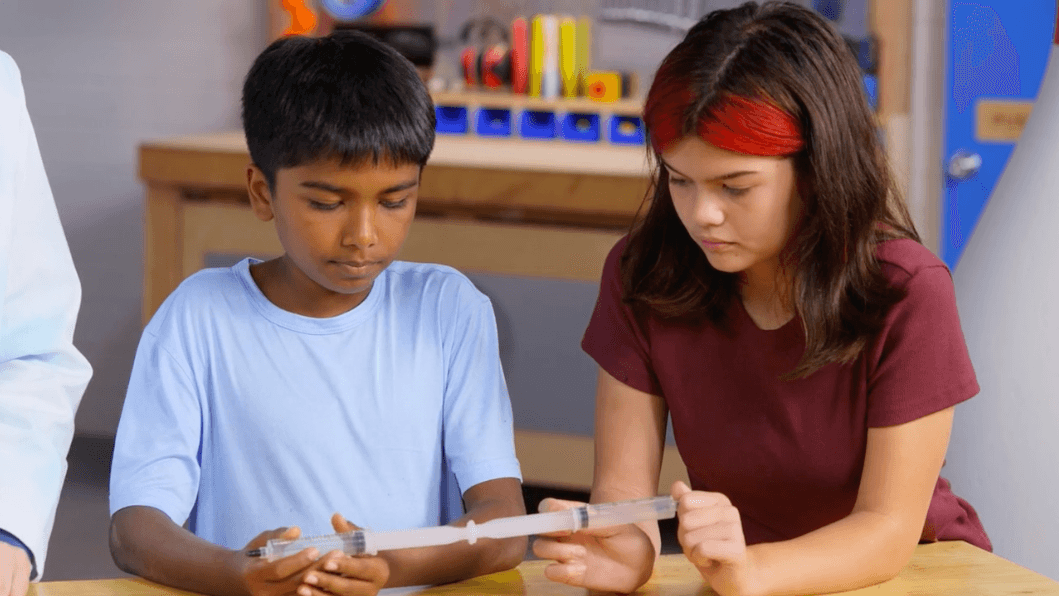
Play with Plungers Challenge
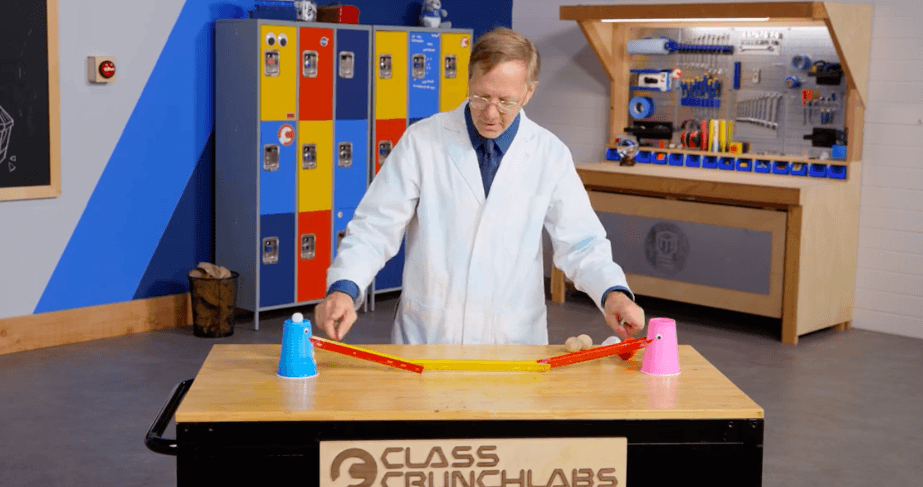
Sumo Spheres Teacher Prep 1
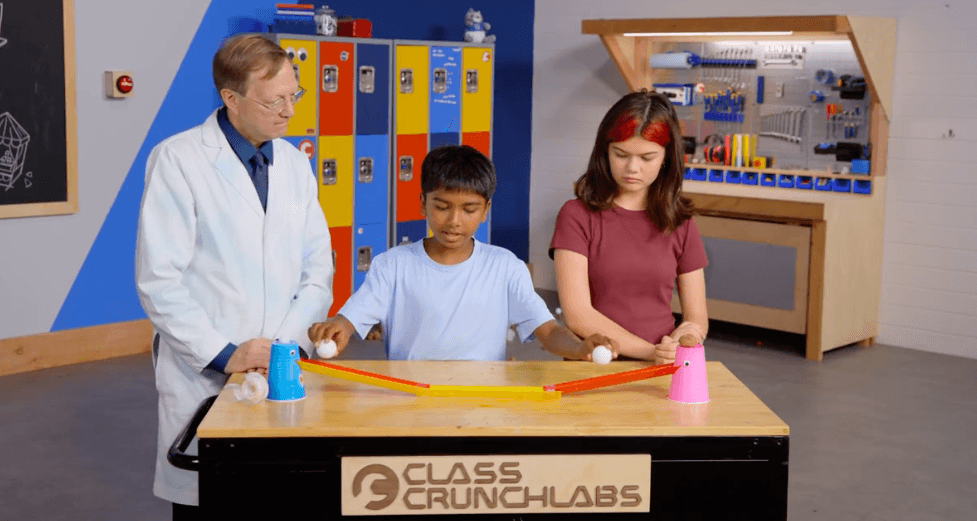
Sumo Spheres Challenge 1
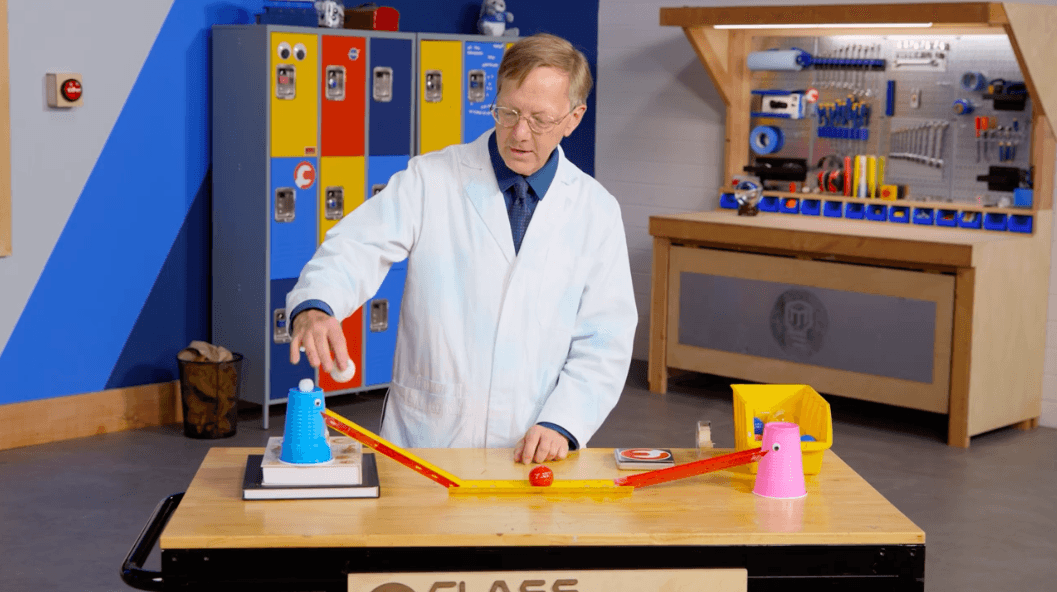
Sumo Spheres Teacher Prep 2
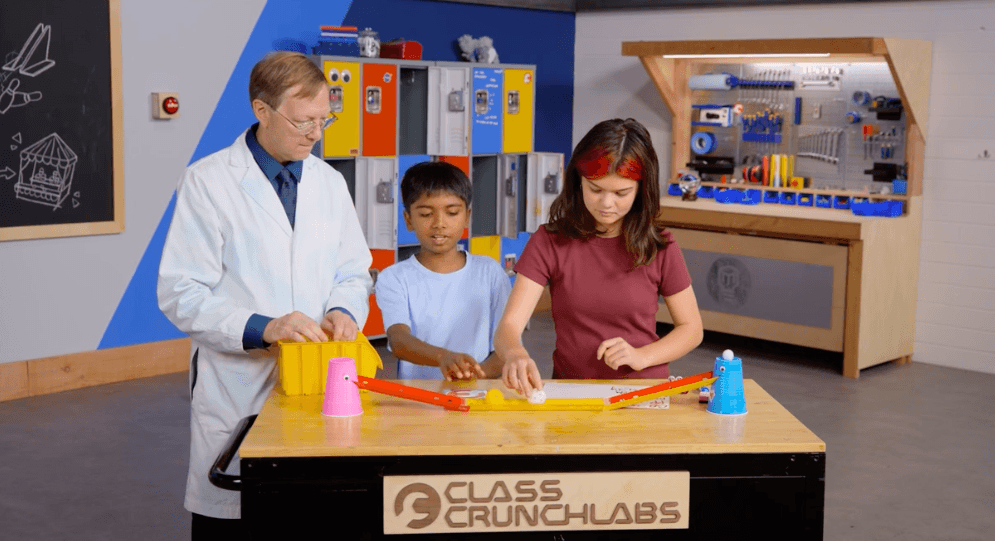
Sumo Spheres Challenge 2
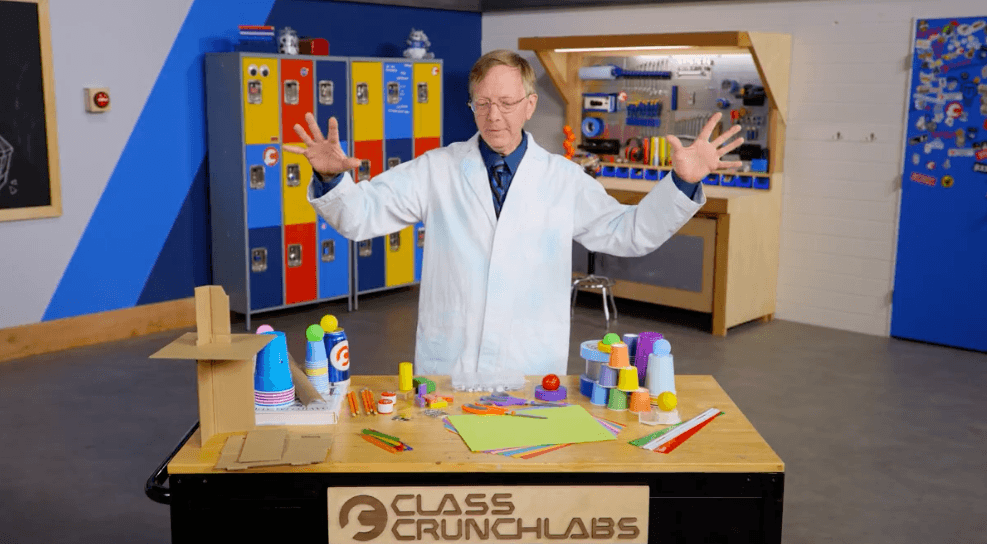
Design Challenge Teacher Prep
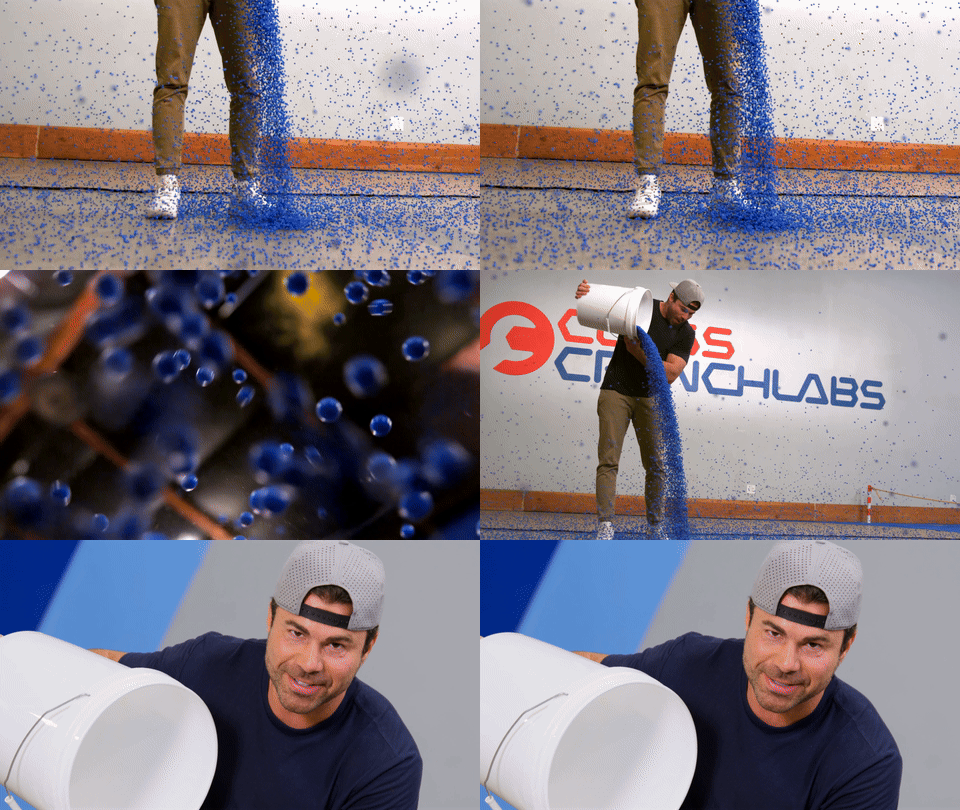
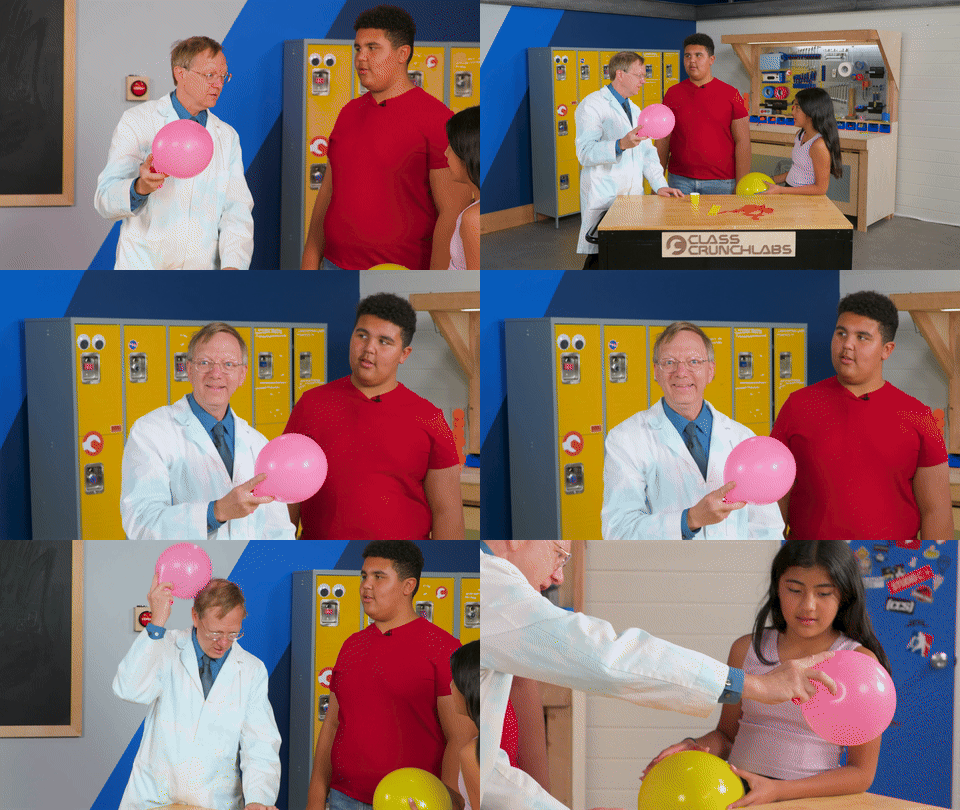
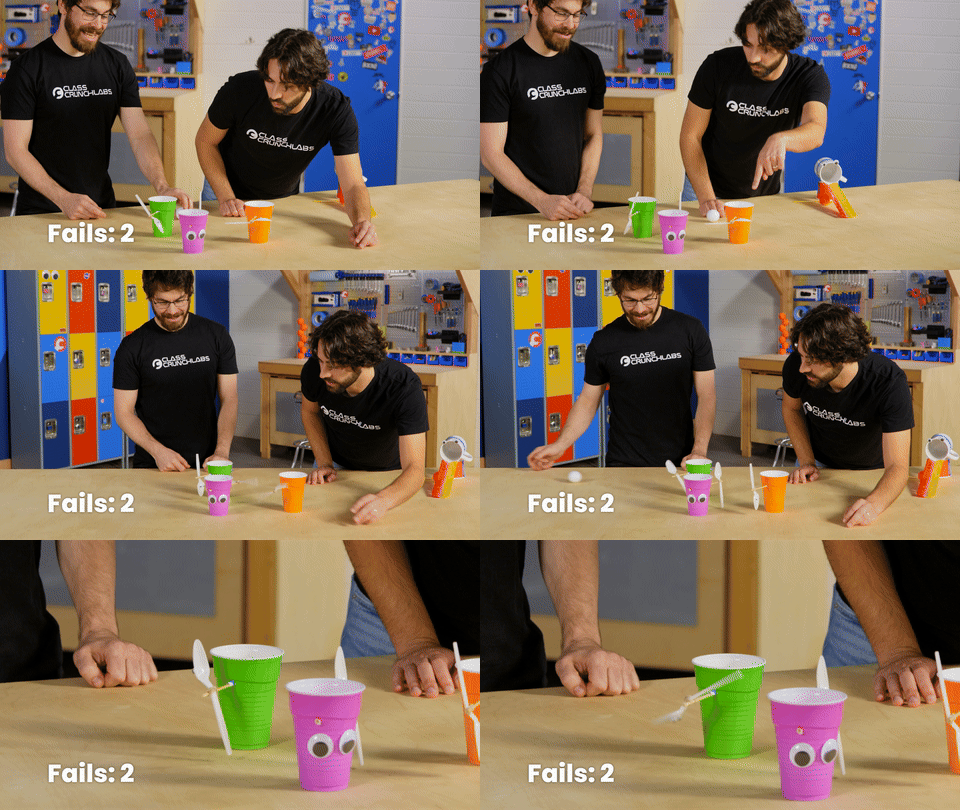
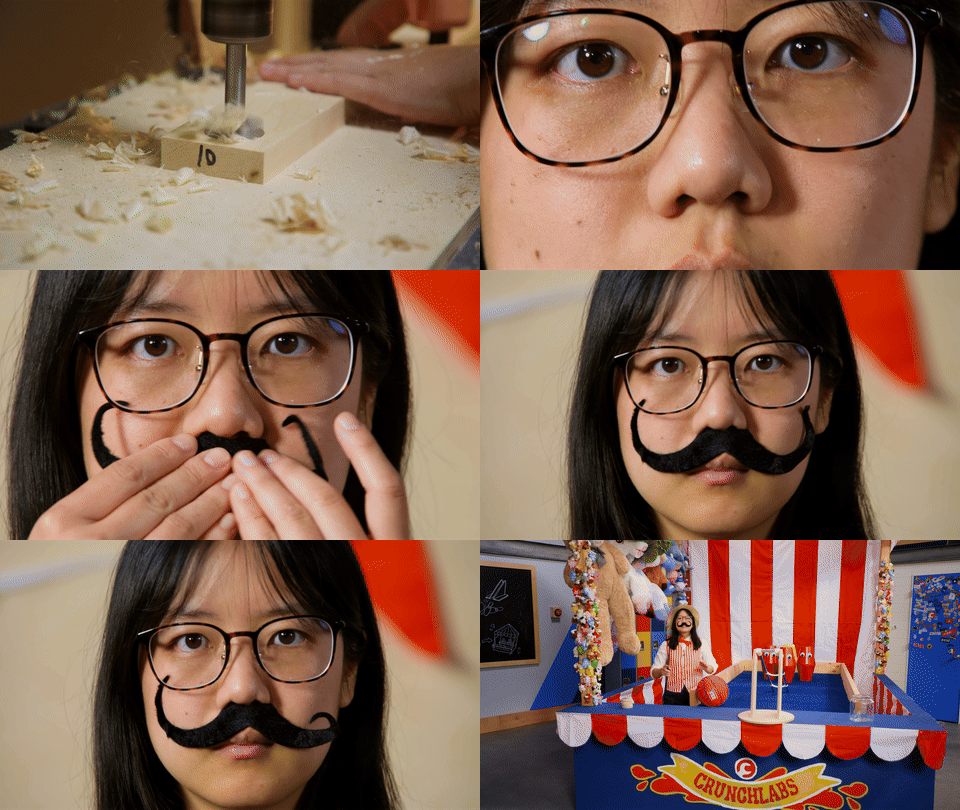
Our Amazing Cast
This team brings the “Wow!” so your students can explain the “How?”
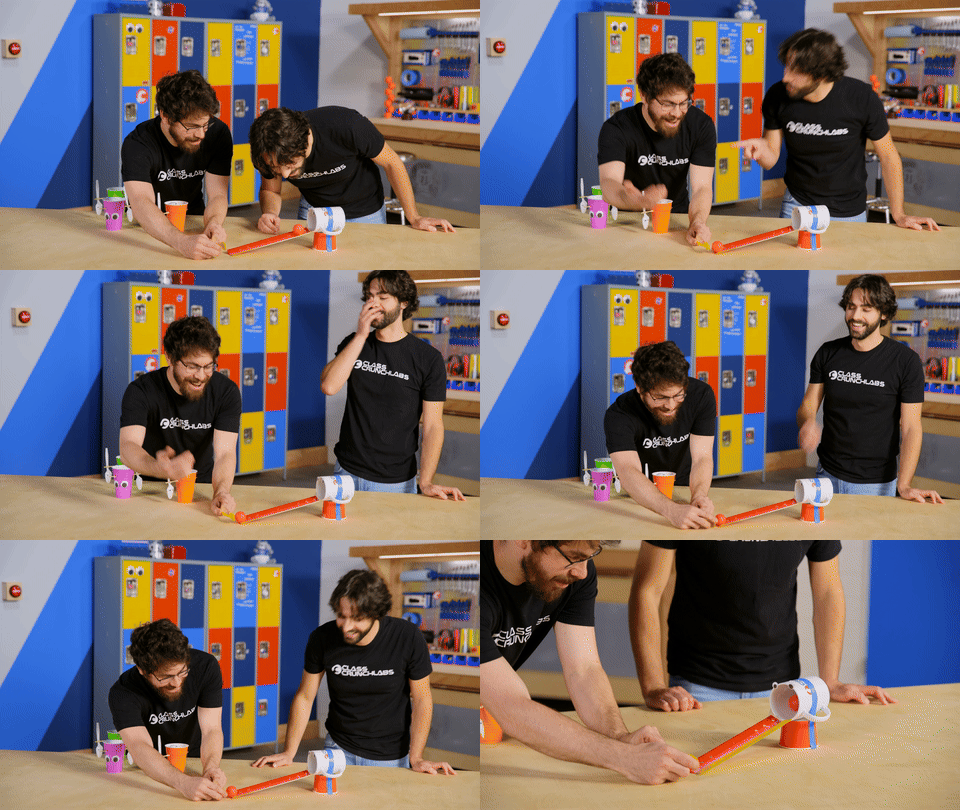
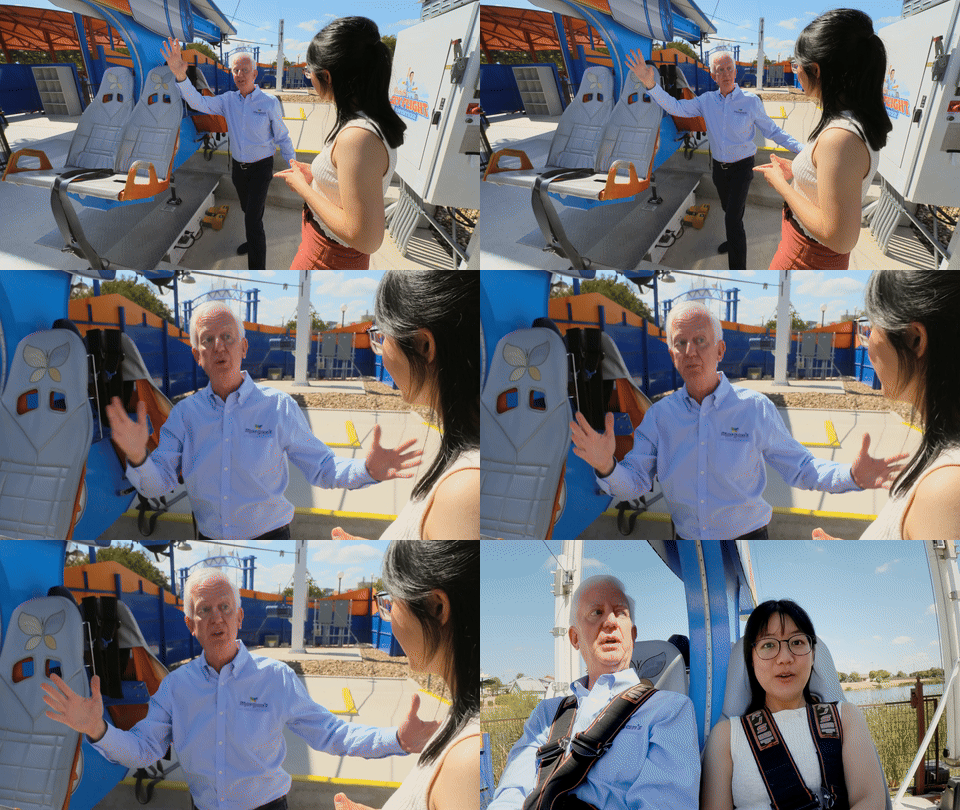
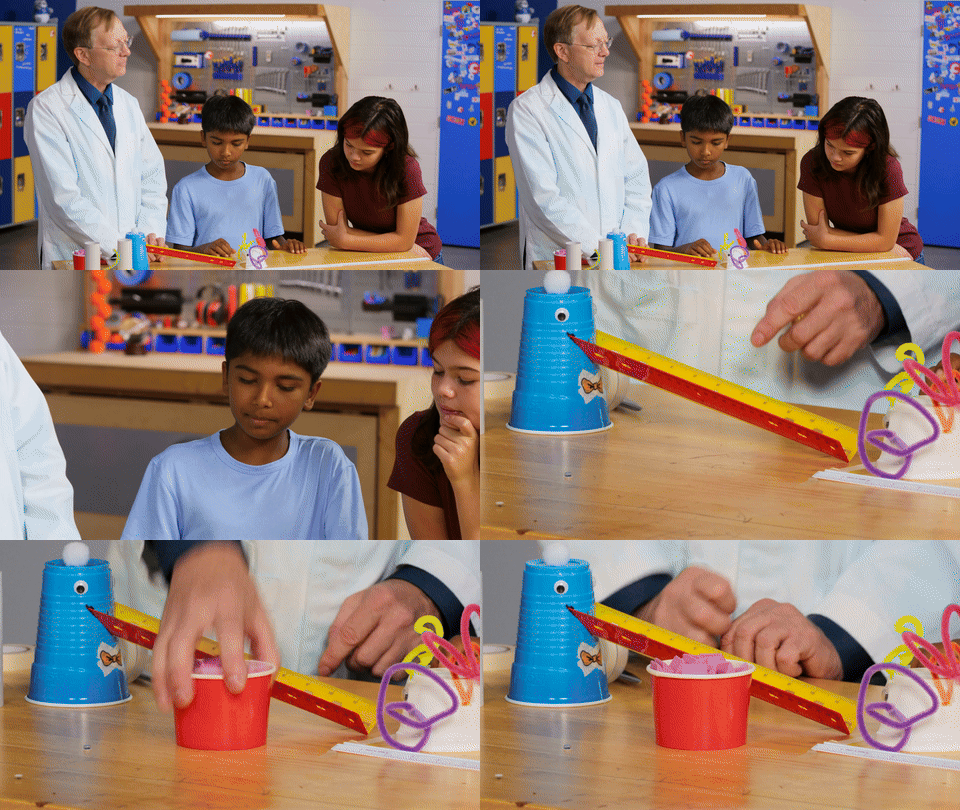
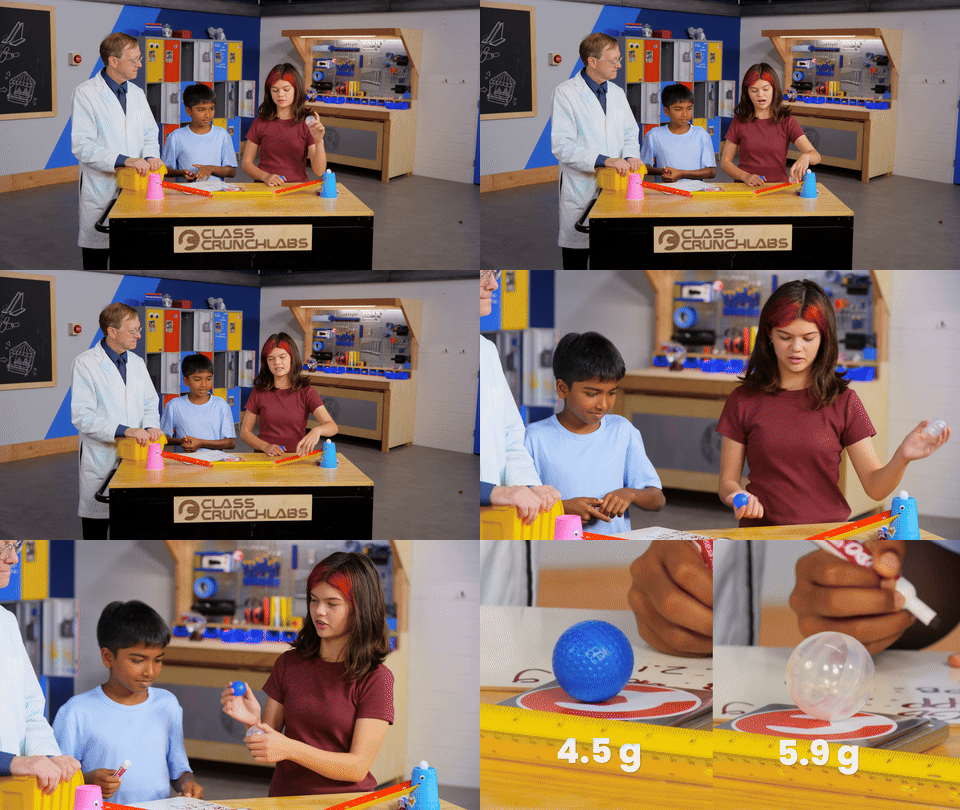
The Video Vault
Every video from the unit all in one place.
1.2 Anchor Check-In
1.4 Carnival Game Prep
1.4 Carnival Game Challenge
2.1 Recap
2.4 Elementary Explainer - Forces
2.9 Zoom and Boom Prep
2.9 Zoom and Boom Challenge
2.20 Check-in with CCL
3.1 Recap
3.3 Bounce Back Demo Prep
3.6 Play with Plungers Prep
3.6 Play with Plungers Challenge
6.1 Recap
6.1 Recap
5.1 Recap
5.12 Design Challenge Prep
5.12 A Message from Mark
5.1 Recap
5.12 Design Challenge Prep
5.12 A Message from Mark
4.1 Recap
4.2 Check-In with Toy Designers
4.6 Morgan's Wonderland
4.1 Recap
4.2 Check-In with Toy Designers
4.6 Morgan's Wonderland
3.1 Recap
3.3 Bounce Back Demo Prep
3.6 Play with Plungers Prep
3.6 Play with Plungers Challenge
3.7 Sumo Spheres Prep (Part 1)
3.7 Sumo Spheres Challenge (Part 1)
3.9 Sumo Spheres Prep (Part 2)
3.9 Sumo Spheres Exploration (Part 2)
3.1 Recap
3.3 Bounce Back Demo Prep
3.6 Play with Plungers Prep
3.6 Play with Plungers Challenge
3.7 Sumo Spheres Prep (Part 1)
3.7 Sumo Spheres Challenge (Part 1)
3.9 Sumo Spheres Prep (Part 2)
3.9 Sumo Spheres Exploration (Part 2)
2.1 Recap
2.4 Elementary Explainer - Forces
2.9 Zoom and Boom Prep
2.9 Zoom and Boom Challenge
2.20 Check-in with CCL
2.1 Recap
2.4 Elementary Explainer - Forces
2.9 Zoom and Boom Prep
2.9 Zoom and Boom Challenge
2.20 Check-in with CCL
1.2 Anchor Check-In
1.4 Carnival Game Prep
1.4 Carnival Game Challenge
1.2 Anchor Check-In
1.4 Carnival Game Prep
1.4 Carnival Game Challenge
1.4 Carnival Game Prep
2.9 Zoom and Boom Prep
3.3 Bounce Back Demo Prep
3.6 Play with Plungers Prep
3.7 Sumo Spheres Prep (Part 1)
3.9 Sumo Spheres Prep (Part 2)
5.12 Design Challenge Prep
1.4 Carnival Game Prep
2.9 Zoom and Boom Prep
3.3 Bounce Back Demo Prep
3.6 Play with Plungers Prep
3.7 Sumo Spheres Prep (Part 1)
3.9 Sumo Spheres Prep (Part 2)
5.12 Design Challenge Prep
1.4 Carnival Game Challenge
2.9 Zoom and Boom Challenge
3.6 Play with Plungers Challenge
3.7 Sumo Spheres Challenge (Part 1)
3.9 Sumo Spheres Exploration (Part 2)
1.4 Carnival Game Challenge
2.9 Zoom and Boom Challenge
3.6 Play with Plungers Challenge
3.7 Sumo Spheres Challenge (Part 1)
3.9 Sumo Spheres Exploration (Part 2)
2.1 Recap
3.1 Recap
4.1 Recap
5.1 Recap
6.1 Recap
2.1 Recap
3.1 Recap
4.1 Recap
5.1 Recap
6.1 Recap
2.4 Elementary Explainer - Forces
2.4 Elementary Explainer - Forces
1.4 Carnival Game Prep
1.4 Carnival Game Challenge
2.9 Zoom and Boom Prep
2.9 Zoom and Boom Challenge
3.6 Play with Plungers Prep
3.6 Play with Plungers Challenge
3.7 Sumo Spheres Prep (Part 1)
3.7 Sumo Spheres Challenge (Part 1)
3.9 Sumo Spheres Prep (Part 2)
3.9 Sumo Spheres Exploration (Part 2)
5.12 Design Challenge Prep
1.4 Carnival Game Prep
1.4 Carnival Game Challenge
2.9 Zoom and Boom Prep
2.9 Zoom and Boom Challenge
3.6 Play with Plungers Prep
3.6 Play with Plungers Challenge
3.7 Sumo Spheres Prep (Part 1)
3.7 Sumo Spheres Challenge (Part 1)
3.9 Sumo Spheres Prep (Part 2)
3.9 Sumo Spheres Exploration (Part 2)
5.12 Design Challenge Prep
1.2 Anchor Check-In
2.20 Check-in with CCL
4.2 Check-In with Toy Designers
5.12 A Message from Mark
1.2 Anchor Check-In
2.20 Check-in with CCL
4.2 Check-In with Toy Designers
5.12 A Message from Mark
4.6 Morgan's Wonderland
4.6 Morgan's Wonderland
1.4 Carnival Game Prep
1.4 Carnival Game Challenge
2.9 Zoom and Boom Prep
2.9 Zoom and Boom Challenge
3.3 Bounce Back Demo Prep
3.6 Play with Plungers Prep
3.6 Play with Plungers Challenge
3.7 Sumo Spheres Prep (Part 1)
3.7 Sumo Spheres Challenge (Part 1)
3.9 Sumo Spheres Prep (Part 2)
3.9 Sumo Spheres Exploration (Part 2)
5.12 Design Challenge Prep
1.4 Carnival Game Prep
1.4 Carnival Game Challenge
2.9 Zoom and Boom Prep
2.9 Zoom and Boom Challenge
3.3 Bounce Back Demo Prep
3.6 Play with Plungers Prep
3.6 Play with Plungers Challenge
3.7 Sumo Spheres Prep (Part 1)
3.7 Sumo Spheres Challenge (Part 1)
3.9 Sumo Spheres Prep (Part 2)
3.9 Sumo Spheres Exploration (Part 2)
5.12 Design Challenge Prep
1.2 Anchor Check-In
2.1 Recap
2.4 Elementary Explainer - Forces
2.20 Check-in with CCL
3.1 Recap
4.1 Recap
4.2 Check-In with Toy Designers
5.1 Recap
5.12 A Message from Mark
6.1 Recap
1.2 Anchor Check-In
2.1 Recap
2.4 Elementary Explainer - Forces
2.20 Check-in with CCL
3.1 Recap
4.1 Recap
4.2 Check-In with Toy Designers
5.1 Recap
5.12 A Message from Mark
6.1 Recap
3.3 Bounce Back Demo Prep
3.3 Bounce Back Demo Prep
What's Next?
More experiments. More discoveries. What will your students learn next?
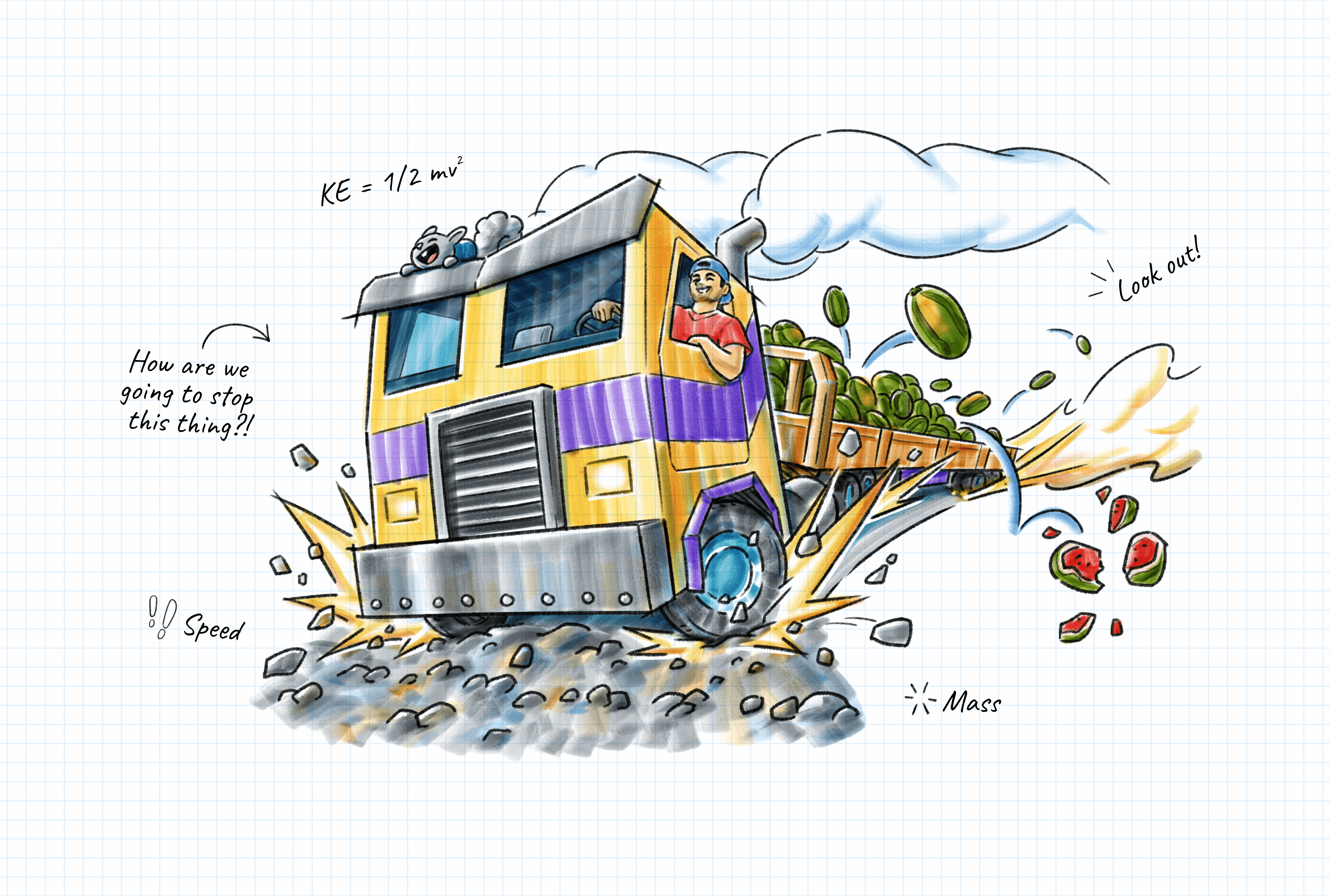
Teamwork makes the dream work!
More than 100 people worked together to make this unit a reality.
Tell us what you think
Class CrunchLabs is just getting started! After you've reviewed or taught this pilot, we'd love your feedback. You can also drop us an email: class@crunchlabs.com (opens in new tab)