Operation Space Jump
Are you feeling the pull?
Astronauts. A baseball in space. Crash-landing on other planets. Time to make the jump!
Topics Covered
Standards
Grades
Operation Space Jump
Unit Overview
Why can you jump higher on some planets and not others?
We'll explore gravity to discover why you can jump higher on some planets than others. Using videos from NASA missions, an epic simulation, and real data from a baseball that Class CrunchLabs sent up to the stratosphere, students test competing claims about gravitational forces before applying what they’ve learned to save Earth from an oncoming asteroid. We also talk with an astronaut about what space is actually like, see Mark set a slam-dunk record, and see gravity in action at a watermelon’s expense.

It's Three Dimensional!
Operation Space Jump
Unit Storyline
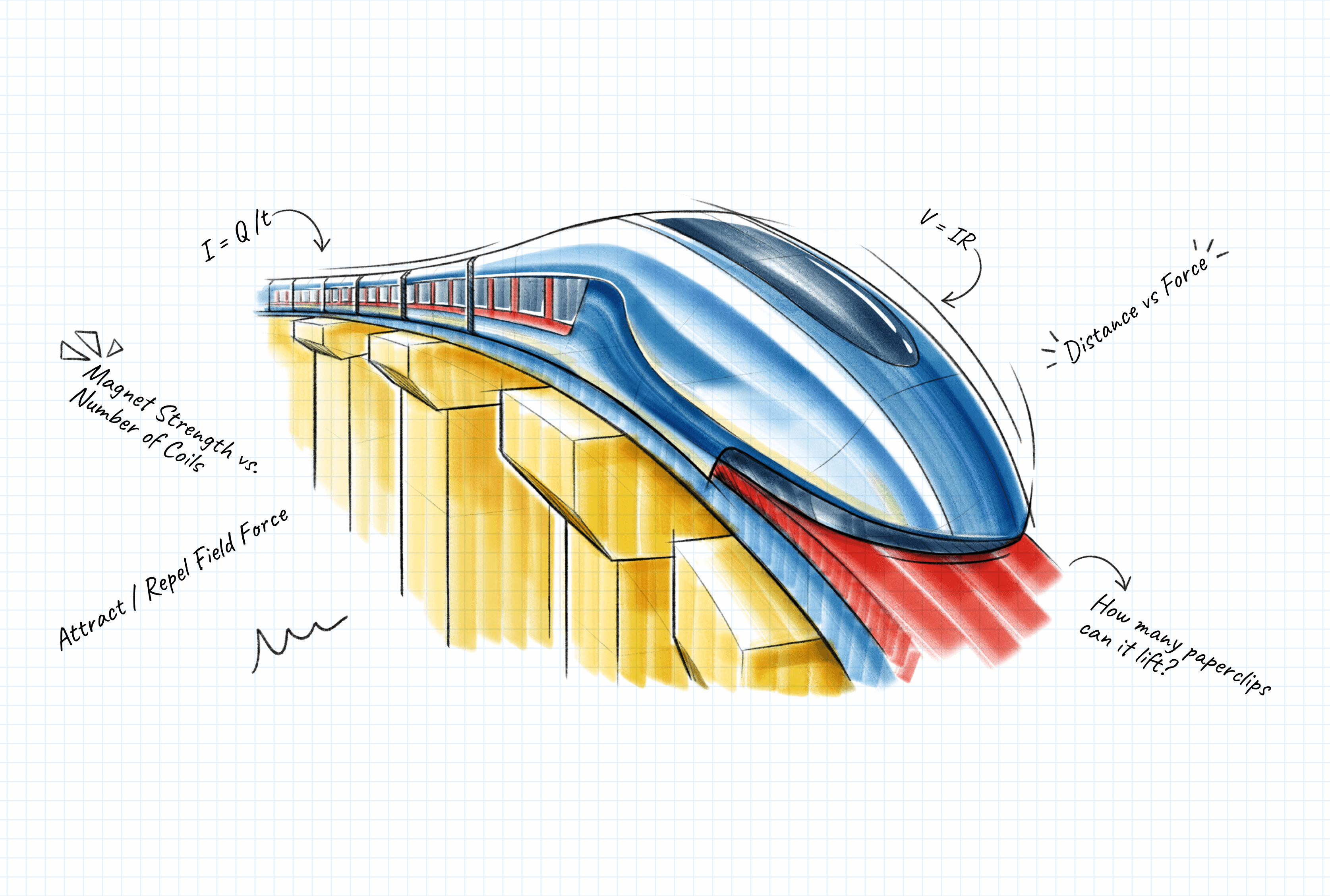
A puzzling phenomenon, not a textbook, drives the learning in Operation Space Jump as students investigate the workings of a futuristic train. Every question leads to another, turning a series of lessons into a single connected journey toward an overarching answer.
What we do
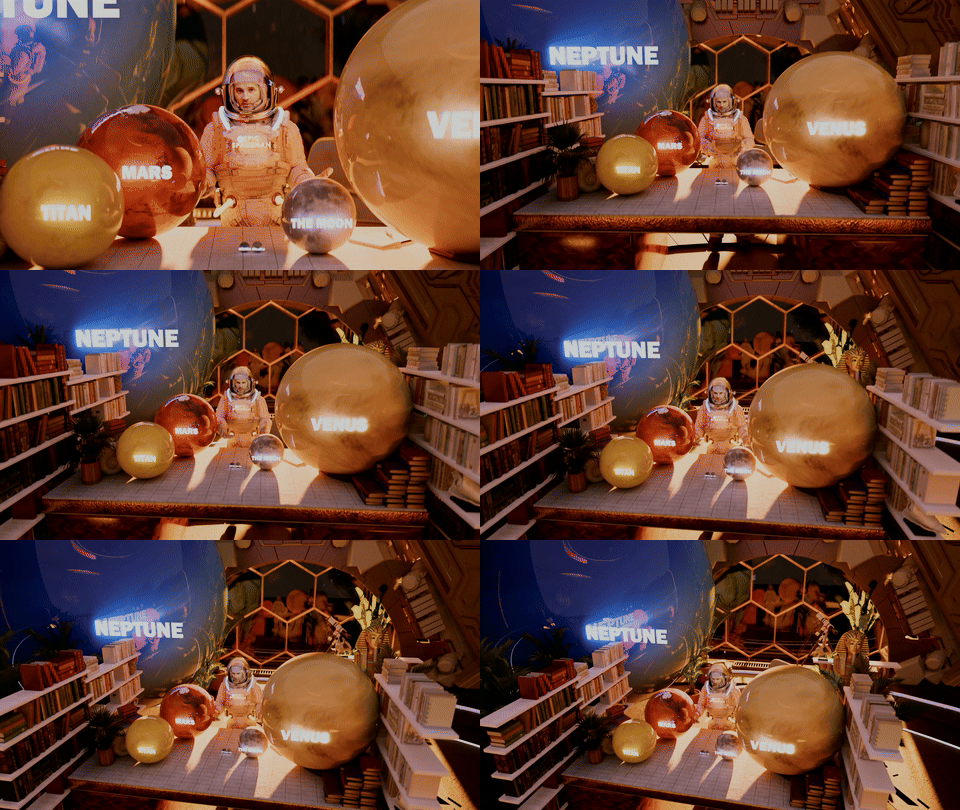
• Watch a video simulation of Mark Rober in a spacesuit jumping on different moons and planets.
• Compare it to actual video of astronauts jumping on the Moon, causing us to Notice, Think & Wonder (NTW) about the differences in jumping in all of these situations.
• Wonder how high we can jump on Earth and make measurements to compare to Mark’s jumps.
• Develop questions, initial ideas, and potential investigations to explore further.
• Review what we have learned about forces in elementary school science.What we figure out
• Gravity must be acting on Mark when he jumps and on us when we jump.
• Mark jumps to different heights on the different moons and planets.
• There are multiple forces acting on Mark and on us as we jump.
• We are beginning to wonder if there is something about these space objects that causes some of them to pull or push on Mark more than others.
• We have some ideas about the characteristics of planets and moons that may be causing the differences in jump heights.
• Systems have inputs and outputs.How we show it
Individually
• Draft early explanations and draw initial models to show what we think may cause the differences in Mark’s jump height on the different moons and planets.
• Develop questions we want to answer about why jump height is different in different places.
• Make our thinking visible in our Mission Logs.
• Complete a Status Check short assessment.
As a class
• Collect a list of ideas and questions to investigate together.
• Develop a Class Initial Model and a Class Initial Explanation that may explain why Mark’s jump height varies across the Solar System.Lesson goals
• Develop and use a model to explain that jumping involves multiple forces acting on a person, including an upward contact force from the ground and a downward gravitational pull.
• Ask questions that arise from observations of different jumping events to figure out what causes Mark to jump to different heights on different space objects.
• Construct an explanation using models and patterns in jump height data to propose that the strength of forces acting on a jumper differs depending on the space object they are on.What we do
• Carry out investigations to explore how the properties of space objects relate to jump heights on those objects.
• Analyze and interpret data to identify patterns that serve as evidence for claims about why jump heights differ across space objects.
• Define the relationship between our question, claims, and evidence.What we figure out
• There is a relationship between the properties of space objects and how high Mark can jump on them.
• The surface and atmospheric characteristics of space objects do not seem to have as big an impact on jump height as mass and diameter.
• Patterns reveal relationships that help us make scientific claims.
• Scientific argumentation helps us make sense of competing ideas by using evidence and reasoning to support the best explanation.
• A strong argument clearly connects claims to evidence and includes logical reasoning.How we show it
Individually
• Analyze and interpret data to develop two testable claims about the relationships between (1) the diameter of an object and the jump height there and (2) the mass of an object and the jump height there.
• Make our thinking visible in our Mission Logs.
• Complete a Status Check short assessment.
As a class
• Develop two testable claims that describe which properties of space objects we think are the causes of the differences in jump heights: Claim A about diameter and Claim B about mass.
• Clarify that “size” in the Class Model could be either mass or diameter.Lesson goals
• Carry out an investigation to produce data that can be used as evidence for how jump height relates to the properties of space objects.
• Analyze and interpret data to identify patterns that could be used to make initial claims about what might be responsible for the relationship between jump height and the mass and/or diameter of a space object.What we do
• Carry out investigations to explore the relationship between mass, diameter, and the magnitude of gravitational force.
• Analyze and interpret data to identify patterns that serve as evidence to support or refute claims about the causes of the jump height fluctuations.
• Use simulations to gather evidence to support or refute claims.What we figure out
• Gravity is a force that pulls things towards each other.
• Gravitational interactions between two objects depend on the mass of both objects in the system.
• The magnitude of gravitational force depends on the mass of both objects in a system.
• There is a correlation between the diameter of a space object and the magnitude of its gravitational force.
• There is a causal relationship between mass and the magnitude of gravitational force between large space objects.
• Evidence can be used to support or refute a claim.
• Arguments can be strengthened by having multiple sources of evidence.How we show it
Individually
• Conduct investigations and discuss our findings.
• Make our thinking visible in our Mission Logs.
• Argue from evidence to support or refute claims about properties affecting Mark’s jump heights.
• Complete a Status Check short assessment.
As a class
• Identify multiple sources of evidence to support a claim that the mass of a space object affects the magnitude of its gravitational force.
• Revise our class consensus model to include the relative masses of the two space objects (more massive/less massive) and arrows that show the magnitude and direction of gravitational force.Lesson goals
• Analyze and interpret patterns in data from physical and digital models to identify how the masses of two interacting objects affect the magnitude and direction of the gravitational forces they exert on each other.
• Use empirical evidence and scientific reasoning to construct a written argument that mass, not diameter, is the causal factor responsible for the magnitude of the gravitational force in a two-object system.What we do
• See a model that provides evidence for smaller masses pulling and see what evidence for pulling looks like using other non-contact forces.
• Observe small objects pulling together even though they are not magnetic and have masses much smaller than planets.
• Construct arguments about what causes the objects to move towards each other.
• Revisit a simulation to find patterns in the magnitude and direction of gravitational forces on each object in a system.
• Use observations of gravity’s effects in space to determine if gravity is always attractive everywhere.What we figure out
• There is a gravitational force between any two objects with mass, even if the mass is very small.
• Gravitational forces are always attractive so they pull, never push.
• When two objects interact gravitationally, each object is pulled towards the other with a force of equal magnitude, but the resulting motion depends on their masses.
• A person pulls the planet towards them with the same force that the planet pulls on the person. The person’s motion changes more because the person has much less mass.
• A force can exist even when its effects are too small to observe directly.
• Evidence can be used to compare, support, and rule out competing explanations for a phenomenon.
• Sometimes you have to change the scale of a model to more fully show the inputs, outputs and processes.How we show it
Individually
• Conduct investigations and discuss our findings.
• Construct and revise written arguments.
• Make our thinking visible in our Mission Logs.
• Complete a Status Check short assessment.
As a class
• Develop a model to explain gravitational forces between objects.
• Use argumentation to support and refute different explanations for the movement of small-mass objects.
• Complete a Video Pop Quiz.Lesson goals
• Develop and revise models, supported by evidence, to describe that gravitational forces between any two objects with mass are always attractive and act on both objects, regardless of their size or location in the Solar System.
• Construct and revise written arguments, using evidence and reasoning, to explain that gravitational forces acting between two objects are equal in magnitude and opposite in direction, but that differences in mass cause unequal changes in motion—explaining why a person’s gravitational pull on a planet is not observable while the planet’s pull on the person is.What we do
• Investigate how force changes with distance using magnets as a model for non-contact forces.
• Analyze magnetic force data using graphs and a slow-reveal pattern analysis.
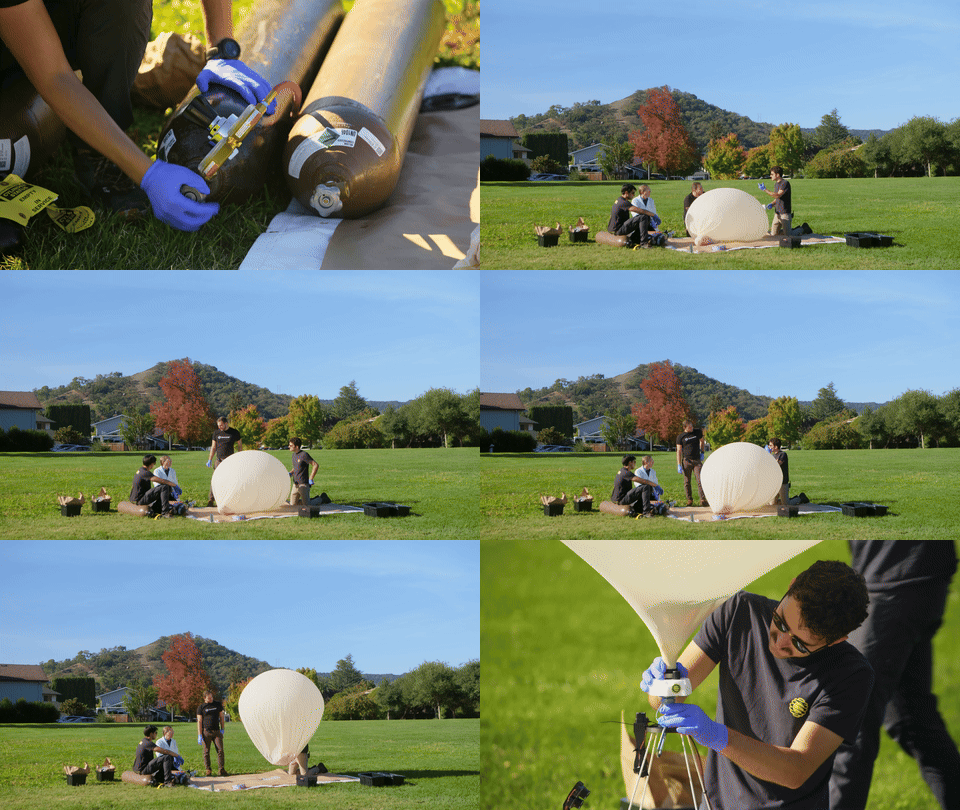
• Evaluate competing claims about gravity and distance using data from a weather balloon experiment.
• Use simulations to visualize gravitational force at scales beyond what we can measure directly.
• Revise models and explanations to account for distance, mass, and gravitational fields.What we figure out
• Both magnetic and gravitational forces decrease as the distance between objects increases.
• Magnetic force changes rapidly over short distances, while gravitational force changes gradually and requires much larger distances to observe.
• Gravitational force weakens with distance but never reaches zero.
• Differences in measured force depend on distance, not changes in an object’s mass.
• A gravitational field extends in all directions around any object with mass and weakens with distance away from its center.How we show it
Individually
• Annotate and make predictions about force-distance graphs to identify patterns.
• Analyze data from a weather balloon experiment to determine which claims it supports or refutes.
• Construct a Claims-Evidence-Reasoning (CER) argument using evidence from multiple sources.
• Make our thinking visible in our Mission Logs.
• Complete a Status Check short assessment.
As a class
• Co-develop investigation questions and variables.
• Compare evidence from magnets, the weather balloon investigation, and simulations.
• Update shared models to represent gravitational fields and distance effects.
• Build consensus around the best-supported claim.Lesson goals
• Analyze and interpret data to identify patterns that provide evidence about the relationship between distance and gravitational force.
• Construct a written argument supported by empirical evidence and scientific reasoning to support or refute explanations of cause-and-effect relationships between distance and gravitational force.
• Revise and use models of gravitational systems to represent how gravitational fields weaken with distance.What we do
• Review what we figured out over the course of the unit.
• Construct an explanation with evidence and reasoning to explain the factors that affect gravity.
• Construct an argument supported with evidence and reasoning to solve a real-world problem.What we figure out
• Gravity can be used to solve problems in space.
How we show it
Individually
• Develop an argument to show a solution to a hypothetical problem.
• Complete a Mission Milestone assessment.
In small groups
• Synthesize evidence from earlier lessons and determine which pieces will help us with our task.
• Assess the models developed by different groups and decide one best explains how space objects pull on each other.Lesson goals
• Construct and defend an evidence-based explanation that gravitational force is an attractive interaction between objects and that its magnitude depends on both the combined mass of and distance between objects within a system.
• Construct an argument supported by evidence and reasoning to support or refute claims about how the attractive gravitational force between two interacting space objects could be used to save the planet.
The Anchor
What we do
• Watch a video simulation of Mark Rober in a spacesuit jumping on different moons and planets.
• Compare it to actual video of astronauts jumping on the Moon, causing us to Notice, Think & Wonder (NTW) about the differences in jumping in all of these situations.
• Wonder how high we can jump on Earth and make measurements to compare to Mark’s jumps.
• Develop questions, initial ideas, and potential investigations to explore further.
• Review what we have learned about forces in elementary school science.
What we figure out
• Gravity must be acting on Mark when he jumps and on us when we jump.
• Mark jumps to different heights on the different moons and planets.
• There are multiple forces acting on Mark and on us as we jump.
• We are beginning to wonder if there is something about these space objects that causes some of them to pull or push on Mark more than others.
• We have some ideas about the characteristics of planets and moons that may be causing the differences in jump heights.
• Systems have inputs and outputs.
How we show it
Individually
• Draft early explanations and draw initial models to show what we think may cause the differences in Mark’s jump height on the different moons and planets.
• Develop questions we want to answer about why jump height is different in different places.
• Make our thinking visible in our Mission Logs.
• Complete a Status Check short assessment.
As a class
• Collect a list of ideas and questions to investigate together.
• Develop a Class Initial Model and a Class Initial Explanation that may explain why Mark’s jump height varies across the Solar System.
Lesson goals
• Develop and use a model to explain that jumping involves multiple forces acting on a person, including an upward contact force from the ground and a downward gravitational pull.
• Ask questions that arise from observations of different jumping events to figure out what causes Mark to jump to different heights on different space objects.
• Construct an explanation using models and patterns in jump height data to propose that the strength of forces acting on a jumper differs depending on the space object they are on.
Planetary Properties
What we do
• Carry out investigations to explore how the properties of space objects relate to jump heights on those objects.
• Analyze and interpret data to identify patterns that serve as evidence for claims about why jump heights differ across space objects.
• Define the relationship between our question, claims, and evidence.
What we figure out
• There is a relationship between the properties of space objects and how high Mark can jump on them.
• The surface and atmospheric characteristics of space objects do not seem to have as big an impact on jump height as mass and diameter.
• Patterns reveal relationships that help us make scientific claims.
• Scientific argumentation helps us make sense of competing ideas by using evidence and reasoning to support the best explanation.
• A strong argument clearly connects claims to evidence and includes logical reasoning.
How we show it
Individually
• Analyze and interpret data to develop two testable claims about the relationships between (1) the diameter of an object and the jump height there and (2) the mass of an object and the jump height there.
• Make our thinking visible in our Mission Logs.
• Complete a Status Check short assessment.
As a class
• Develop two testable claims that describe which properties of space objects we think are the causes of the differences in jump heights: Claim A about diameter and Claim B about mass.
• Clarify that “size” in the Class Model could be either mass or diameter.
Lesson goals
• Carry out an investigation to produce data that can be used as evidence for how jump height relates to the properties of space objects.
• Analyze and interpret data to identify patterns that could be used to make initial claims about what might be responsible for the relationship between jump height and the mass and/or diameter of a space object.
Mass vs. Diameter
What we do
• Carry out investigations to explore the relationship between mass, diameter, and the magnitude of gravitational force.
• Analyze and interpret data to identify patterns that serve as evidence to support or refute claims about the causes of the jump height fluctuations.
• Use simulations to gather evidence to support or refute claims.
What we figure out
• Gravity is a force that pulls things towards each other.
• Gravitational interactions between two objects depend on the mass of both objects in the system.
• The magnitude of gravitational force depends on the mass of both objects in a system.
• There is a correlation between the diameter of a space object and the magnitude of its gravitational force.
• There is a causal relationship between mass and the magnitude of gravitational force between large space objects.
• Evidence can be used to support or refute a claim.
• Arguments can be strengthened by having multiple sources of evidence.
How we show it
Individually
• Conduct investigations and discuss our findings.
• Make our thinking visible in our Mission Logs.
• Argue from evidence to support or refute claims about properties affecting Mark’s jump heights.
• Complete a Status Check short assessment.
As a class
• Identify multiple sources of evidence to support a claim that the mass of a space object affects the magnitude of its gravitational force.
• Revise our class consensus model to include the relative masses of the two space objects (more massive/less massive) and arrows that show the magnitude and direction of gravitational force.
Lesson goals
• Analyze and interpret patterns in data from physical and digital models to identify how the masses of two interacting objects affect the magnitude and direction of the gravitational forces they exert on each other.
• Use empirical evidence and scientific reasoning to construct a written argument that mass, not diameter, is the causal factor responsible for the magnitude of the gravitational force in a two-object system.
Gravity of Small Stuff
What we do
• See a model that provides evidence for smaller masses pulling and see what evidence for pulling looks like using other non-contact forces.
• Observe small objects pulling together even though they are not magnetic and have masses much smaller than planets.
• Construct arguments about what causes the objects to move towards each other.
• Revisit a simulation to find patterns in the magnitude and direction of gravitational forces on each object in a system.
• Use observations of gravity’s effects in space to determine if gravity is always attractive everywhere.
What we figure out
• There is a gravitational force between any two objects with mass, even if the mass is very small.
• Gravitational forces are always attractive so they pull, never push.
• When two objects interact gravitationally, each object is pulled towards the other with a force of equal magnitude, but the resulting motion depends on their masses.
• A person pulls the planet towards them with the same force that the planet pulls on the person. The person’s motion changes more because the person has much less mass.
• A force can exist even when its effects are too small to observe directly.
• Evidence can be used to compare, support, and rule out competing explanations for a phenomenon.
• Sometimes you have to change the scale of a model to more fully show the inputs, outputs and processes.
How we show it
Individually
• Conduct investigations and discuss our findings.
• Construct and revise written arguments.
• Make our thinking visible in our Mission Logs.
• Complete a Status Check short assessment.
As a class
• Develop a model to explain gravitational forces between objects.
• Use argumentation to support and refute different explanations for the movement of small-mass objects.
• Complete a Video Pop Quiz.
Lesson goals
• Develop and revise models, supported by evidence, to describe that gravitational forces between any two objects with mass are always attractive and act on both objects, regardless of their size or location in the Solar System.
• Construct and revise written arguments, using evidence and reasoning, to explain that gravitational forces acting between two objects are equal in magnitude and opposite in direction, but that differences in mass cause unequal changes in motion—explaining why a person’s gravitational pull on a planet is not observable while the planet’s pull on the person is.
Gravitational Fields
What we do
• Investigate how force changes with distance using magnets as a model for non-contact forces.
• Analyze magnetic force data using graphs and a slow-reveal pattern analysis.
• Evaluate competing claims about gravity and distance using data from a weather balloon experiment.
• Use simulations to visualize gravitational force at scales beyond what we can measure directly.
• Revise models and explanations to account for distance, mass, and gravitational fields.
What we figure out
• Both magnetic and gravitational forces decrease as the distance between objects increases.
• Magnetic force changes rapidly over short distances, while gravitational force changes gradually and requires much larger distances to observe.
• Gravitational force weakens with distance but never reaches zero.
• Differences in measured force depend on distance, not changes in an object’s mass.
• A gravitational field extends in all directions around any object with mass and weakens with distance away from its center.
How we show it
Individually
• Annotate and make predictions about force-distance graphs to identify patterns.
• Analyze data from a weather balloon experiment to determine which claims it supports or refutes.
• Construct a Claims-Evidence-Reasoning (CER) argument using evidence from multiple sources.
• Make our thinking visible in our Mission Logs.
• Complete a Status Check short assessment.
As a class
• Co-develop investigation questions and variables.
• Compare evidence from magnets, the weather balloon investigation, and simulations.
• Update shared models to represent gravitational fields and distance effects.
• Build consensus around the best-supported claim.
Lesson goals
• Analyze and interpret data to identify patterns that provide evidence about the relationship between distance and gravitational force.
• Construct a written argument supported by empirical evidence and scientific reasoning to support or refute explanations of cause-and-effect relationships between distance and gravitational force.
• Revise and use models of gravitational systems to represent how gravitational fields weaken with distance.
Gravity at Work
What we do
• Review what we figured out over the course of the unit.
• Construct an explanation with evidence and reasoning to explain the factors that affect gravity.
• Construct an argument supported with evidence and reasoning to solve a real-world problem.
What we figure out
• Gravity can be used to solve problems in space.
How we show it
Individually
• Develop an argument to show a solution to a hypothetical problem.
• Complete a Mission Milestone assessment.
In small groups
• Synthesize evidence from earlier lessons and determine which pieces will help us with our task.
• Assess the models developed by different groups and decide one best explains how space objects pull on each other.
Lesson goals
• Construct and defend an evidence-based explanation that gravitational force is an attractive interaction between objects and that its magnitude depends on both the combined mass of and distance between objects within a system.
• Construct an argument supported by evidence and reasoning to support or refute claims about how the attractive gravitational force between two interacting space objects could be used to save the planet.
Unit Materials
Our materials provide a roadmap for teachers and students. They’re standards-aligned, use evidence-backed strategies, and are built to actually work.

Mission Launch Deck
Your command center. Slides include discussion prompts, embedded videos, and directions for hands-on challenges, all in an editable deck.
 Open in Google Drive
Teacher Mission Manual
The TMM has background info, lesson breakdowns, guidance on materials, and pro tips for pulling the whole thing off.
Open in Google Drive
Student Mission Log
Every scientist and engineer needs a place to record their questions, investigation plans, and data and track their progress.
Open in Google Drive
Status Check Assessments
Status Checks help teachers see where every student stands and understand what's clicking and what's not.
Open in Google Drive
Teacher Assessment Guidance
Things to look for in student responses so you can give feedback that actually moves the needle.
Open in Google Drive
Handouts
Readings, worksheets, and other print materials your students need to make the most of the unit.
Open in Google Drive
Other Materials
Flashcards, tools for hands-on investigations, and other unit-specific resources.
Open in Google Drive
Supply List
Your shopping list for hands-on challenges and other classroom materials.
Open in Google DriveHands-On Challenges
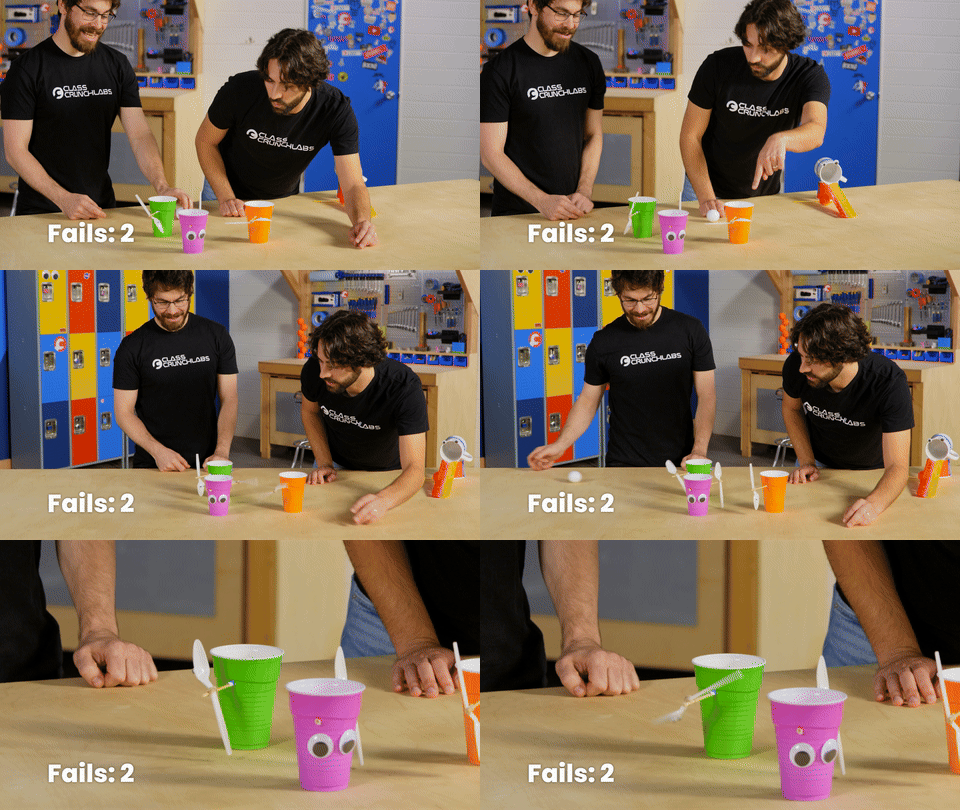
These videos show you how to use everyday items in activities that make abstract concepts click, because the best way to learn science is to DO it.
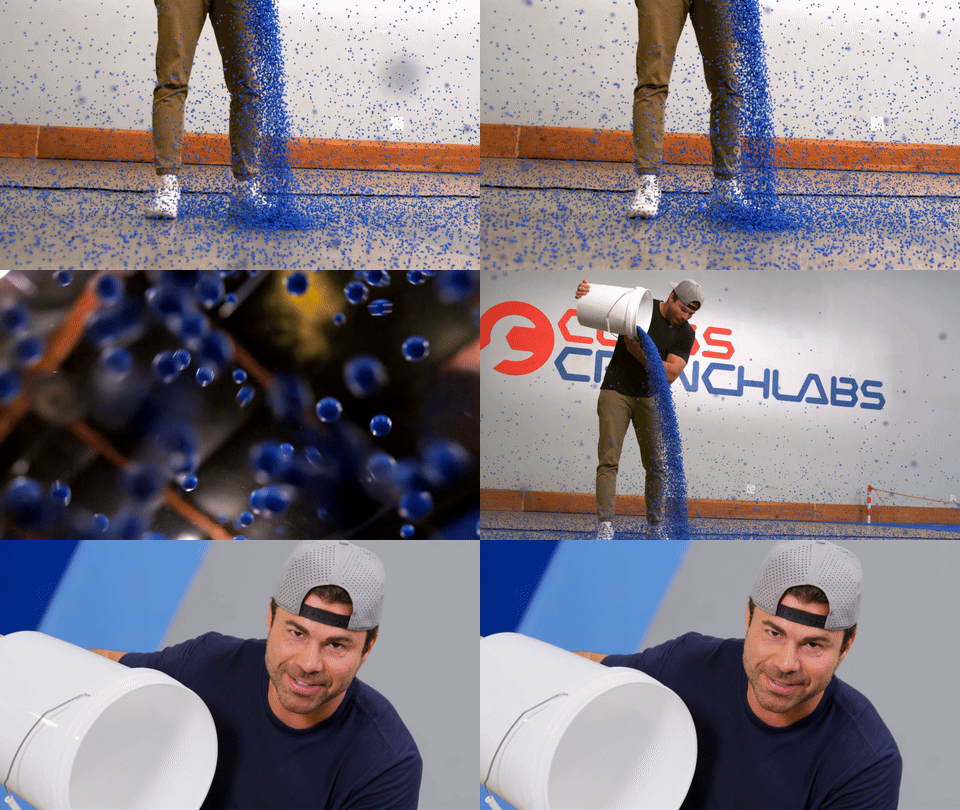
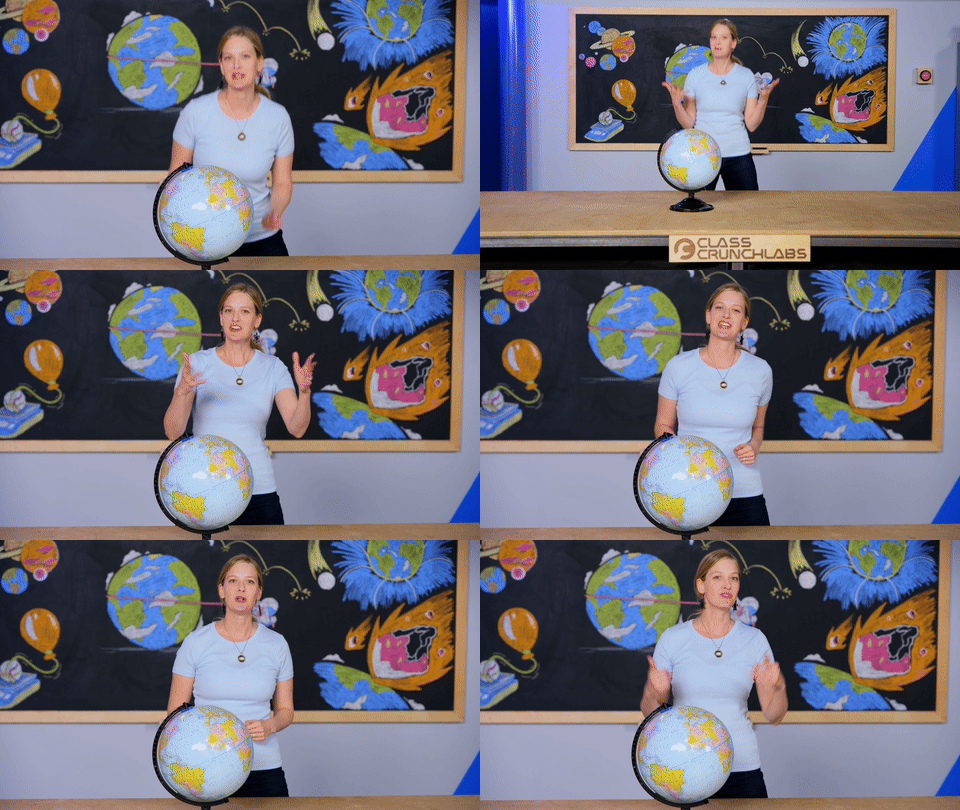
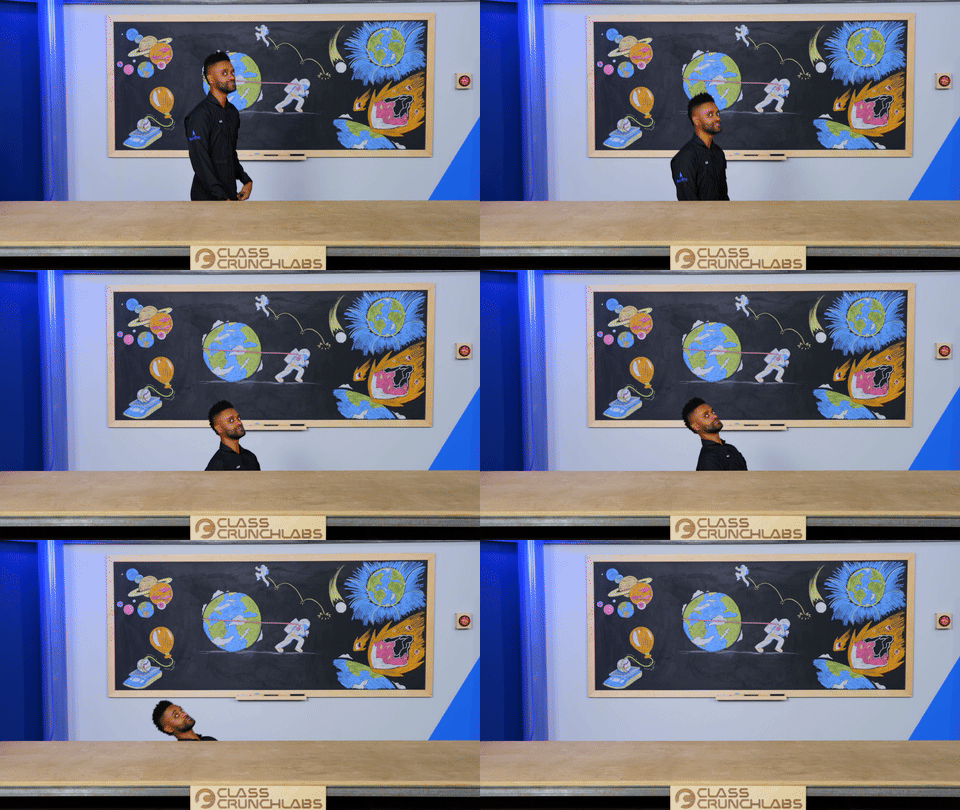
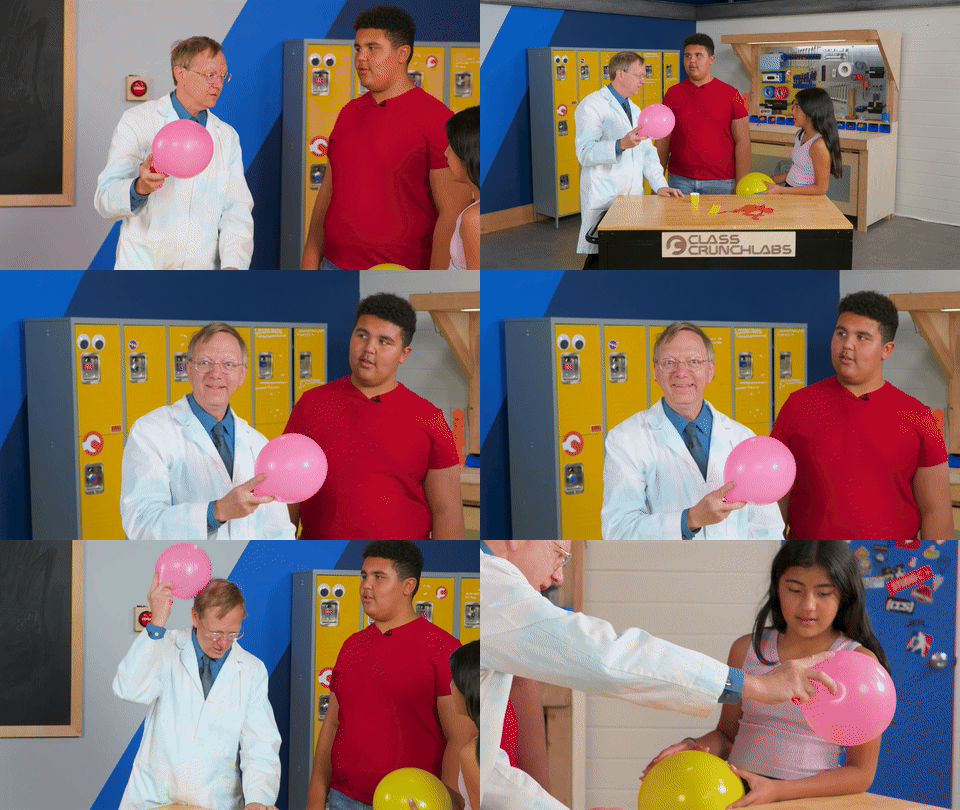
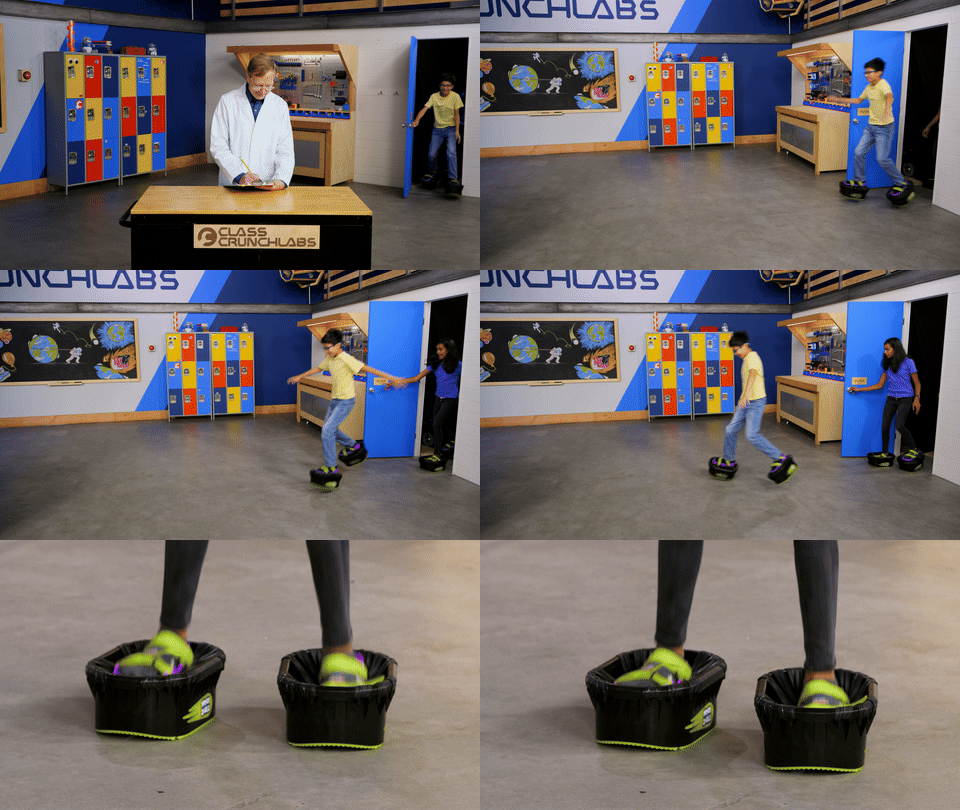
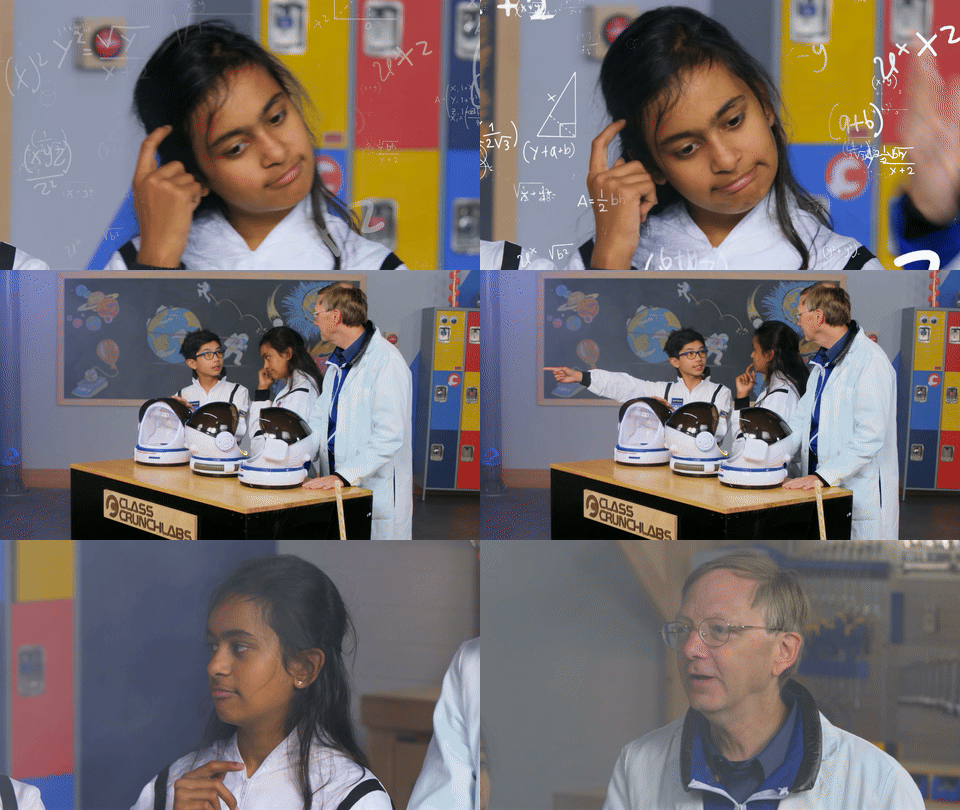
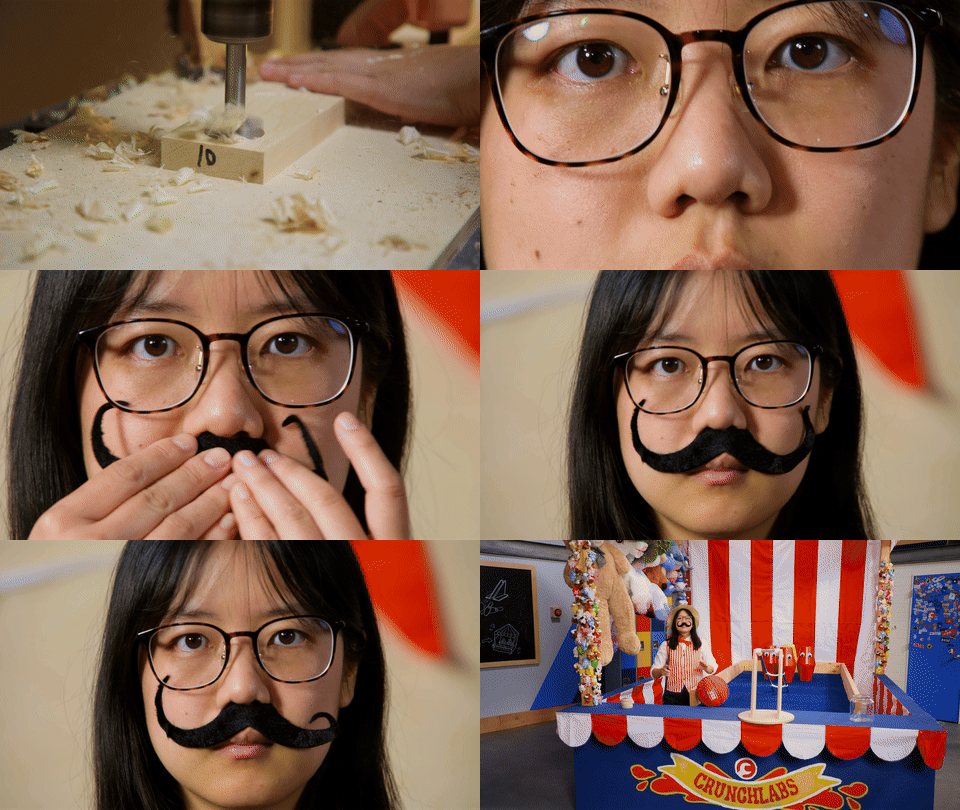
Our Amazing Cast
This team brings the “Wow!” so your students can explain the “How?”


The Video Vault
Every video from the unit all in one place.
1.5 Anchor Check-In
1.8 Check-In with Class CrunchLabs
1.11 Space Jump Simulations
1.12 Operation High Jump Prep
1.12 Operation High Jump Challenge
1.0 Elementary Explainer - Forces
2.2 Recap
2.5 Crash-Landed Challenge Prep
2.5 Crash-Landed Challenge
2.8 Unpacking Mass vs. Diameter
3.8 Gravity Arena Prep
3.8 Gravity Arena Challenge
1.5 Anchor Check-In
1.8 Check-In with Class CrunchLabs
1.11 Space Jump Simulations
1.0 Elementary Explainer - Forces
2.2 Recap
2.8 Unpacking Mass vs. Diameter
4.2 Recap
4.6 Check-In with Class CrunchLabs
5.2 Recap
5.8 Check-In with Class CrunchLabs
5.21 Interview with an Astronaut
6.2 Recap
1.5 Anchor Check-In
1.8 Check-In with Class CrunchLabs
1.11 Space Jump Simulations
1.0 Elementary Explainer - Forces
2.2 Recap
2.8 Unpacking Mass vs. Diameter
4.2 Recap
4.6 Check-In with Class CrunchLabs
5.2 Recap
5.8 Check-In with Class CrunchLabs
5.21 Interview with an Astronaut
6.2 Recap
6.16 Unit Celebration
Bonus: Q&A with AstroChuie
Bonus: Gravity vs. Watermelon
1.12 Operation High Jump Prep
1.12 Operation High Jump Challenge
2.5 Crash-Landed Challenge Prep
2.5 Crash-Landed Challenge
3.8 Gravity Arena Prep
3.8 Gravity Arena Challenge
5.6 Spring Scale Prep
5.0 Planet Pull Prep
5.0 Planet Pull Challenge
1.12 Operation High Jump Prep
1.12 Operation High Jump Challenge
2.5 Crash-Landed Challenge Prep
2.5 Crash-Landed Challenge
3.8 Gravity Arena Prep
3.8 Gravity Arena Challenge
5.6 Spring Scale Prep
5.0 Planet Pull Prep
5.0 Planet Pull Challenge
1.11 Space Jump Simulations
5.21 Interview with an Astronaut
Bonus: Q&A with AstroChuie
Bonus: Class CrunchLabs Tour of the International Space Station
1.11 Space Jump Simulations
5.21 Interview with an Astronaut
Bonus: Q&A with AstroChuie
Bonus: Class CrunchLabs Tour of the International Space Station
6.12 Gravity Tracker Assessment
6.12 Gravity Tracker Assessment
Bonus: Q&A with AstroChuie
Bonus: Gravity vs. Watermelon
Bonus: Class CrunchLabs Tour of the International Space Station
Bonus: Q&A with AstroChuie
Bonus: Gravity vs. Watermelon
Bonus: Class CrunchLabs Tour of the International Space Station
5.21 Interview with an Astronaut
5.21 Interview with an Astronaut
1.5 Anchor Check-In
1.8 Check-In with Class CrunchLabs
1.11 Space Jump Simulations
2.8 Unpacking Mass vs. Diameter
4.6 Check-In with Class CrunchLabs
4.14 Cavendish Experiment Summary
4.19 Jumps Around the World
5.8 Check-In with Class CrunchLabs
6.16 Unit Celebration
1.5 Anchor Check-In
1.8 Check-In with Class CrunchLabs
1.11 Space Jump Simulations
2.8 Unpacking Mass vs. Diameter
4.6 Check-In with Class CrunchLabs
4.14 Cavendish Experiment Summary
4.19 Jumps Around the World
5.8 Check-In with Class CrunchLabs
6.16 Unit Celebration
1.12 Operation High Jump Prep
1.12 Operation High Jump Challenge
2.5 Crash-Landed Challenge Prep
2.5 Crash-Landed Challenge
3.8 Gravity Arena Prep
3.8 Gravity Arena Challenge
5.6 Spring Scale Prep
5.0 Planet Pull Prep
5.0 Planet Pull Challenge
1.12 Operation High Jump Prep
1.12 Operation High Jump Challenge
2.5 Crash-Landed Challenge Prep
2.5 Crash-Landed Challenge
3.8 Gravity Arena Prep
3.8 Gravity Arena Challenge
5.6 Spring Scale Prep
5.0 Planet Pull Prep
5.0 Planet Pull Challenge
1.0 Elementary Explainer - Forces
1.0 Elementary Explainer - Forces
1.12 Operation High Jump Prep
2.2 Recap
4.2 Recap
5.2 Recap
6.2 Recap
1.12 Operation High Jump Prep
2.2 Recap
4.2 Recap
5.2 Recap
6.2 Recap
1.12 Operation High Jump Challenge
2.5 Crash-Landed Challenge
3.8 Gravity Arena Challenge
5.0 Planet Pull Challenge
1.12 Operation High Jump Challenge
2.5 Crash-Landed Challenge
3.8 Gravity Arena Challenge
5.0 Planet Pull Challenge
1.12 Operation High Jump Prep
2.5 Crash-Landed Challenge Prep
3.8 Gravity Arena Prep
4.6 Teacher Background: Cavendish Experiment
5.6 Spring Scale Prep
5.0 Planet Pull Prep
1.12 Operation High Jump Prep
2.5 Crash-Landed Challenge Prep
3.8 Gravity Arena Prep
4.6 Teacher Background: Cavendish Experiment
5.6 Spring Scale Prep
5.0 Planet Pull Prep
1.5 Anchor Check-In
1.8 Check-In with Class CrunchLabs
1.11 Space Jump Simulations
1.12 Operation High Jump Prep
1.12 Operation High Jump Challenge
1.0 Elementary Explainer - Forces
1.5 Anchor Check-In
1.8 Check-In with Class CrunchLabs
1.11 Space Jump Simulations
1.12 Operation High Jump Prep
1.12 Operation High Jump Challenge
1.0 Elementary Explainer - Forces
2.2 Recap
2.5 Crash-Landed Challenge Prep
2.5 Crash-Landed Challenge
2.8 Unpacking Mass vs. Diameter
2.2 Recap
2.5 Crash-Landed Challenge Prep
2.5 Crash-Landed Challenge
2.8 Unpacking Mass vs. Diameter
3.8 Gravity Arena Prep
3.8 Gravity Arena Challenge
3.8 Gravity Arena Prep
3.8 Gravity Arena Challenge
4.2 Recap
4.6 Check-In with Class CrunchLabs
4.6 Teacher Background: Cavendish Experiment
4.14 Cavendish Experiment Summary
4.19 Jumps Around the World
4.2 Recap
4.6 Check-In with Class CrunchLabs
4.6 Teacher Background: Cavendish Experiment
4.14 Cavendish Experiment Summary
4.19 Jumps Around the World
5.2 Recap
5.6 Spring Scale Prep
5.8 Check-In with Class CrunchLabs
5.21 Interview with an Astronaut
5.0 Planet Pull Prep
5.0 Planet Pull Challenge
5.2 Recap
5.6 Spring Scale Prep
5.8 Check-In with Class CrunchLabs
5.21 Interview with an Astronaut
5.0 Planet Pull Prep
5.0 Planet Pull Challenge
6.2 Recap
6.12 Gravity Tracker Assessment
6.16 Unit Celebration
6.2 Recap
6.12 Gravity Tracker Assessment
6.16 Unit Celebration
What's Next?
More experiments. More discoveries. Pick your next adventure!
Teamwork makes the dream work!
More than 100 people worked together to make this unit a reality.
Tell us what you think!
Class CrunchLabs is just getting started! After you've reviewed or taught this pilot, we'd love your feedback. You can also drop us an email: class@crunchlabs.com (opens in new tab)