Mission Maglev
Hop aboard this magnetic unit!
Floating trains, scrapyard magnets, MRI machines... and one unlucky watermelon!
Topics Covered
Standards
Grades
Mission Maglev
Unit Overview
What causes a massive train to float in the air and move without anything touching it?
All aboard! This unit is all about the invisible superpowers of magnetic and electric forces. Together, we'll uncover how they make magnetic levitation (maglev) trains float, help scrapyards move giant piles of metal, and let MRI machines see inside the human body. Students will learn to think like scientists and engineers as they model, test, and explain the forces that make everyday marvels possible. And that watermelon at the end? It doesn't stand a chance against the pull of science.

It's Three Dimensional!
Mission Maglev
Unit Storyline
A puzzling phenomenon, not a textbook, drives the learning in Mission Maglev as students investigate the workings of a futuristic train. Every question leads to another, turning a series of lessons into a single connected journey toward an overarching answer.
What we do
• Watch a video of a maglev train floating in the air and moving really fast. We Notice, Think & Wonder about the train and make comparisons to a “normal” train.
• Try to make something float in the air and move without touching it.
• Develop questions, initial ideas, and potential investigations to explore.
• Review what we have learned about forces in elementary science.What we figure out
• A maglev train floats in the air and moves really fast.
• When magnets are oriented one way, they can attract things.
• When magnets are oriented another way, they can repel objects.
• Different magnets can have different strengths.How we show it
Individually:
• Draft early explanations and/or draw models to show what we think may cause a maglev train to float and move.
• Develop questions that we want to answer about how the maglev train works.
As a class:
• Collect ideas and questions to investigate together.
• Develop an initial class consensus model.Lesson goal
• Ask and refine questions that can be investigated in the classroom to figure out what causes a train to float in the air and move without touching the ground.
What we do
• Develop and evaluate methods for measuring magnet strength.
• Plan and carry out investigations to quantify magnet strength.
• Analyze our class data and identify ways to improve our investigation methods.
• Design a vehicle that can move forward and backward using only magnetic forces.
• Watch a Class CrunchLabs video of a massive magnet interacting with objects.What we figure out
• Magnets can be oriented so they repel one another and levitate.
• Some magnets create stronger forces than others.
• Different investigative methods can produce different results, but the data are still consistent about which magnets are stronger.
• The orientation of a magnet affects whether it attracts or repels a MagDrive Derby Car.
• Magnets attract and repel more strongly when they are closer to one another than when they are farther apart.
• By using multiple magnets and changing their orientation, we can propel a MagDrive Derby Car like a maglev train.How we show it
Individually:
• Make our thinking visible in our Mission Logs.
• Complete a Check & Connect short assessment.
In small groups:
• Conduct investigations and discuss our findings.
As a class:
• Explain the factors that affect magnetic forces.
• Add the concept of magnetic “poles” to our maglev train model to explain how magnets can make the train levitate and move.Lesson goals
• Students conduct an investigation to evaluate whether measuring how high a cup is lifted by a repulsive magnetic force is an effective way to determine the strength of a magnet.
• Students use their investigation data to explain how the strength and arrangement of magnets affect the motion of objects, then apply these ideas to the maglev train model.
• Students ask questions about qualitative data that can be investigated to figure out how magnets can produce both attractive and repulsive forces at a distance.What we do
• Investigate how iron filings interact with magnets.
• Investigate how compasses help us map magnetic fields.
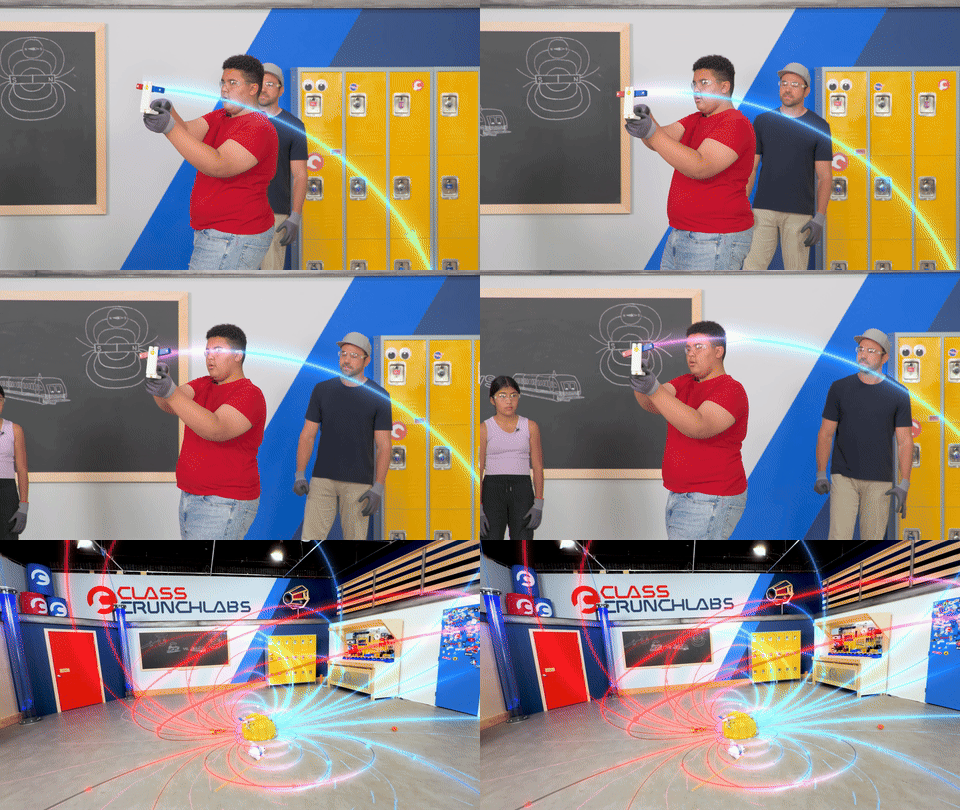
• Watch a Class CrunchLabs video showing the LARGE magnetic field around a MASSIVE magnet.What we figure out
• Magnetic fields extend into the space around a magnet and get weaker with distance.
• Iron filings and compasses are tools that make the invisible field visible.
• The way iron filings line up (their spacing, density, and shape) and the way compasses point provide evidence for both the strength and the shape of a magnetic field.How we show it
Individually:
• Conduct investigations and discuss our findings.
• Make our thinking visible in our Mission Logs.
• Complete a Check & Connect short assessment.
As a class:
• Develop a model to explain magnetic forces in magnetic fields.
• Use evidence to explain how distance and orientation affect magnetic forces.
• Model the magnetic fields acting on a maglev train.Lesson goals
• Students ask testable questions about how different factors (such as distance and orientation) affect the attractive or repulsive forces of magnets and their fields.
• Students use patterns from their investigations to develop a model that represents how forces act at a distance and can be explained by fields that are mapped by their effect on a test object.What we do
• Uncover the idea of electric forces acting at a distance.
• Co-construct a checklist to use as criteria throughout the lesson.
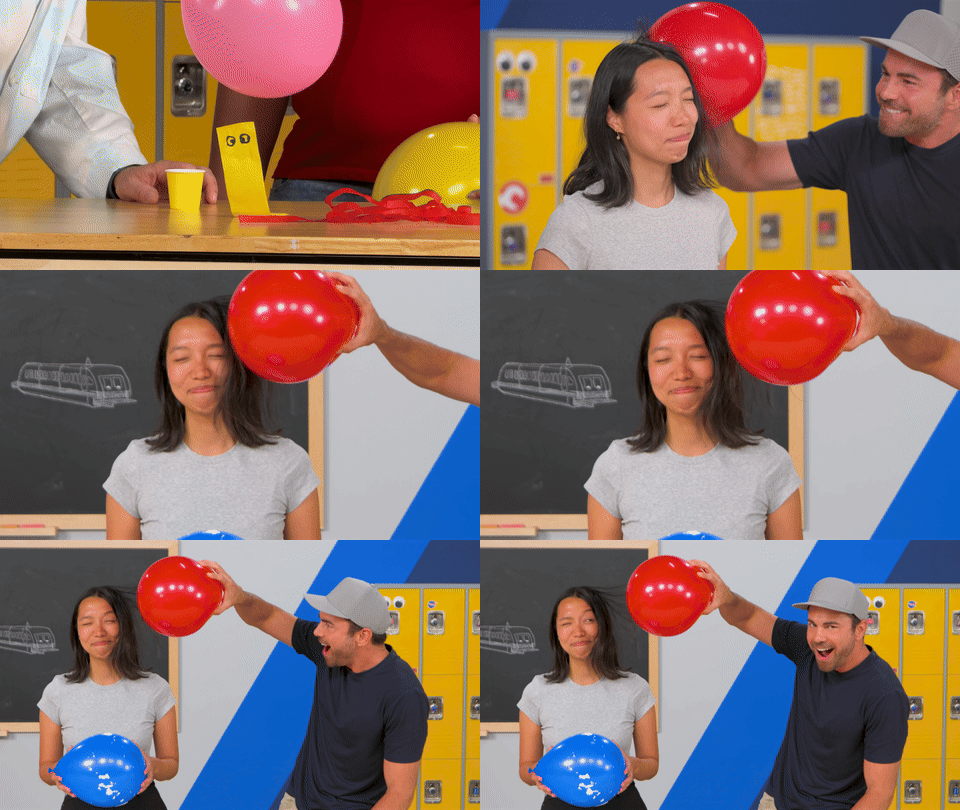
• Carry out a sequence of Static Electricity Lightning Challenge tasks to test how electric forces can attract and repel stuff.
• Conduct an investigation to compare the strength of electric and magnetic forces, including using a simulation to visualize charges and fields.
• Read to gather additional information about charges, attraction, and repulsion.What we figure out
• Electric forces, like magnetic forces, act at a distance.
• The strength of electric forces increases as objects get closer and as the charge increases.
• Opposite charges attract; similar charges repel.
• Static electricity can move neutral objects.
• Electric forces share similarities with magnetic forces but also have differences.How we show it
Individually:
• Conduct investigations and discuss our findings.
• Make our thinking visible in our Mission Logs.
• Complete a Check & Connect short assessment.
As a class:
• Co-construct an explanation of whether static electricity meets the checklist criteria for field forces.
• Complete a Video Pop Quiz.Lesson goal
• Students conduct an investigation to produce data that can serve as evidence for the factors that affect electric forces and compare them with magnetic forces.
What we do
• Watch a video of a scrapyard magnet picking up heavy things and dropping them.
• Build our own electromagnets and test them.What we figure out
• Scrapyard magnets can lift heavy things even though they aren’t like regular permanent magnets.
• Electromagnets work like permanent magnets but can be turned on and off.
• Electromagnets create a magnetic field, like permanent magnets.
• The more turns of copper wire you have around an iron core, the stronger the electromagnet.How we show it
Individually:
• Complete a Check & Connect short assessment
• Participate in classroom discussions
As a class:
• Interpret data about magnetic & electric forces.Lesson goal
• Students analyze and interpret data to use as evidence for what causes the strength of an electromagnet to change.
What we do
• Watch a video of a maglev train prototype that helps us explain how electromagnets are used to levitate and propel a maglev train.
• Develop a model to explain how a maglev train floats and moves.What we figure out
• How electromagnets make a train move forward.
How we show it
Individually:
• Create models.
• Compare initial versus final models.
• Complete an end-of-unit assessment.
As a class:
• Construct a model to explain how a maglev train floats and moves.Lesson goal
• Students develop a model to explain how electromagnetic forces - which are dependent on strength, distance, and electric current - cause the levitation and movement of a maglev train.
The Anchor
What we do
• Watch a video of a maglev train floating in the air and moving really fast. We Notice, Think & Wonder about the train and make comparisons to a “normal” train.
• Try to make something float in the air and move without touching it.
• Develop questions, initial ideas, and potential investigations to explore.
• Review what we have learned about forces in elementary science.
What we figure out
• A maglev train floats in the air and moves really fast.
• When magnets are oriented one way, they can attract things.
• When magnets are oriented another way, they can repel objects.
• Different magnets can have different strengths.
How we show it
Individually:
• Draft early explanations and/or draw models to show what we think may cause a maglev train to float and move.
• Develop questions that we want to answer about how the maglev train works.
As a class:
• Collect ideas and questions to investigate together.
• Develop an initial class consensus model.
Lesson goal
• Ask and refine questions that can be investigated in the classroom to figure out what causes a train to float in the air and move without touching the ground.
Magnets
What we do
• Develop and evaluate methods for measuring magnet strength.
• Plan and carry out investigations to quantify magnet strength.
• Analyze our class data and identify ways to improve our investigation methods.
• Design a vehicle that can move forward and backward using only magnetic forces.
• Watch a Class CrunchLabs video of a massive magnet interacting with objects.
What we figure out
• Magnets can be oriented so they repel one another and levitate.
• Some magnets create stronger forces than others.
• Different investigative methods can produce different results, but the data are still consistent about which magnets are stronger.
• The orientation of a magnet affects whether it attracts or repels a MagDrive Derby Car.
• Magnets attract and repel more strongly when they are closer to one another than when they are farther apart.
• By using multiple magnets and changing their orientation, we can propel a MagDrive Derby Car like a maglev train.
How we show it
Individually:
• Make our thinking visible in our Mission Logs.
• Complete a Check & Connect short assessment.
In small groups:
• Conduct investigations and discuss our findings.
As a class:
• Explain the factors that affect magnetic forces.
• Add the concept of magnetic “poles” to our maglev train model to explain how magnets can make the train levitate and move.
Lesson goals
• Students conduct an investigation to evaluate whether measuring how high a cup is lifted by a repulsive magnetic force is an effective way to determine the strength of a magnet.
• Students use their investigation data to explain how the strength and arrangement of magnets affect the motion of objects, then apply these ideas to the maglev train model.
• Students ask questions about qualitative data that can be investigated to figure out how magnets can produce both attractive and repulsive forces at a distance.
Magnetic Fields
What we do
• Investigate how iron filings interact with magnets.
• Investigate how compasses help us map magnetic fields.
• Watch a Class CrunchLabs video showing the LARGE magnetic field around a MASSIVE magnet.
What we figure out
• Magnetic fields extend into the space around a magnet and get weaker with distance.
• Iron filings and compasses are tools that make the invisible field visible.
• The way iron filings line up (their spacing, density, and shape) and the way compasses point provide evidence for both the strength and the shape of a magnetic field.
How we show it
Individually:
• Conduct investigations and discuss our findings.
• Make our thinking visible in our Mission Logs.
• Complete a Check & Connect short assessment.
As a class:
• Develop a model to explain magnetic forces in magnetic fields.
• Use evidence to explain how distance and orientation affect magnetic forces.
• Model the magnetic fields acting on a maglev train.
Lesson goals
• Students ask testable questions about how different factors (such as distance and orientation) affect the attractive or repulsive forces of magnets and their fields.
• Students use patterns from their investigations to develop a model that represents how forces act at a distance and can be explained by fields that are mapped by their effect on a test object.
Static Electricity
What we do
• Uncover the idea of electric forces acting at a distance.
• Co-construct a checklist to use as criteria throughout the lesson.
• Carry out a sequence of Static Electricity Lightning Challenge tasks to test how electric forces can attract and repel stuff.
• Conduct an investigation to compare the strength of electric and magnetic forces, including using a simulation to visualize charges and fields.
• Read to gather additional information about charges, attraction, and repulsion.
What we figure out
• Electric forces, like magnetic forces, act at a distance.
• The strength of electric forces increases as objects get closer and as the charge increases.
• Opposite charges attract; similar charges repel.
• Static electricity can move neutral objects.
• Electric forces share similarities with magnetic forces but also have differences.
How we show it
Individually:
• Conduct investigations and discuss our findings.
• Make our thinking visible in our Mission Logs.
• Complete a Check & Connect short assessment.
As a class:
• Co-construct an explanation of whether static electricity meets the checklist criteria for field forces.
• Complete a Video Pop Quiz.
Lesson goal
• Students conduct an investigation to produce data that can serve as evidence for the factors that affect electric forces and compare them with magnetic forces.
Electromagnetism
What we do
• Watch a video of a scrapyard magnet picking up heavy things and dropping them.
• Build our own electromagnets and test them.
What we figure out
• Scrapyard magnets can lift heavy things even though they aren’t like regular permanent magnets.
• Electromagnets work like permanent magnets but can be turned on and off.
• Electromagnets create a magnetic field, like permanent magnets.
• The more turns of copper wire you have around an iron core, the stronger the electromagnet.
How we show it
Individually:
• Complete a Check & Connect short assessment
• Participate in classroom discussions
As a class:
• Interpret data about magnetic & electric forces.
Lesson goal
• Students analyze and interpret data to use as evidence for what causes the strength of an electromagnet to change.
Modeling Maglev
What we do
• Watch a video of a maglev train prototype that helps us explain how electromagnets are used to levitate and propel a maglev train.
• Develop a model to explain how a maglev train floats and moves.
What we figure out
• How electromagnets make a train move forward.
How we show it
Individually:
• Create models.
• Compare initial versus final models.
• Complete an end-of-unit assessment.
As a class:
• Construct a model to explain how a maglev train floats and moves.
Lesson goal
• Students develop a model to explain how electromagnetic forces - which are dependent on strength, distance, and electric current - cause the levitation and movement of a maglev train.
Unit Materials
Our materials provide a roadmap for teachers and students. They’re standards-aligned, use evidence-backed strategies, and are built to actually work.

Mission Launch Deck
Your command center. Slides include discussion prompts, embedded videos, and directions for hands-on challenges, all in an editable deck.
 Open in Google Drive
Teacher Mission Manual
The TMM has background info, lesson breakdowns, materials and preparation lists, assessment overviews, and tips to pull the whole thing off.
 Open in Google Drive
Student Mission Log
Every scientist and engineer needs a place to record their questions, investigation plans, and data and track their progress.
Open in Google Drive
Status Check Assessments
Status Checks help teachers see where every student stands and understand what's clicking and what's not.
Open in Google Drive
Teacher Assessment Guidance
Things to look for in student responses so you can give feedback that actually moves the needle.
Open in Google Drive
Handouts
Readings, worksheets, and other print materials your students need to make the most of the unit.
Open in Google Drive
Other Materials
Flashcards, tools for hands-on investigations, and other unit-specific resources.
Open in Google Drive
Supply List
Your shopping list for hands-on challenges and other classroom materials.
Open in Google DriveHands-On Challenges
These videos show you how to use everyday items in activities that make abstract concepts click, because the best way to learn science is to DO it.
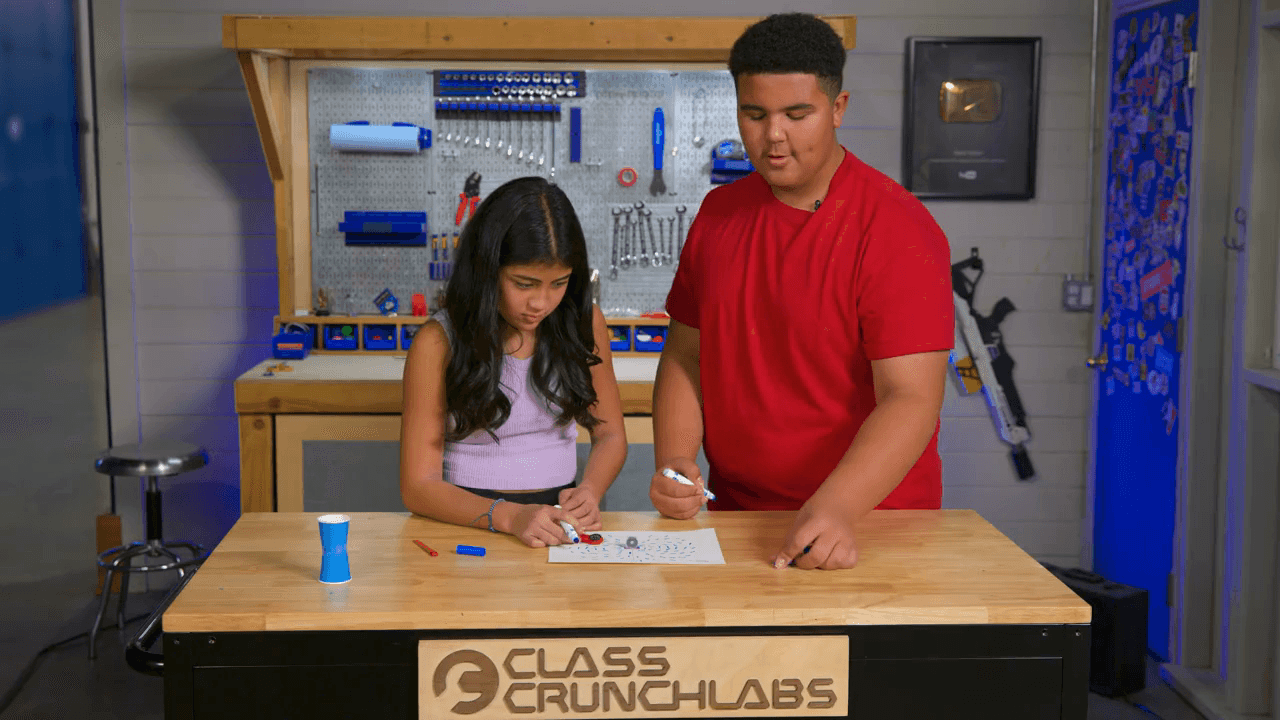
Mapping Magnetic Fields Challenge
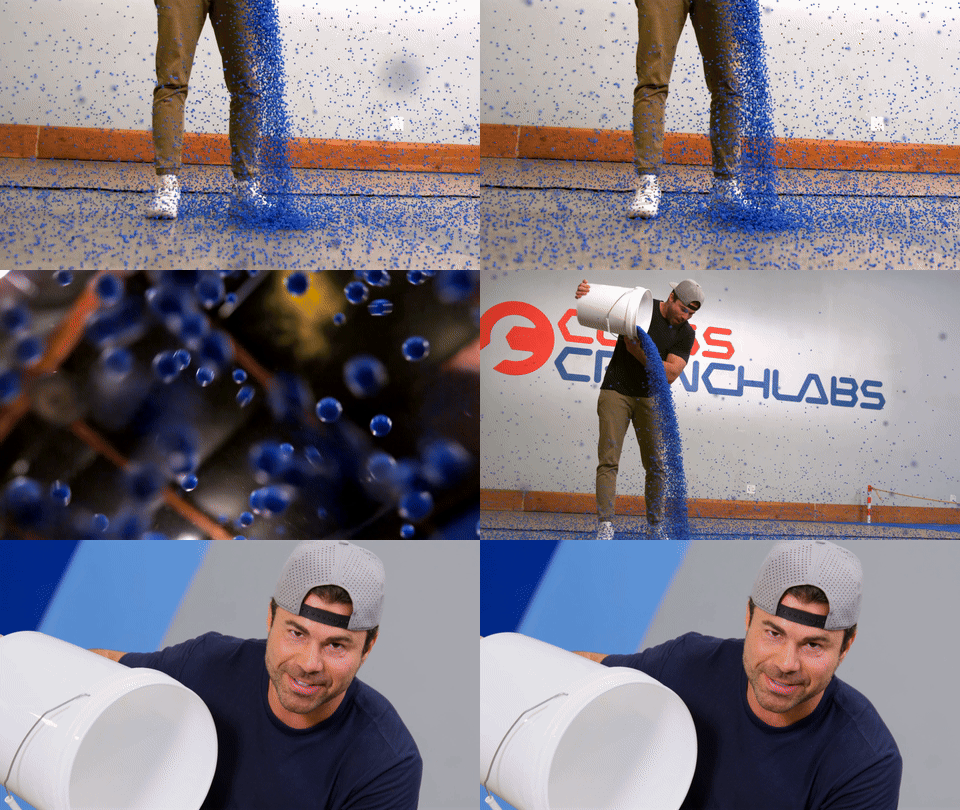
Our Amazing Cast
This team brings the “Wow!” so your students can explain the “How?”

The Video Vault
Every video from the unit all in one place.
1.1 Anchor Check-In
1.2 Elementary Explainer - Forces
1.3 Floating Maglev Prep
1.3 Floating Maglev Challenge
2.1 Recap
2.3 Floating Cup Prep
2.3 Floating Cup Challenge
2.10 Magdrive Derby Prep
2.10 Magdrive Derby Challenge
2.15 Check-In with Class CrunchLabs
3.1 Recap
3.7 Magnetic Filings Prep
1.1 Anchor Check-In
1.2 Elementary Explainer - Forces
2.1 Recap
2.15 Check-In with Class CrunchLabs
3.1 Recap
3.15 Check-In with Class CrunchLabs
4.4 Recap
4.13 Check-In with Class CrunchLabs
5.1 Recap
6.1 Recap
6.3 Check-In with Class CrunchLabs
6.10 MRI Video Assessment (Part 1)
1.1 Anchor Check-In
1.2 Elementary Explainer - Forces
2.1 Recap
2.15 Check-In with Class CrunchLabs
3.1 Recap
3.15 Check-In with Class CrunchLabs
4.4 Recap
4.13 Check-In with Class CrunchLabs
5.1 Recap
6.1 Recap
6.3 Check-In with Class CrunchLabs
6.10 MRI Video Assessment (Part 1)
6.10 MRI Video Assessment (Part 2)
Video Bonus: Head to Head with GeoRainbolt
1.3 Floating Maglev Prep
1.3 Floating Maglev Challenge
2.3 Floating Cup Prep
2.3 Floating Cup Challenge
2.10 Magdrive Derby Prep
2.10 Magdrive Derby Challenge
3.7 Magnetic Filings Prep
3.7 Magnetic Filings Challenge
3.11 Mapping Magnetic Fields Prep
3.11 Mapping Magnetic Fields Challenge
4.9 Static Electricity Lightning Prep
4.9 Static Electricity Lightning Challenge
1.3 Floating Maglev Prep
1.3 Floating Maglev Challenge
2.3 Floating Cup Prep
2.3 Floating Cup Challenge
2.10 Magdrive Derby Prep
2.10 Magdrive Derby Challenge
3.7 Magnetic Filings Prep
3.7 Magnetic Filings Challenge
3.11 Mapping Magnetic Fields Prep
3.11 Mapping Magnetic Fields Challenge
4.9 Static Electricity Lightning Prep
4.9 Static Electricity Lightning Challenge
4.10 Electrodrive Derby Car Prep
4.10 Electrodrive Derby Car Challenge
5.6 Electromagnet Prep
5.6 Electromagnet Challenge
Video Bonus: Head to Head with GeoRainbolt
Video Bonus: Head to Head with GeoRainbolt
6.10 MRI Video Assessment (Part 1)
6.10 MRI Video Assessment (Part 2)
6.10 MRI Video Assessment (Part 1)
6.10 MRI Video Assessment (Part 2)
1.1 Anchor Check-In
1.2 Elementary Explainer - Forces
2.15 Check-In with Class CrunchLabs
3.15 Check-In with Class CrunchLabs
4.13 Check-In with Class CrunchLabs
5.3 Check-In with Class CrunchLabs
5.20 Back to the Scrapyard!
6.3 Check-In with Class CrunchLabs
6.10 MRI Video Assessment (Part 2)
1.1 Anchor Check-In
1.2 Elementary Explainer - Forces
2.15 Check-In with Class CrunchLabs
3.15 Check-In with Class CrunchLabs
4.13 Check-In with Class CrunchLabs
5.3 Check-In with Class CrunchLabs
5.20 Back to the Scrapyard!
6.3 Check-In with Class CrunchLabs
6.10 MRI Video Assessment (Part 2)
1.3 Floating Maglev Prep
1.3 Floating Maglev Challenge
2.3 Floating Cup Prep
2.3 Floating Cup Challenge
2.10 Magdrive Derby Prep
2.10 Magdrive Derby Challenge
3.7 Magnetic Filings Prep
3.7 Magnetic Filings Challenge
3.11 Mapping Magnetic Fields Prep
3.11 Mapping Magnetic Fields Challenge
4.9 Static Electricity Lightning Prep
4.9 Static Electricity Lightning Challenge
1.3 Floating Maglev Prep
1.3 Floating Maglev Challenge
2.3 Floating Cup Prep
2.3 Floating Cup Challenge
2.10 Magdrive Derby Prep
2.10 Magdrive Derby Challenge
3.7 Magnetic Filings Prep
3.7 Magnetic Filings Challenge
3.11 Mapping Magnetic Fields Prep
3.11 Mapping Magnetic Fields Challenge
4.9 Static Electricity Lightning Prep
4.9 Static Electricity Lightning Challenge
4.10 Electrodrive Derby Car Prep
4.10 Electrodrive Derby Car Challenge
5.6 Electromagnet Prep
5.6 Electromagnet Challenge
1.2 Elementary Explainer - Forces
1.2 Elementary Explainer - Forces
2.1 Recap
3.1 Recap
4.4 Recap
5.1 Recap
6.1 Recap
2.1 Recap
3.1 Recap
4.4 Recap
5.1 Recap
6.1 Recap
1.3 Floating Maglev Challenge
2.3 Floating Cup Challenge
2.10 Magdrive Derby Challenge
3.7 Magnetic Filings Challenge
4.9 Static Electricity Lightning Challenge
4.10 Electrodrive Derby Car Challenge
5.6 Electromagnet Challenge
1.3 Floating Maglev Challenge
2.3 Floating Cup Challenge
2.10 Magdrive Derby Challenge
3.7 Magnetic Filings Challenge
4.9 Static Electricity Lightning Challenge
4.10 Electrodrive Derby Car Challenge
5.6 Electromagnet Challenge
1.3 Floating Maglev Prep
2.3 Floating Cup Prep
2.10 Magdrive Derby Prep
3.7 Magnetic Filings Prep
3.11 Mapping Magnetic Fields Prep
3.11 Mapping Magnetic Fields Challenge
4.9 Static Electricity Lightning Prep
4.10 Electrodrive Derby Car Prep
5.6 Electromagnet Prep
1.3 Floating Maglev Prep
2.3 Floating Cup Prep
2.10 Magdrive Derby Prep
3.7 Magnetic Filings Prep
3.11 Mapping Magnetic Fields Prep
3.11 Mapping Magnetic Fields Challenge
4.9 Static Electricity Lightning Prep
4.10 Electrodrive Derby Car Prep
5.6 Electromagnet Prep
1.1 Anchor Check-In
1.2 Elementary Explainer - Forces
1.3 Floating Maglev Prep
1.3 Floating Maglev Challenge
1.1 Anchor Check-In
1.2 Elementary Explainer - Forces
1.3 Floating Maglev Prep
1.3 Floating Maglev Challenge
2.1 Recap
2.3 Floating Cup Prep
2.3 Floating Cup Challenge
2.10 Magdrive Derby Prep
2.10 Magdrive Derby Challenge
2.15 Check-In with Class CrunchLabs
2.1 Recap
2.3 Floating Cup Prep
2.3 Floating Cup Challenge
2.10 Magdrive Derby Prep
2.10 Magdrive Derby Challenge
2.15 Check-In with Class CrunchLabs
3.1 Recap
3.7 Magnetic Filings Prep
3.7 Magnetic Filings Challenge
3.11 Mapping Magnetic Fields Prep
3.11 Mapping Magnetic Fields Challenge
3.15 Check-In with Class CrunchLabs
3.1 Recap
3.7 Magnetic Filings Prep
3.7 Magnetic Filings Challenge
3.11 Mapping Magnetic Fields Prep
3.11 Mapping Magnetic Fields Challenge
3.15 Check-In with Class CrunchLabs
4.4 Recap
4.9 Static Electricity Lightning Prep
4.9 Static Electricity Lightning Challenge
4.10 Electrodrive Derby Car Prep
4.10 Electrodrive Derby Car Challenge
4.13 Check-In with Class CrunchLabs
4.4 Recap
4.9 Static Electricity Lightning Prep
4.9 Static Electricity Lightning Challenge
4.10 Electrodrive Derby Car Prep
4.10 Electrodrive Derby Car Challenge
4.13 Check-In with Class CrunchLabs
5.1 Recap
5.3 Check-In with Class CrunchLabs
5.6 Electromagnet Prep
5.6 Electromagnet Challenge
5.20 Back to the Scrapyard!
5.1 Recap
5.3 Check-In with Class CrunchLabs
5.6 Electromagnet Prep
5.6 Electromagnet Challenge
5.20 Back to the Scrapyard!
6.1 Recap
6.3 Check-In with Class CrunchLabs
6.10 MRI Video Assessment (Part 1)
6.10 MRI Video Assessment (Part 2)
6.1 Recap
6.3 Check-In with Class CrunchLabs
6.10 MRI Video Assessment (Part 1)
6.10 MRI Video Assessment (Part 2)
Video Bonus: Head to Head with GeoRainbolt
Video Bonus: Head to Head with GeoRainbolt
What's Next?
More experiments. More discoveries. Pick your next adventure!
Teamwork makes the dream work!
More than 100 people worked together to make this unit a reality.


Tell us what you think
Class CrunchLabs is just getting started! After you've reviewed or taught this pilot, we'd love your feedback. You can also drop us an email: class@crunchlabs.com (opens in new tab)